

Introduction | About the guest | Transcript | Follow us
Introduction
Something remarkable happens when spaces are allowed to feel more human—when they are welcoming, grounded in care, and shaped with intention. When there’s time to sit together, perhaps good food on the table, and an openness that feels closer to being welcomed into someone’s home than arriving at an institution of learning.
Across the country, centres for Black studies are emerging as spaces like these. They are places where Black scholarship is held with care, where history and leadership are approached through joy, and where intellectual life is nurtured rather than extracted.
That spirit of joy comes to the Big Thinking Podcast this month. Andrew B. Campbell joins Karine Morin for a conversation about Black leadership through history, the power of building scholarly spaces that are expansive rather than extractive, and what becomes possible when we show up not just as participants, but as allies and co-conspirators in sustaining this work.
About the guest
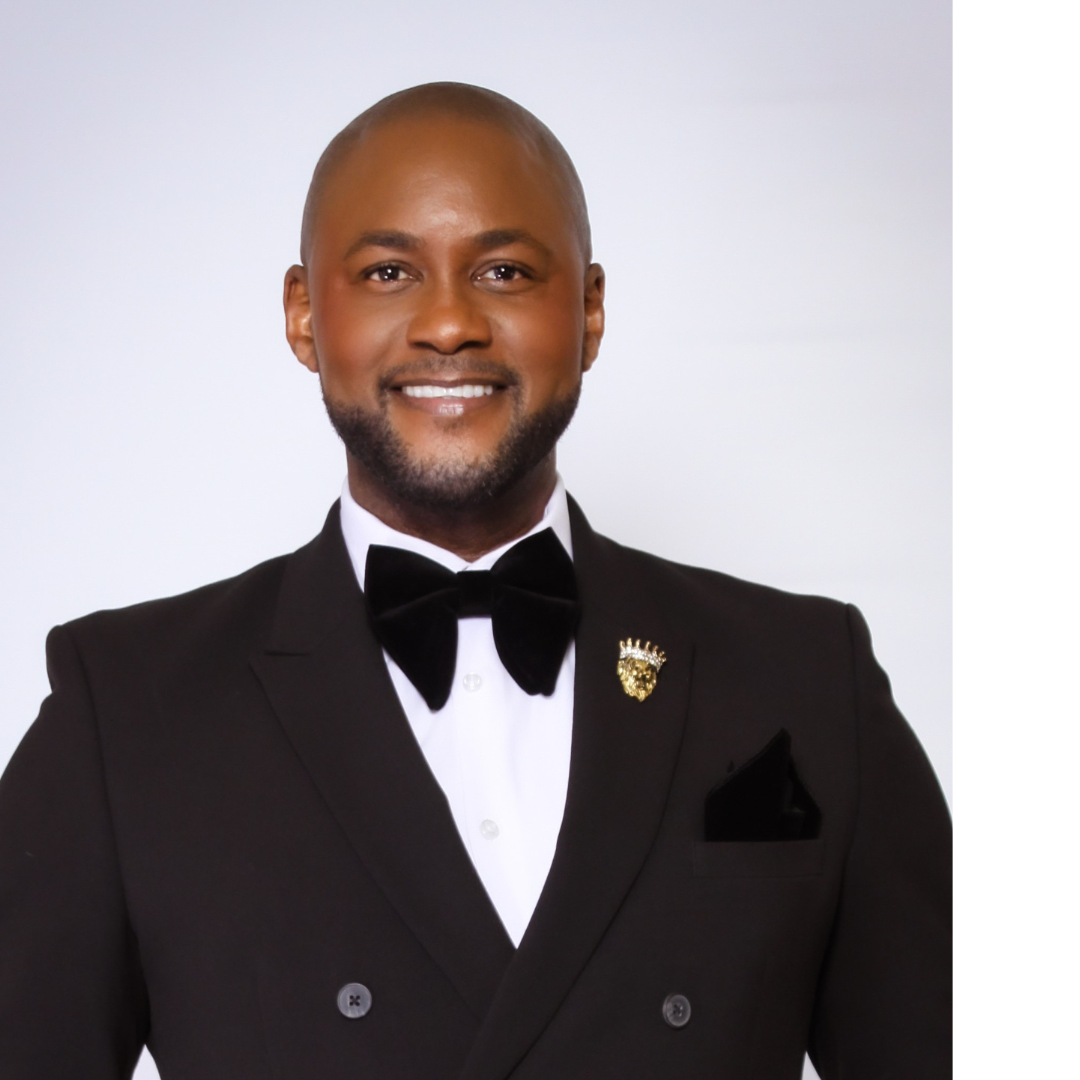 Andrew B. Campbell is an Assistant Professor, Teaching Stream, in Leadership for Racial Justice in Teacher Education in the Master of Teaching Program at the Ontario Institute for Studies in Education (OISE), University of Toronto OISE.
He is Coordinator for the Black Future Educators’ Program (BFEP) and the newly appointed Director of the Centre for Black Studies in Education (CBSE). DR. ABC is known to the OISE and wider community for his leadership on advancing equity, leadership, 2SLGBTQIA+ community, and teacher education.
DR. ABC’s exemplary work has seen numerous awards bestowed to him, such as a 2024 recipient of the Black History Month Award, from the Jamaica Canadian Association; The 2022 Award for Excellence in Initial Teacher Education from University of Toronto; The 2021 Distinguish African Caribbean Award from University of Toronto, African Alumni Association; The 2021 Champion Educator Award from ONABSE (Ontario Alliance of Black School Educators) and numerous others.
He presently teaches courses in anti discrimination education, leadership, educational change, urban education, and Black Educators’ Identity and Pedagogy. He has presented at numerous conferences and has delivered many presentations as a keynote speaker, motivational speaker, and workshop facilitator. He loves people, food, fashion, travelling and bringing his community together for a good meal.
[00:00:08] Karine Morin: Whether in learning environments, workplaces, or our community, it's often clear when a space has been built with care rather than simply set up to function. At the Center for Black Studies in Education, which is part of the Ontario Institute for Studies in Education or OISE, Black scholars and students are exploring community and care as foundational to research and teaching.
[00:00:33] I'm Karine Morin, and I'm the President and CEO of the Federation for the Humanities and Social Sciences. Today I'm joined by Dr. Andrew B. Campbell, Assistant Professor in Leadership for Racial Justice in Teacher education at the University of Toronto, where he is the Director for the center. We'll speak of building Black scholarly space shaped by joy and collective life and the power such work carries.
[00:01:00] Karine Morin: Dr. Campbell, what a perfect moment to be having this conversation as your work at the University of Toronto's Ontario Institute for Studies and Education, known as OISE, is particularly relevant and visible, you're leading a new Center for Black Studies in Education, and this past June, it held its second annual Black education Symposium.
[00:01:22] You are a scholar, workshop leader, community builder, inside and outside the post-secondary sector. But at heart you describe yourself as an educator. Could you tell us what has motivated your path to be an educator, to pursue a PhD at OISE, and now to be leading the center?
[00:01:44] Andrew Campbell: Wow, thank you so much, thank you so much. I've always wanted to be an educator, many of us have those growing up story, my growing up story is I want to be a teacher. I've always wanted to be a teacher. I have had some beautiful teachers growing up, and more and more I understand the power of having great examples of teachers that you can desire to be, and I had that from primary school or what we call elementary school in Canada as of course I'm from Jamaica.
[00:02:11] And so that has been my passion, I've always stayed into that, and as I got into teaching, and got into education, then I realized there were so many other spaces and places that I could exist and I could be, and I could do things in administration, in workshop, in teacher evaluation, in teacher training, teacher development, parent development.
[00:02:34] I've done quite a bit of work with parents as well, and so for me, it's all things education, all things school, inside and outside of school I am passionate about. And because of my desire and my dreams to do what I wanna do, I realized that in order for me to get to certain spaces and places, then I would have to grow.
[00:02:55] And so, the PhD for me was a natural growth, a next step to do what I wanna do in order to publish, and to research, and to write books, and to be in certain rooms that in a world like this will require titles and letters behind your name. And that's a reality that we have to come up grips with sometimes, is that in order to be on certain tables and certain spaces, we need to have certain qualifications.
[00:03:21] So for me, a PhD was the next step, and I'm happy that I did it because it, it has allowed me, as you said, to be in spaces that the University of Toronto OISE and to be the director for the Center for Black Studies in Education.
[00:03:34] Karine Morin: Can you highlight what the Center for Black Studies is all about?
[00:03:39] Andrew Campbell: For me, I would describe it as a watering hole that we come there to be watered, to be fed, to be nurtured, to be nourished, and everybody is there. And so the center is a space for all of us as academics, as faculty, students, staff, and I need to underline that staff as well, and community is a space for us to be, and to be nurtured and to pour in to community in whatever way we can.
[00:04:11] And that includes research, that includes conferences, that includes programming, that includes classes, and meetings, and community chats, that include having an elder in the space, that includes having our students come to us for just one-on-one conversation, and that includes also nurturing Black joy.
[00:04:32] We have had occasions where it's just a gathering to just be, and so that is the best description of the center, a watering hole.
[00:04:41] Karine Morin: It's a beautiful metaphor. You've just told us so much that goes on at the center, but I want to just come back to the Second Annual Black Education Symposium that was held last January.
[00:04:54] What stood out for you this year? What felt more significant about the second gathering?
[00:04:59] Andrew Campbell: Ah, we had more people and so, that is important. We had way more registration, and we had far more persons in attendance. Last year we had on record 253, I think we're about 275 this time, and that stood out for me.
[00:05:15] So it says that we have something that the community needs. We are offering something that the community wants. What also stood out for me was the themes, of course, I was a part of selecting the themes, but the ways in which the panels navigated the themes were so important.
[00:05:34] And I must tell you, when we select the themes, and we select a moderator, we asked the moderator to take it from there. So, I can tell you I did not give any moderator any document. I asked them, I said to them, I want you to take it from here. This is a theme, it's around Blacks Canadian Studies in education, it's around affirming blackness in academia, it's around freedom dreaming for Black educators. Take it away.
[00:06:04] And for me, I was just truly satisfied with where each panel took the conversation. And next thing that stood out for me, which I've always very big on, it's just how community was in the space. And I am always pleased with the level of connections made at these gatherings.
[00:06:28] Because oftentimes many of us as Black folks, we work in silos. I may have the pleasure and the opportunity to be at OISE where I'm a part of Black future educators’ pathways, so I get to interact with quite a bit of Black students, which is something that is rare in many spaces. I also get to interact with a number of Black professors, 'cause I'm not the only black professor at OISE.
[00:06:51] We have a Black caucus of 13 members, and so I get that, but also, there are persons who are coming who they are the only one, so when they come to a space like this, they are naturally in awe. And then they get to interact, and to network, and not just networking as how we see and how it is done; ‘go get somebody's name, get somebody's email so you can call them back.’
[00:07:18] But networking and making connections. And you can see the blossoming of those connections with the invitations, and the lunch and the coffee chats and somebody becomes, somebody's on somebody else's panel and somebody says to me, Dr. A.B.B, I am doing this panel because your event was my first panel.
[00:07:38] And so you see that, and that really resonates with me because I feel like I know we are pouring into each other, and that's what we need. That's what we need. Many of us we come to these spaces, we are a little bit challenged and sometimes we're feeling empty. So leaving these spaces feeling full, like you're being poured into, for me, is a big win.
[00:08:00] Karine Morin: Again, I'm struck that you're using a little bit of the same theme of pouring. I think you're pouring the water into that water hole where everybody can gather.
[00:08:08] Andrew Campbell: Yes.
[00:08:09] Karine Morin: So community is clearly very important, and you've just alluded to being in Toronto, being at OISE, There is community close to you, but you also refer to people who don't have that experience.
[00:08:23] People who will be further from Toronto across Canada. How do you see not only building community, but sustaining community across instances, across different institutions? How does that manifest through the center's work?
[00:08:38] Andrew Campbell: We have to be intentional. That's my word, intentional. What is it that you want to do? And then, be very clear: what is it that you want to do and then decide how you're going to do it. One of the issues we do have, and we do face many of us in institutions, is that we do have what we want to do, but oftentimes it's co-opted, oftentimes it's diluted, oftentimes it's watered down when you have to go up the ladder, across the ladder goes through the different ways.
[00:09:07] And so for me, being very clear, intentional, and deliberate in how we want to form community and collaborate is something that has to be thought out, and I think we are doing that. I wouldn't say we have done that, but we are doing it and we are doing it well so far.
[00:09:29] Let me give you an example. What that looks like is bringing others in, disrupting the idea of gatekeeping, disrupting the idea of you should be the only one. I know it's a thing when you hear Black folks speak and they say, well, ‘I'm the only one’, and ‘I'm the first’, and ‘I'm the only one’. I want to have community so well that the idea that ‘I am the only one’ or ‘I am the first’ is a thing of the past.
[00:09:58] And that is why whenever I see a new center, you know, popping up somewhere or a new center establishing another university, I am over the moon. I remember when I got the invitation, it was University of Windsor that opened their center, I was over the moon. I remember when Toronto District School Board opened their Black Center for Excellence.
[00:10:20] And then I realized a couple years ago, Peel District school board opened their center. And so there's space for us all, and we need to be intentional about how we are making connections. So, here is something beautiful when you come to our events at OISE, especially the Symposium, you can identify players, so to speak, from all these centers in the space.
[00:10:45] A lot of people are doing things and they're doing it by themselves, sometimes you have to realize that there is help over there. I always say to people, I come from a Pentecostal church background years ago. I love a soloist, I love me a soloist, but there is nothing more powerful than when the choir comes in, and you hear the soprano, and then you hear the altar, and then all of a sudden you hear the tenor.
[00:11:11] It fills me up because it's not just one voice, one voice is powerful, but ooh, when the soprano comes in, it's magic. And so, I know there is strength in numbers, there is also clarity in numbers, and there's also power in numbers. And so for me, community is key, and we pour into community and are allow community to pour into us. And I feel both, each time
[00:11:40] Karine Morin: You're bringing all the senses into this conversation.
[00:11:43] Andrew Campbell: Yes, that's a school teacher in me now, remember now.
[00:11:47] Karine Morin: I see it, I see it now. One thing that we had just heard a little bit, and I want you to say more about, aside from scholarship, you also put a lot of thought into care, and self-care.
[00:12:01] What inspired that practice? Where does that come from? And what are you trying to achieve when you put that emphasis on care and self-care?
[00:12:10] Andrew Campbell: I'm going to use a line that I started using maybe about six years ago, and it was: “I have to be well enough, to be good enough”. And I've been sharing that in a lot of my workshops, my keynotes, my lectures, my conversations, because we carry so much and we do so much, and what I've seen oftentimes is the persons who have to do so much, the twice as hard, the being everywhere, being everything for everyone, sometimes we do because we want community.
[00:12:50] We want our community to grow, but there are not enough bodies to do it. And so I'm sure you have heard about one of the challenges we have as Black folks and Black people within these institutions is that we are always, as you said, so limited, it’s only one of the two of us. So every single thing that has to do with Blackness, we are called upon.
[00:13:09] And if we are not careful, it's a burden, the work becomes a burden, there's no joy in it. And so in order to preserve that joy in the work, we must take care of ourselves. And so, for me, I am very intentional, I'm not saying I am great, but I'm pretty good.
[00:13:30] I'm pretty good. I will reply to an email respectfully, but I will always also say hashtag capacity. I literally use "#capacity” because I want them to know that I am saying, no, not because I'm unwilling, but because over here I am full, I'm at capacity, and so we have to know to say that. I'm sure you have heard people saying, well, it's a skill to say no, it's a complete answer.
[00:13:59] We say those things, but we don't follow through. Because oftentimes, especially as Black bodies, we are in fear that if we don't follow through, if we don't raise our hand, if we don't say yes, that we are not going to be asked again, we're not going to be selected, we are not going to be nominated, we're not going to be chosen, we're not going to be invited, we are not going to be included, we are not going to feel a sense of belonging, and that is a risk. And I use the word risk intentional that I have to take so I can preserve me. I wanna be well enough to be good enough.
[00:14:36] Karine Morin: We could all use that mantra, so thank you very much. So you've just listed there many forms of challenges to being Black in our educational spaces, how are you seeing Black students and faculty respond to those challenges?
[00:14:54] How are they reshaping learning environments at this point in time? Perhaps if you think back to how different that is from, say, a decade ago. How is Black educational space being redefined and transformed by this generation of faculty and students?
[00:15:12] Andrew Campbell: The first thing I want to say, however, is that there's nothing new under the sun. Many of the challenges, the anti-Black racism, the anti-Blackness that we see, it has been around for decades, right? For years.
[00:15:25] And I have to give respect and honor to the people before us. When I say the people before us, you know, I'm very big on my imagery, I am looking right now with my eyes closed, I'm looking at the Harriet Tubman story and I'm seeing her with her lantern or her gun. Oh, I just felt that just now.
[00:15:44] I'm looking at Rosa Parks and I'm seeing her sitting on the bus refusing, I'm looking at Viola Desmond and I'm seeing her in the theater, and I'm looking, and I'm looking and I'm looking way back.
[00:15:56] I'm even looking way beyond that, to our ancestors and I see who is running away, I see who has decided to jump overboard choosing death rather than working on a plantation. And I'm looking closer in the sixties, and the fifties, and the seventies of people who are alive today, the Jean Augustines, the people who are before it.
[00:16:18] I'm looking even at OISE and I'm seeing the older professors who have done the work, the Professor George Dei, the Ann Lopez, [...], the people who have come before me. I am new, I am young into this, so to speak, and so I want to establish that.
[00:16:35] So we are taken from the lessons, we are taken from the wisdom, but let me say this, there are also new strategies, there are also new opportunities. Let me give you an example: we have never had social media to be used like we can use it now. The center is seen and visible and the work because of social media. I am very big on social media because people need to know what you're doing.
[00:17:05] So when I say at the beginning, a ‘gathering hole’, here is a trick: how do we tell people come and gather, there is water? And that's a part of it, how we use social media to tell people there is a center down here, there is water, there are some people gathering, there are some black folks doing something, come join us.
[00:17:29] So we have that tool, and let me just take it further: the younger folks are now coming to the center and they're coming with amazing ideas, and they're coming with ideas that I have never even thought of.
[00:17:46] And so even for me, I am going: ‘wow, I never thought of that’. Even in their writing, they're writing stories that need to be told, and they're writing it in ways that are different and creative and new, and it's just magical. And so, we are hopeful. You can't do this work without hope, we are built on hope, we're submerged, so to speak, in hope. And that keeps us alive, that keeps the joy.
[00:18:16] Karine Morin: You were speaking of hope and I was going to say, and I often hear of joy and you just mentioned joy. Tell us about joy in teaching, joy in learning and how that has become so important in spaces where we talk about Black education and it's not elsewhere so important, tell us more about joy.
[00:18:36] Andrew Campbell: I'm going to tell you what I want to say about joy. This past weekend, and everything is connected, this past weekend I was in Ottawa from Thursday to Saturday at the National Black Queer Gathering, a room full of Black queer folks discussing what's best for them. And where they want to go next.
[00:19:00] Joy was a part of the conversation and as, and I was asked to be the host for the three-day event, a great responsibility, and that I took with such honor. And something that I shared with the room, I reminded the room, in a moment of pause that joy is not the absence, Black joy is not the absence of struggles and sorrow.
[00:19:23] It's not just a cute, happy moment. When we say Black joy, it's not ‘let us all get dressed and go for brunch’, that's cute and we love it, but Black joy is ‘in spite of’. So if you ask me right now, is everything great and bubbly and joyful at the center? I will tell you no. I will tell you there are challenges with anti-Blackness within the institution.
[00:19:46] I could tell you tons of stories where I, myself, even in this moment, have faced challenges in the institution at OISE of anti-Blackness. I could tell you about overthinking, about funding and resources. I could tell you about the level of intentionality that we have to work, or I have to work to make sure I am not tokenized, I'm not the token., I don't become the super token.
[00:20:13] And so, all of these things are happening, but Black joy is in spite of. So I may get up in the morning and I'm aware of what's going on. I'm aware of an email that pulls me to feel threatened. But in that moment, I am also heading to OISE, and I'm heading to a research gathering, I'm heading to a meeting, I'm heading to a planning session, I'm heading to something, and I am full of joy.
[00:20:44] I always say to the young people, when you hear what we call 'Negro Spirituals’ and you see those songs, and you see those old videos of our ancestors working in the field and singing, that is not a happy moment: that is an in spite of moment, that is a regardless of moment, that is a healing moment, that is a moment that says: 'we will overcome, we will be here’. And so it gives us that inside joy. And so for me, Black joy is so powerful that we have it because it is sustaining.
[00:21:20] Karine Morin: Thank you for that, I can feel with you.
[00:21:25] Andrew Campbell: Thank you.
[00:21:26] Karine Morin: So, there are plenty of us non-racialized faculty and student who want to support these efforts. How does that support, come through meaningfully? What can we, non-racialized faculty, students, and others do to support this effort?
[00:21:47] Andrew Campbell: Be a little bit more aware. Don't put the burden on us Black folks to tell you what to do, look around and see what is to be done. I remember growing up, on a Saturday, we tidied the house, you know, Saturday's like the cleaning-day back home, and your mother will call you inside and say, Andrew, come and get this done. And I would say, ‘Mommy, what? What should I do?’ And she'll say, ‘Look around, and decide what is to be done’.
[00:22:13] And immediately I would say, okay, the dishes to be washed, I could dust the furniture, the bed to be spread or the shoes to be cleaned. You literally, it took me nothing to look around to realize what to be done. And I want to say that to all our allies and our co-conspirators and everybody: look around you.
[00:22:34] You don't have to try to decipher what's to be done, and then when you see what to be done, then you do step two: decide what is it that you have to offer. We don't have the, we all don't have the same thing to offer. Some of us, we can offer funding, we can offer award. Some of us, we can offer space, think about those panels where Black people says we don't have access to those tables. It's simple by saying, pulling out a chair and said, oh, this chair is reserved for Dr. A. B. C. Simple as that.
[00:23:06] It's being on those committees and those Boards and looking around and realize: ‘oh, this Board lack representation’, and saying to the Board with the level of, hear my word now, my level of moral courage that is necessary and needed to say to the Board: ‘we have to fix this’.
[00:23:25] Somebody has to say, ‘we have to fix this’ so at the next year, the next couple months, when we are doing Board or committee recruitment, we are intentional about what we are looking for, we are not looking for the sameness. It has to be done with intentionality. And I think that is what we are suffering from: a lack of moral courage, a lack of intentionality.
[00:23:49] And then the last thing I want to say, the third thing is, use your power, your position, and your authority to move the work forward. A lot of us, we have way more power and privilege than we let on, and I want to say this, I remember the day that I, it occurred to me that I walk in a certain level of power and privilege.
[00:24:13] The day when I realized I had the power to choose people to be on panels, and come to the mic, who did I feature? Who do I highlight? The day I realized that I was on a hiring committee. What did that look like? The day I realized I had a PhD and people would open the door for me. Who do I allow to follow me through an open door?
[00:24:37] And so, stop thinking when you are asked by racialized folks and Black folks to do something that we are asking you for this big grand gesture. Sometime it's literally pulling out a chair. Sometime it's a way you listen to those persons. Sometime it's just putting a contribution to something that, a worthy cause that's going to water a space. So there's something we all can do, so let's do it.
[00:25:06] Karine Morin: So if we do, what could 10 years from now in 2036, what could the Canadian educational system look like if we've all done our part?
[00:25:17] Andrew Campbell: 10 years from now, I'm going to take it where I am, where I am focusing lately. 10 years from now, our curriculum should be absolutely culturally relevant, responsible, and sustaining.
[00:25:32] It should look like the children in the room, it should tell their story, the struggle to be seen should be over. The books that we are using, the tablets, the technology is just clear that it is telling all our stories. The physical spaces should tell our stories. I want to even wonder if 10 years now we are gonna need a center.
[00:25:59] That may be something that I should think about, would we need a center 10 years and 10 years from now where it's a specific kind of watering hole for Black folks? Or is that all the watering holes in the building are for everybody and anybody can go to any of the water in OISE and drink and feel safe, feel full, feel included, feel a sense of belonging, feel worthy and valued at any water hole.
[00:26:33] You know, imagine being able to go everywhere and anywhere and feel a sense of belonging because you are not fighting to belong, but you are invited, because you know when somebody invites you to a space, it's prepared for you.
[00:26:51] I like to entertain, and when I entertain people, when I invite people to my home, it's very intentional. I know what you like, I know what you're allergic to, I know your favorites, I know how spicy I can make the curry goat based on who I have invited.
[00:27:08] Imagine inviting you to my house and then you say to me, you don't do pepper well, and I just made that curry goat, so pepper, you cannot enjoy it. That's not an invitation. I don't know what it is, I don't have a word for it today, but that's not an invitation because if I invited you to my house, I want to make sure I am prepared for you that when you leave my house, all you can think about is when am I getting the next invitation? Because I don't only give you a good meal, I give you something to go.
[00:27:40] Karine Morin: There are some very lucky guests who get a very special treat, I believe. Thank you so much, Dr. A. B. C., Andrew B. Campbell. What a pleasure it has been. Thank you for this wonderful conversation.
[00:27:53] Andrew Campbell: Oh, thank you.
[00:28:00] Karine Morin: I thank our audience for listening to this episode of The Big Thinking Podcast. Also, a very sincere thank you to my guest, Dr. Andrew B. Campbell, Assistant Professor, Teaching Stream, in Leadership for Racial Justice in Teacher Education at the Ontario Institute for Studies in Education at the University of Toronto.
[00:28:19] I also want to thank our friends and partners at the Social Sciences and Humanities Research Council who support helps make this podcast possible. Finally, thank you to CitedMedia for their support in producing the Big Thinking podcast. New episodes are released each month, so be sure to follow us on your favorite podcast platform.

Spotify

Apple Podcast

Amazon Music

Podcast Addict

iHeartRadio
