

Introduction | About the guest | Transcript | Follow us
Introduction
Why is it essential to combine perspectives, expertise, and methodologies from different fields to better understand the complexity of public health challenges? What are the concrete benefits observed when researchers from various fields collaborate?
Today on the Big Thinking Podcast, Karine Morin is joined by Magaly Brodeur, clinician and researcher, to explore the importance of interdisciplinary approaches in supporting impactful research on complex issues.
About the guest
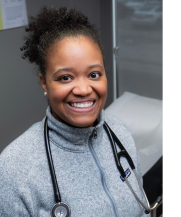
Magaly Brodeur is a family physician. She obtained her certificate from the College of Family Physicians of Canada in 2020 after graduating with a medical degree and completing her residency in family medicine at the University of Sherbrooke.
Magaly Brodeur is also a clinician-researcher and assistant professor in the Faculty of Medicine and Health Sciences at the University of Sherbrooke.
Her research focuses on health policy, particularly on improving public policy and health care for vulnerable populations, especially those suffering from behavioral addictions.
[00:00:12] Karine Morin: Welcome to the Big Thinking Podcast, where we tackle the most important and interesting issues of our time with leading researchers in the humanities and social sciences. My name is Karine Morin, I am the President and CEO of the Federation for the Humanities and Social Sciences, and I am pleased to host today's episode.
[00:00:32] Why is it essential to combine perspectives, expertise, and methodologies from different fields to better understand the complexity of public health challenges? What are the concrete benefits of researchers from different fields collaborating?
[00:00:52] I am pleased to welcome Magaly Brodeur, clinician and researcher, assistant professor in the Faculty of Medicine and Health Sciences at the University of Sherbrooke. Together, we will explore the importance of interdisciplinary approaches in supporting impactful research on complex issues. Hello, Magaly Brodeur.
[00:01:15] Magaly Brodeur: Hello.
[00:01:15] Karine Morin: Today, you're going to let me talk about one of my favorite topics: interdisciplinarity. I myself have worked in the field of bioethics, and from a career perspective, it has been an essential foundation. You are a physician, which often suggests a background in health sciences, biology, and biochemistry.
[00:01:37] But you also have a doctorate in applied human sciences, and having all of that—studies that touched on economics, international relations, history, public administration—is quite unusual. And I get the impression that you are a deeply curious person.
[00:01:53] What did you take away from your studies in the humanities and social sciences, from this training in fields so different from medicine?
[00:02:01] Magaly Brodeur: Actually, my background in humanities and social sciences has been extremely formative for me. It's something that has left a lasting impression on me and influences my research and work on a daily basis. But it's been an extremely rich experience, which is a bit atypical, as you say, for someone who is more in the field of health sciences.
[00:02:22] But I see it as a great strength that allows me to combine different areas of expertise in order to better answer the big questions I ask myself through my research.
[00:02:35] So it was a long journey that was filled with questions and led me to medicine. I started out studying business administration at HEC Montréal. At the time, I was really enjoying it, but I realized that I was very interested in economics.
[00:02:54] So, after talking to a professor, he told me that it would be better to specialize, to do a bachelor's degree in economics rather than business administration. So, at that point, I changed programs and universities to really focus on economics.
[00:03:09] So I did a bachelor's degree in economics with a minor in international relations. At the end of our studies, we had to do a final project. At the time, I was very interested in state-owned companies. There were a lot of questions—and we still have the question in Quebec—about whether to privatize the Quebec Liquor Corporation.
[00:03:33] So at that point, I did my final project on that, and it raised a lot of questions for me. I also learned a lot about health issues related to alcohol consumption, among other things, and I thought it would be really relevant to continue on to a master's degree.
[00:03:47] So at that point, I had lots of options open to me to continue studying economics, but there was one story that really interested me because I realized there were things I wanted to understand, such as why we had ended up creating state-owned companies, including the Quebec Liquor Corporation.
[00:04:05] But that's when something significant happened in my career, I would say, when my thesis advisor at the time, who is a historian and now at Concordia University, said to me, "But Magaly, could you maybe look at working on something other than alcohol, something other than the Société des alcools du Québec?"
[00:04:27] And then at that point, I said, "I'll go take a look, we'll see," and that's when I came across Loto-Québec. So, after quickly reviewing the literature, I realized that not much had been done on the history of gambling and games of chance in Canada or Quebec.
[00:04:43] And that's how my journey began. So, my master's thesis focused on everything that came before, the creation of Loto-Québec, and the entire period when games of chance and gambling were banned and prohibited in Canada, which led us on a journey right up to the creation of Loto-Québec.
[00:05:03] So, when I finished my master's degree, I had a lot of questions because when I talked about my thesis, people often asked me, "But what do you think about the current situation? The state is responsible for gambling, which creates health problems for people. What do we do with this dual role?
[00:05:20] And then, as part of my PhD, I became really interested in the whole issue of the state's social responsibility in relation to gambling, but also in everything surrounding the construction of the public problem that excessive gambling represents in the public space.
[00:05:38] So, I really enjoyed writing my thesis, which allowed me to combine various disciplines, including ethics, economics, and public health. And then at the end of the program, it was time to decide what I was going to do next. You always reach the end of your PhD, so what do you do? I knew I wanted to become a researcher, but I felt like something was missing, something involving direct contact with people.
[00:06:09] Karine Morin: That little something that was missing was another degree in medicine.
[00:06:14] Magaly Brodeur: Exactly. And that's when I decided to take the leap into medicine and then pursue a career as a clinical researcher. So it's been a long journey, but a lot of fun. And there's been a common thread that has allowed me to work on a topic that is close to my heart.
[00:06:33] Karine Morin: But I get the impression that there are still a lot of people who must think that this journey was full of unnecessary detours. How would you respond to that?
[00:06:43] Magaly Brodeur: Definitely, from the outside, people might wonder why I went through all that to end up here. I could have just studied medicine, for example, then gone on to get a master's or doctorate and pursued a career as a clinical researcher.
[00:06:58] But in fact, what I would say is that I couldn't produce the same work; it wouldn't have the same flavor. It really wouldn't be the same. My background in economics and history often comes into play.
[00:07:10] So I include behavioral economics, I always have this concern to fully understand the past, what led us to make decisions, and I also have a desire to adopt mixed methods, so on the one hand I have health sciences, which can sometimes be very quantitative, but also having the desire to understand, to take a lot of qualitative approaches, which influences my approach.
[00:07:37] And then I definitely couldn't do the same work without having gone through that whole process. And then it wouldn't bring the same perspective either. I can put on different glasses, depending on how I look at an issue, but I think that's what makes my contribution so rich, or what sets me apart.
[00:07:56] Karine Morin: Certainly.
[00:07:57] Magaly Brodeur: And I think it's important, and I couldn't really do the same thing in my eyes.
[00:08:06] Karine Morin: Important, useful, and valuable. So, as you just said, you are a clinical researcher, and your area of specialization is behavioral addictions. Can you explain what that entails?
[00:08:18] Magaly Brodeur: Yes, in fact, behavioral addictions are all addictions that are not substance-related. So they are really addictions that are associated with a behavior. Examples include the use of social media, the internet, video games, or gambling such as poker, online games, or slot machines.
[00:08:41] We are very familiar with substance addictions; they are something we hear about often. We think of addiction to alcohol, drugs, or tobacco, but behavioral addictions are something that is a little newer to the public imagination.
[00:08:57] And it was only in 2013 that behavioral addictions were introduced into our psychology "bible," the DSM. Before that, there was a slight reclassification, and it was included under impulse control disorders. And then finally, the literature showed that there were great similarities with substance addictions. So it's a field of study that is extremely promising and also very topical.
[00:09:22] We've seen this in recent years, especially during the pandemic, when we turned to the internet a lot. So it's essential to take an interest in this addiction and to be able to provide possible solutions to reduce the harm associated with it.
[00:09:38] Karine Morin: It's really fascinating to think that we can still "discover" or at least "define" new fields of research. So let's talk a little bit about the research you're doing. I would be curious if you could briefly describe how your research is conducted, what methods you use, as you just mentioned briefly.
[00:10:02] Describe a research project for us, the methodology you use to explore behavioral addictions.
[00:10:10] Magaly Brodeur: Yes. I can give you several examples, starting with one that focuses on the healthcare and social service trajectories of people with gambling problems in Quebec.
[00:10:22] This is a project we are doing with an organization called Organisme jeu aide et références, which is funded by the Department of Health and Social Services and provides referral services. People can contact them by phone or online chat, for example, if they are experiencing difficulties related to problem gambling.
[00:10:39] What interests us is what happens to gamblers once they have contacted the organization. What is their journey through the healthcare system? Because we know that it can sometimes be tortuous, involving knocking on many different doors. Sometimes you get turned away, sometimes you end up on waiting lists.
[00:10:55] Sometimes we change our minds, it's not always easy, sometimes we fall between two stools, we get forgotten. So, in the context of this project, we are actually conducting a qualitative study in two phases. In the first phase, we are conducting semi-structured interviews with people who have a gambling problem.
[00:11:14] We meet with them after they have been referred to the Jeu aide et références organization, and then we call them back a year later to find out what has happened in the last year. Were you referred? What has your journey been like? And what are your gambling habits like now? The goal is to track the players' progress and get their opinion on the care they received and any difficulties they may have experienced.
[00:11:39] So that's one aspect. The other aspect is discussion groups, this time with stakeholders. Stakeholders, specifically organizations or "arms," if you will, of the health and social services system where players have been referred by the Jeu Aide et Références organization.
[00:11:52] So our goal is really to get the perspective of both the stakeholders and the gamblers in order to propose courses of action to improve the health care and social services offered to people with problem gambling.
[00:12:06] We also have another project that looks at social norms surrounding smartphone use among young people aged 18 to 25. So our goal with this project is to understand a little bit about the social norms surrounding the use of these famous smartphones among young people.
[00:12:24] And in what context is it appropriate? In what context is it considered a bit of an addiction? What is less so? To really understand their perspective, we conduct interviews. Phase 1 consists of semi-structured interviews with young people.
[00:12:42] But our second phase will consist of co-construction workshops that we will conduct with the same young people who participated in our interviews. We will present to them what we have found, what the situation is, and then develop messages aimed at raising awareness among young people, and then preventing and reducing harm.
[00:12:58] To do this, we will use behavioral economics to create messages that will really influence young people to change their habits. We will do this in collaboration with them.
[00:13:09] So that's the kind of method we can use. If you want me to present other projects, because we have plenty, and we sometimes use quantitative methods too because we have so many, but those were two projects that I find interesting.
[00:13:25] Karine Morin: And I like them, and you really demonstrate the importance of qualitative research, even in health fields, even there, where we would be inclined to believe that everything is done at the statistical level, etc., etc.
[00:13:36] You just described a bit about co-production, and we often talk about patient-centered research. How do you view these participants who become very involved in a research project?
[00:13:52] How would you characterize their contributions? What does it add to have this non-expert perspective as part of a research collaboration? What do patients bring that experts don't already know or try to understand?
[00:14:12] Magaly Brodeur: In fact, for us, patient partners are extremely valuable. In all of our projects, we have citizen partners or patient partners who are involved.
[00:14:24] They often sit on a committee at [...] to help us decide on the direction of the project and to help us ensure that we are truly meeting the needs on the ground. They bring us their perspective as patients, as citizens, as people who have lived with the disease, or as people who have lived with a loved one who has the disease.
[00:14:47] So it's fundamental, it profoundly changes our work. We're so interested in it that we've done two research projects, but one research project in two phases that focused specifically on patient-partners in research.
[00:15:00] So we did one to understand their experience, but also to find out what it's like to collaborate with health researchers. Because it's not always easy for them either. It's not always easy for researchers either. So we really sought out the perspective of patient partners and also the perspective of researchers to get both sides.
[00:15:17] And to see what recommendations we could make to successfully improve collaboration. Because on paper, it looks good, it looks easy, but it's fraught with difficulties on both sides, both for the researcher in adapting their pace, and for the research in learning to popularize and explain the work and adapt as well.
[00:15:40] Sometimes, it can be people who, for example, in our case, in our work, have a gambling or addiction disorder, so they have periods of relapse where sometimes our partners are harder to reach or there are issues, and then we have to find common ground.
[00:15:56] We collaborate a lot with patient partners at the Sherbrooke University Hospital Center. And they are really valuable allies, so they have often initiated projects, made suggestions, and that is extremely rich, extremely valuable, it really allows us to develop things that will have a concerted impact in the community.
[00:16:23] Karine Morin: I really like it when we can give the public an experience or a certain perspective on what we do academically, on what research is. I want to come back to interdisciplinarity. You yourself are interdisciplinary, but I understand that you work with interdisciplinary teams.
[00:16:43] Describe a little bit what your interdisciplinary team discussions are like. What is it like to see these different perspectives intersect during collaborative activities or team meetings? What is an interdisciplinary conversation with your teams like?
[00:17:02] Magaly Brodeur: It's so nice to work with people who wear different hats, who see things through different lenses, because it allows us to create projects that are of higher quality, that are richer, that ensure we cover certain blind spots.
[00:17:18] So sometimes, when you have colleagues who come from different disciplines or professions, in the healthcare sector, for example, you might work with psychologists, nurses, other doctors who may be specialists such as psychiatrists, but also, on the other side, you might talk to sociologists or work with anthropologists.
[00:17:39] So it's about everyone sitting down together—epidemiologists—and then discussing how we can successfully answer the question we're asking ourselves. And then everyone brings ideas to the table, that's the difference, we always manage to find a point where we say, "Oh wow, if we can do that, it's going to be really extraordinary."
[00:17:56] We can draw on the expertise of our colleagues and collaborators, and then it snowballs, making the project extremely interesting. So that's always a priority when we develop our projects: to seek out a variety of expertise to ensure that we can approach the issue from a completely different perspective.
[00:18:22] The goal is to create teams where we are all a little different, where we each bring our own little piece of the puzzle to make the project happen. And then even within the team, both students and research professionals, doing research is also a valuable asset, and we even have people within our team with very, very different backgrounds, which are not necessarily traditional and are a little atypical, but which allow us to bring that kind of vision that will be different.
[00:18:55] And I think you always have to stay tuned in to all that, and that's what ultimately allows us to produce things that are original, sometimes a little different, and that will be able to reach people.
[00:19:12] So, by having diversity on the scientific side, we also try to have diversity at the community level. So yes, patients, citizens, but also community organizations or actors who are involved in the field. So, the more people we have around the table, the better we can ensure that we provide the best possible answer to the question we're asking ourselves.
[00:19:37] Karine Morin: So really, depth, a wide range of broad, innovative perspectives, which sometimes even seem a little unexpected. Do you happen to have an example of a conversation where you changed your mind about a clinical perspective because of this set of perspectives? At some point, you said to yourself, "Wow, I hadn't thought of that," and it came specifically from this interdisciplinary conversation.
[00:20:10] Magaly Brodeur: Often, it's the patients, the citizens, who bring a different perspective to our projects or who come to share their experiences and tell us, "If you ask questions like that, if you recruit people in that way, it may not necessarily be the best way to do things or to succeed."
[00:20:41] A good example I have, which is a recent example, was with the organization Jeu aide et références, where it was really our partners who helped us recruit participants for the study.
[00:20:55] And then there was the challenge that when people who gamble call, they are often in crisis, so it's a time of great psychological distress, and then it was a matter of finding, but how, someone who is not feeling well, who calls, who is experiencing difficulties, and then presenting them with a research project and saying: "Look, things aren't going well, but we'd like to suggest that you take part in a project. We think it would be good for you."
[00:21:22] But it was really the discussions and the participants' perspectives that allowed us to see how we could adapt the recruitment process to avoid, for example, any discomfort or difficulties.
[00:21:37] And then it was really them who helped us adapt our texts because there was chatting, and a little bit of the telephone script. And then, in the end, it was a success because about one in two people who were contacted by the participants agreed to take part in the study, and our initial plan was probably not the best plan.
[00:22:03] Karine Morin: They were well informed about their realities rather than our theoretical perceptions.
[00:22:09] Magaly Brodeur: That's right.
[00:22:10] Karine Morin: Before we move on, if you could address those listening to us today, whether they are studying humanities or health sciences, what would you say to them about the importance and benefits of adopting an interdisciplinary approach?
[00:22:28] Magaly Brodeur: What I would say is that it's extremely important. Especially in today's world, where in our jobs, both in academia and outside academia, we may be required to perform different tasks, which can make us more versatile, but also enable us to understand issues and problems from different points of view.
[00:22:52] So I see it as a strength. But what I would say above all to people, especially young people, for example, who are listening, or more or less young people too, who may sometimes be returning to school, as I was, the important thing is to listen a little, to listen to our hearts, to listen to our interests, to want to answer questions, to let ourselves be guided sometimes by life, our questions, and then not to try to fit into a mold.
[00:23:22] Because sometimes that's what we can try to do, but in certain situations, it can sometimes make us a little unhappy, because there are things that remain unresolved, that we haven't answered, and there's a kind of emptiness that we can feel. So just listen to each other, be curious, and I think that's what ultimately allows us to really enjoy what we do, and that's fundamental.
[00:23:44] Karine Morin: I don't want us to completely ignore public policy on healthcare. You work with vulnerable populations, those who suffer from behavioral addiction.
[00:23:55] In your opinion, what are the most significant challenges you have observed in your research work? What still concerns you greatly about these populations?
[00:24:03] Magaly Brodeur: There are several things that are extremely concerning for people with behavioral addictions. If I had to start, I would say the two most important ones, but there are so many.
[00:24:14] The first thing is access to healthcare and social services, ensuring that there is a path that is simple and uncomplicated for people with behavioral addictions. This is still something that is not well known.
[00:24:29] So often, people might knock on different doors, and then we didn't know how to deal with the issue. So we've seen this sometimes, people saying, "I asked for help, but they neglected the issue of, for example, gambling and internet addiction. They only treated my anxiety disorder and my depression without addressing this problem."
[00:24:54] There are also people, one of my doctoral students who is working on the experience of psychologists with people who have a gambling problem, many of whom mention that the psychologist said right away, "I don't know anything about problem gambling, so I can't really help you."
[00:25:12] So it's sometimes difficult to find the right resources. And then what's important is that there can be a bit of a conductor, as we see in other pathologies, for example, cases of cancer or in other cases, for example, with chronic diseases, where there can be pivot nurses, actors who will play a central role in really guiding the person through the health and social services network.
[00:25:35] Because you have to understand that with many behavioral addictions, such as gambling disorder, for example, problem gambling almost always occurs in conjunction with another mental health disorder. That's true for 96% of people, and 64% of them have at least three concurrent disorders.
[00:25:54] So that means that these are complex cases that require multidisciplinary care, which is precisely what will ensure better care for our patients, prevent and reduce the impact on their health, and sometimes even avoid tragic situations such as suicide, because we know that many suicides are associated with behavioral addictions.
[00:26:14] And then, in addition to this second factor, we have seen a significant rise in the popularity of online gambling in recent years. This also raises many issues because it transcends borders and is easily accessible. In Quebec, for example, these platforms are illegal; only the Loto-Québec platform is legal.
[00:26:36] So most people don't know that playing on certain platforms is illegal, comes with its own set of risks, and also involves practices that are not necessarily best practices. So that's also something we need to look at and think about as a society.
[00:27:06] Karine Morin: Finally, if you were offered unlimited research funding, what would be the big question you would like to ask?
[00:27:13] Magaly Brodeur: Oh, that's an excellent question. If my team were here, they would all be laughing because we have a list of research projects we would like to do, and we keep adding ideas, so we have at least 200 years' worth of research projects.
[00:27:34] But right now, and we certainly have serious questions about what is happening among young people, there has been a significant increase in interest in sports betting, all online gaming platforms, and also video games that include various features that can be somewhat similar to games of chance and gambling, such as loot boxes found in certain video games.
[00:28:02] So, I think there is something to be done to encourage young people, but we must be careful because we need to focus on these populations in order to prevent the consequences that could arise later on in their lives. We need to know more. Things have changed in recent years. We are no longer in the era where the only contact with games of chance and gambling was the lottery ticket that grandma bought to put in the birthday card.
[00:28:31] Nowadays, we have access via our smartphones, we have access via our computers, it's not the same as it used to be when you could only go to the casino, you couldn't go in if you were under 18.
[00:28:46] So that has changed the context a bit. And it's important to dwell on that. But unlimited funds would allow us to do incredible projects with lots of collaborators. And then, in fact, what I would say to you is another project, a project that I think would be extremely important, which is really to work on treatments associated with behavioral addictions.
[00:29:16] In the case of gambling disorder, we have a lot of evidence, especially for non-pharmacological treatments such as therapy and psychology. As for pharmacology, we have some data, but it is not yet conclusive.
[00:29:34] And then there are often studies that have been carried out and everything, but it would take greater interest from researchers, as well as greater funding, to be able to look into all of this and try to see which treatment could help, because we know that there is a lot of comorbidity, and we also know that certain drugs can cause behavioral addiction, which is a side effect.
[00:29:59] So really to understand all this a little better and then to be able to provide solutions for people who gamble. But given that this is an issue that affects a small percentage of the population, sometimes there is less interest.
[00:30:12] But the impact on people is so significant that I think this is a population that we really need to focus on and try to find better solutions for, in order to ensure a lasting recovery.
[00:30:25] Karine Morin: With everything you've presented today, I can see a very exciting and long research journey ahead of you in your career. Magaly Brodeur, thank you very much for sharing your interdisciplinary curiosity, and thank you also for your work in public health.
[00:30:42] Magaly Brodeur: Thank you for the wonderful invitation. It is truly much appreciated.
[00:30:50] Karine Morin: Thank you for listening to the Voir Grand podcast, and thank you to our guest Magaly Brodeur. I would also like to thank our friends and partners at the Social Sciences and Humanities Research Council and the production company CitedMedia, without whom this podcast would not be possible.
[00:31:08] You can find all episodes on your favorite podcast platform, and I sincerely invite you to let us know what you thought of this episode by connecting with us on social media. See you next time.

Spotify

Apple Podcast

Amazon Music

Podcast Addict

iHeartRadio
