

Introduction | About the guest | Transcript | Follow us
Introduction
As global conflicts intensify, the federal government is being forced to make hard choices about security, defense spending, and values. These choices raise a pressing question: can the country maintain its commitment to Women, Peace, and Security, also known as WPS, while adapting to a rapidly changing global defense landscape?
In this episode of the Big Thinking Podcast, Karine Morin is joined by Stéfanie Von Hltaky, Canada Research Chair in Gender, Security, and the Armed Forces to unpack how WPS commitments collide, coexist, or transform within our national defense framework.
About the guest
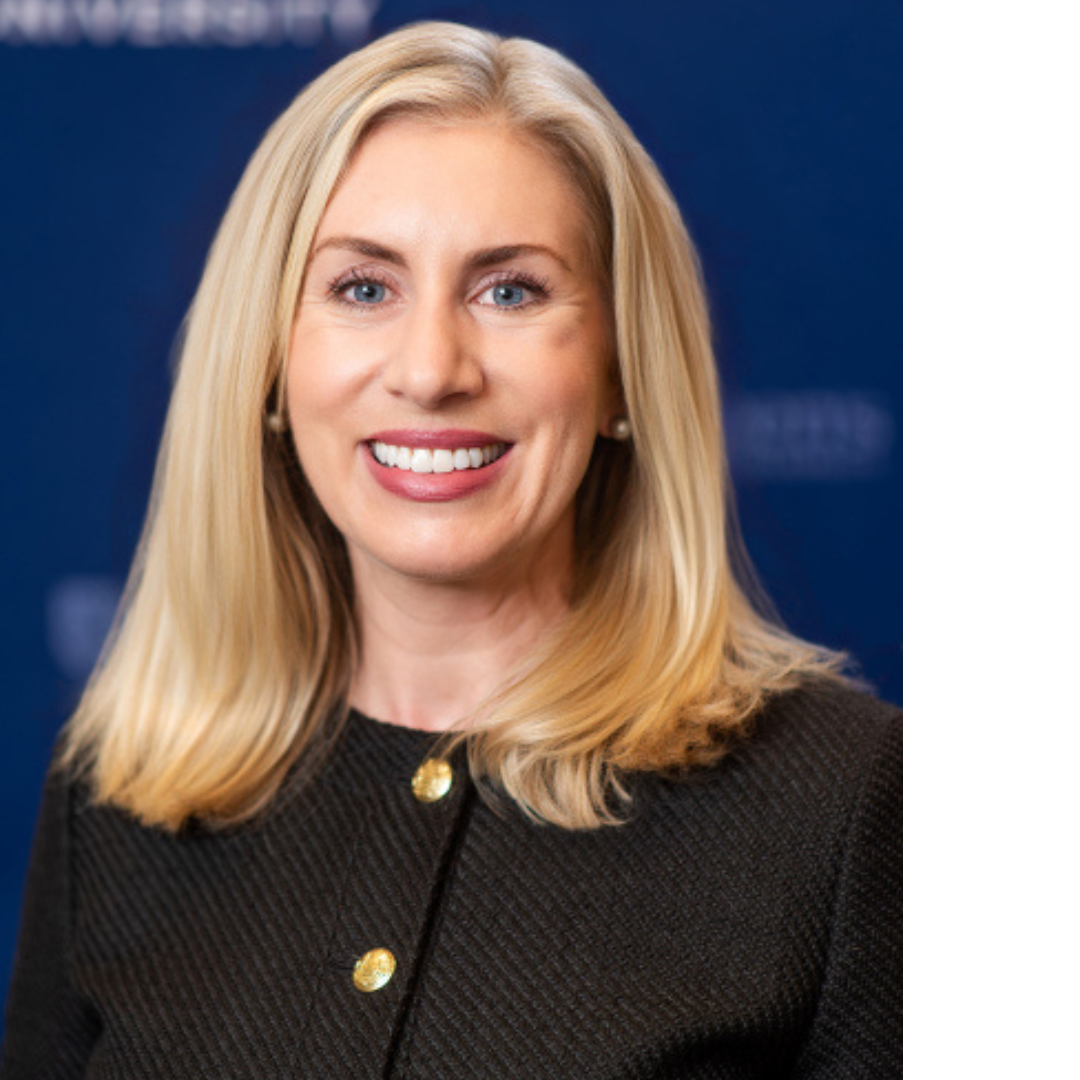 Stéfanie von Hlatky is the Canada Research Chair in Gender, Security and the Armed Forces, Pierre Elliot Trudeau Foundation Fellow and former Director of the Centre for International and Defence Policy at Queen’s University. She is a Full Professor in the Department of Political Studies and Associate Dean (Research) in the Faculty of Arts and Science. She received her Ph.D. in Political Science from Université de Montréal in 2010, where she was also Executive Director for the Centre for International Peace and Security Studies. She’s held positions at Georgetown University, the Woodrow Wilson International Center for Scholars, Dartmouth College, ETH Zurich and was a Fulbright Visiting Research Chair at the University of Southern California’s Centre for Public Diplomacy.
Stéfanie von Hlatky is the founder of Women in International Security-Canada, and the Honorary Colonel of the Princess of Wales' Own Regiment. She has received grants and awards from NATO, the Canadian Department of National Defence, the Social Sciences and Humanities Research Council of Canada, Public Safety, the Government of Ontario’s Ministry of Research and Innovation, and Fulbright Canada.
[00:00:07] Karine Morin: Welcome to the Big Thinking Podcast, where we explore today's biggest topics with Canada's leading voices.
[00:00:14] As global conflicts intensify, the federal government is being forced to make hard choices about security, defense spending and values. These choices raise a pressing question: Can the country maintain its commitment to women, peace, and security, also known as WPS, while adapting to a rapidly changing global defense landscape?
[00:00:38] I’m Karine Morin, and I am the President and CEO of the Federation for the Humanities and Social Science. Today I'm joined by Stéfanie Von Hlatky, Canada Research Chair in gender security and the armed forces to unpack how WPS commitments collide, coexist, or transform within our National Defense framework.
[00:00:59] Karine Morin: Welcome Stéfanie Von Hlatky, it seems our conversation today is extremely timely as we are recording this episode at a time when there are many stories in the media about sovereignty, defense, military interventions, and specifically concerns about Greenland.
[00:01:15] And you are the Canada Research Chair in gender security and the armed forces, and in 2022, you published a book titled ‘Deploying Feminism: The role of gender in NATO military operations’. Can we begin by learning a little bit about what got you motivated to do this type of research? How did these research interests come about?
[00:01:39] Stéfanie von Hlatky: Of course, and thank you so much for having me. There's never a dull moment these days for NATO researchers, and so I'm really happy to have this opportunity to discuss what's going on with the Alliance these days and perhaps more specifically how it continues to implement the women, peace, and security agenda.
[00:02:00] And so my research began really with, with asking the question of why NATO got into this business of championing women, peace, and security, because it might seem like an odd fit at first for a military alliance. So it's in the context of my broader research on NATO and military cooperation that I got curious about this journey on women peace and security.
[00:02:27] I'll also add perhaps that I'm calling from Kingston 'cause I work at Queens University and there's a big military community here. And so, through various interactions with the armed forces, both locally and nationally, I also got very interested in how the armed forces interpret broader principles, and then implement them through various processes like operational planning and when they deploy on missions.
[00:03:00] Karine Morin: I can't imagine though, that as a civilian doing research regarding the military, were they at all easy? Can you say a little bit about your research approach, something about your methodology, how you come across the relevant information that you need to describe to us and, and analyze what is going on behind those, what seem to be typically closed doors. So share a little bit how you go about doing that research and finding that information.
[00:03:29] Stéfanie von Hlatky: Of course, and I have these discussions with my students and colleagues all the time. The military experience or the-day-to-day of the Canadian Armed Forces can seem quite opaque, but there's a surprising amount of publicly available documents, whether they're policies or military directives.
[00:03:49] So we have a team here at Queens, I work very closely, uh, with some of my colleagues in the department, Dr. Yolande Bouka, and Dr. Stéphanie Martel, and we work on women, peace, and security through a comparative lens, so NATO, the African Union, and [...]
[00:04:07] Our main area of focus is the analysis of policy documents, but complemented by interviews and participant observation. What's really important is to learn the lingo. So, when you're developing an interview questionnaire, for example, it's very important to be aware that your questions need to be accessible for non-academics, and that you have a baseline awareness of military occupations, training requirements, rank dynamics, and so on, so that you can have really a good and productive interaction with the people you will interview.
[00:04:50] I'll also say that I've gained a lot from traveling to do research in the context of operational headquarters and also at the theater level, and missions and operations, because it's really important to see how people do their day-to-day work.
[00:05:10] And so for the military, that's not just the strategic planning that goes on in major headquarters, that's also, you know, the contingent that are deployed and what their mission tasks look like and what kind of conversations they're having in the day-to-day when they have to implement their higher level military guidance. So I would say from field work to learning how to interview military actors, there's a lot of prep work that goes in the background.
[00:05:39] Karine Morin: I want to just come back to that field work perhaps. Again, I can imagine that on the one hand you have highly trained military, and we've certainly heard before of journalists, and now you're indicating that researchers might find themselves in those spaces at certain times.
[00:05:54] Can you say a word about what that looks like, what kind of preparation it takes, how you demonstrate that you'd be able to be in that space alongside them without getting in the way or causing them greater risk or anything of that would get in the way of their operations. Could you speak a little bit about that preparation and what it's like to be there alongside our military troops?
[00:06:14] Stéfanie von Hlatky: Yes, absolutely. And you don't want to be a distraction or a variable yourself, so that's kind of planning is quite important, especially in the context of NATO missions and operations because there's many chains of commands involved. So we're used to thinking through our own university requirements for research.
[00:06:35] So that's a generic ethics process, and then certainly the risks have to be explained, but there are usually additional requirements when doing research in the military. So the Canadian Armed Forces has its own ethics process to allow you to interview members of the Canadian military and then just to gain access to bases or theater level sites.
[00:07:00] Consider that it might be a NATO operation under Canadian command but on a US base, and so, in this case, you need to secure the approval of all of those authorities and they might have specific requirements on what you need to enter that site. So, for instance, certain field trips for me have involved a pre-deployment training that's tailored to civilians, but that allow you to know some of the basics so that you're not a liability or distraction, and that you know your way around a little bit. So that was very handy, I got to do some of that training right here in Kingston because there's a Canadian forces base prior to some of these trips.
[00:07:45] Karine Morin: And soon I want to come to your book because I think it's very relevant. But you've mentioned already this notion of women, peace, and security - WPS - and I want to make sure that we understand a little bit of where it comes from.
[00:07:55] For instance, I saw reference to it in one of the UN Security Council resolutions, so can you first, set the context a little bit about women, peace, and security as a commitment or, or as an agenda?
[00:08:07] Stéfanie von Hlatky: Yes. So we just celebrated the 25th anniversary of this agenda, so it's a good time to remind people of international policy agenda, but also Canada's own commitments and how that connects to its NATO activities.
[00:08:23] So, in the year 2000, the UN Security Council adopted resolution 1325, which was really meant to increase the visibility and participation of women in all that the UN does from conflict prevention to conflict resolution, sometimes that looked like initiatives to increase the participation of women in military operations.
[00:08:46] There's other policy emphases that look at the development of policy to make sure that gender is taken into account, understanding that conflict has differentiated impact on women and boys and girls. And so for Canada, it's something that the Canadian government had a lot of experience with through the prism of its gender-based analysis plus tool for policy.
[00:09:13] So it was already very compatible with the way that Canada was thinking through policy priorities, the allocation of resources for the military, I think it took a little bit longer to truly integrate that as a planning priority, but certainly GBA Plus (author’s note: GBA Plus stands for Gender-Based Analysis Plus) applies to the military as well.
[00:09:31] And they developed new positions to fulfill their commitments through the positions of gender advisors and gender focal points. And that’s true for the Canadian Armed Forces, and it's also true for NATO, so on the NATO front, the women, peace, and security agenda was adapted to NATO priorities in 2007.
[00:09:55] And there have been updates to NATO's policy on women, peace, and security regularly. The last one being in 2024 as NATO was celebrating its 75th anniversary. And so here it is, yes, to increase the participation of women in all of NATO's activities, but also to think through gendered implications of operational planning, missions, operations, and activities.
[00:10:24] And that's especially important at the tactical level when NATO might be engaging directly with host communities, but also relevant now with the bigger focus on deterrence and collective defense, because we're seeing acute grade power competition and a shift towards whole of society defense approaches where that cultural, gender, societal lens is critical to collective defense.
[00:10:50] Karine Morin: Now, I think you've already been touching on what is part of your book ‘Deploying feminism: The role of gender in NATO military operations’, do you want to give us a bit of an outline of some research questions that you asked, and what were the findings? What were you able to establish by taking on that whole topic?
[00:11:10] Stéfanie von Hlatky: Yeah, so, this was first published in 2022, and then more recently I worked on an anniversary edition of ‘Deploying Feminism’, and that came out right in October of 2025. The objective was to line up the publication of the second edition of 'Deploying Feminism’ with the 25th anniversary of 1325.
[00:11:35] And I didn't anticipate, of course, at the time when I was doing a lot of these updates in 2023 and 2024, and then beginning to feel it more and more the beginning of 2025 what a shift or a major challenge women, peace, and security would face. And we've seen that, especially acutely in the United States where women, peace, and security has been directly attacked by the Secretary of Defense or Secretary of War, as he likes to call himself,
[00:12:02] But also, elsewhere where the policy legacy of women, peace, and security has been more difficult to sustain, so, along with updating the operational realities of my case studies, which featured NATO operations, missions, and activities in the Baltics and Kosovo, Iraq, to see how military actors implement women, peace, and security on the ground, you also have shifting dynamics and increasing political contestation in the background.
[00:12:32] So I have to say from the moment the book was first published in 2022, to now, the political side of the equation has evolved quite a bit. But that being said, and I think, that speaks to one of the key findings of the book, there is a lot of resilience to how NATO approaches its policy commitments and then translates them into action because it takes quite a bit to achieve the consensus of 32 member states.
[00:13:02] So once something has been agreed upon, once there are strong foundations and policy anchors, then the whole machine continues its day-to-day work. So I would say despite what we've been hearing in the political arena and Trump's provocations towards NATO on all fronts, this is not just women, peace, and security, it goes pretty much at the heart of all of NATO's core tenants, in the day-to-day, whether at the NATO headquarters or across various missions, operations, and activities.
[00:13:35] We're seeing that the machine is carrying on with its work, and I would say that military to military ties, in particular, have this quality of withstanding and enduring through collaboration, a lot of the political contestation that may occur at higher levels.
[00:13:54] And then because NATO represents allies, it's very important for like-minded member states to continue to champion women, peace insecurity, along with other NATO priorities that are really important strategic imperatives and core values.
[00:14:10] So sometimes that means you do the work in smaller coalitions as sometimes we call it minilateralism, as opposed to reopening a really big debate about a policy, you focus on additional bespoke initiatives that you can continue to move forward with member states that are as committed as Canada to women, peace, and security. So we're seeing that now on a host of various issues from climate security, to women, peace, and security and diplomacy and military activities in that realm carry on.
[00:14:45] Karine Morin: I think everybody has sensed that things are no longer the way they were just recently, but I still want to look back at that sort of period of 2022, the book comes out. At the time, it seems like your assessment was perhaps confident that such a doctrine could get implemented, but I'd still be curious to hear a little bit about what type of tension there may be between military interpretation, or operationalization of women, peace, and security and what it might mean outside of military alliance.
[00:15:15] So what sort of tension is there in operationalizing that concept into a military alliance like NATO?
[00:15:23] Stéfanie von Hlatky: It goes back to why I was originally interested in this topic is that tension of why military alliances would be in the business of advancing gender equality in international security, and the political intent behind championing this policy for NATO is the recognition that when there's higher levels of gender equality, you have more sustainable security outcomes.
[00:15:52] So it makes the Alliance better at its core mission of ensuring transatlantic security and so, then you have to ask yourself, is that the interpretation that military actors are also getting from the women peace and security agenda?
[00:16:11] And to a certain extent, certainly, when it comes to increasing the participation of women, I think there's a fair alignment in the interpretation. I think it gets a bit fuzzier in terms of how gender equality might feature into operational planning and the execution of missions.
[00:16:31] So, one of the central arguments of the book is that there is some norm distortion there as a military actor has become predominant in the interpretation of women, peace, and security, which they are at the tactical level, fewer civilians, and a lot more military actors, and they become very focused on whether or not a certain policy, or a military directive might be directly relevant for the execution of specific mission tasks.
[00:17:00] And so what you have, and what the book demonstrates through the various case studies, is that there is a narrowing of the focus. You know, military actors will ask questions like, how does the women, peace, and security agenda make the military more lethal, for instance, which from a feminist standpoint is almost nonsensical.
[00:17:21] So there has been, I think, an evolution in the understanding of women peace and security, and certainly there have been also some operational lessons. So, in Afghanistan, for instance, commanders on the ground quickly realized that you needed to interact with the whole of society if you're going to win hearts and minds and truly understand the operating environment.
[00:17:42] And those lessons carried forward also in the way that KFOR, NATO's operation and Kosovo was being done. And in Iraq too, for the NATO mission in Iraq, which is primarily about training Iraqi forces and advising the Iraqi Ministry of Defense.
[00:18:02] So there's been an evolution, and the book shows that as well, for instance, KFOR is a very long-standing mission that predates the women, peace, and security agenda. So what it looked like in 1999 when NATO first got involved to what it might look like today has changed and women, peace, and security has been also changing within that context.
[00:18:25] I think the biggest adjustment for NATO, and I speak to that in the chapter on NATO's Enhanced Forward presence, which relates to the eight brigades on the Eastern flank where NATO is sending, prepositioning troops to do a show of collective defense, and there are a lot of trainings and exercises going on there to really strengthen deterrence.
[00:18:47] And that's first started in response to Russia's annexation of Crimea and was NATO doubled down after 2022, after the full-scale invasion of Ukraine. And so maybe that was the biggest jump for women, peace, and security at NATO is recognizing that it had been very active and out of area operations where there were a lot of population centric interactions to that more strategic aspect of deterrence and what that looks like in the day-to-day and upholding collective defense.
[00:19:21] Karine Morin: So I'm curious if your intentions or aspirations with this research were to really have an impact on policy across our Canadian military and or defense policy and whether the time that you've spent on these issues seem to be, other than a recent setback, had been going in a promising direction, whether you’re having the impact that you would've perhaps aspired to have or that you were motivated to have.
[00:19:48] Stéfanie von Hlatky: I think the Department of National Defense and the Canadian Armed Forces have shown a lot of interest in my work and I can see very tangibly how it's had an impact in conversations on military training.
[00:20:00] Canada has been seen as a leader in this space and has been championing women, peace, and security at NATO. So there's always a recognition that research and evidence-based is really important to sustain these policy conversations, whether they're happening in Canada or at NATO.
[00:20:18] I also was very fortunate to participate, and still participate, in a NATO's Civil Society Advisory Panel on Women, Peace, and Securitiy, so providing some advice to NATO’s special representative on women, peace, and security. So being able to participate on that panel, to me, demonstrates a direct channel for impact and policy engagement in Canada.
[00:20:42] I'll also say that with the creation of new positions, both at home and deployed operations, gender advisors, and gender focal points there's also a desire to engage with academics on how best to provide evidence and data to inform the gender-based analysis that feeds into operational planning and the execution of mission.
[00:21:06] So I would say on multiple fronts, I've been pleasantly surprised by the high level of engagement by defense partners with my work. So we always think when we're publishing a book that it will be primarily for an academic audience, but with this project, I really wanted to be able to reach the world of policy and military practice, and so that's why I chose a series that prioritizes this at Oxford University Press, and that's the Bridging the Gap series.
[00:21:36] So the intention there is really maybe to tone down the academic jargon, really writing the book with policy recommendations or in my case, practical recommendations for the military in mind.
[00:21:48] Karine Morin: I wonder if you feel like that contribution that you've provided was also perhaps a little bit bolstered by the fact that in Canada we've had some women in key roles, so currently General Jennie Carignan is serving as Chief of Defense Staff, and before that we had as Minister of Defense, Anita Anand. Had you seen such women in those leadership roles tend to women, peace, and security in a clear, demonstrable way?
[00:22:15] Stéfanie von Hlatky: So that's a tricky question, cause I would say it's not always, it's not uniformly the case, and we've seen that in a NATO context with 32 member states, I don't want to make a blanket statement, but certainly where it makes a big difference, and certainly in Canada, the individuals that you've mentioned have been able to champion women, peace, and security in very concrete ways.
[00:22:37] But I'll say for the country or for NATO, they will point to those examples when they have them, especially the rare examples you mentioned General Jennie Carignan, she was also the first woman commander in Iraq for the NATO operations and missions there.
[00:22:53] NATO was able to point to that, and that was important because women, peace, and security was really embedded in the NATO mission in Iraq and still is. And so when you're interacting with the Iraqi Ministry of Defense, or its security forces, and you were saying as an alliance, it's really important that you increase the participation of women in your activities, and in your defense policy, and in your military academies, then you better show up with a high representation of women in your own team, or you risk a real credibility or a legitimacy gap.
[00:23:31] So I do think that the individual commitment of women has been absolutely essential to advance women, peace and security, but it's also there's broader significance there for countries or organizations that have adopted a national plan on women, peace, and security, or who contribute to regional action plans so we can think of NATO's own policy on women peace and security.
[00:23:55] When you don't deliver and you continue to champion those principles and those policy objectives, then it undermines the entire agenda, so I do think representation at the highest-level matters and that the individual commitment of those leaders matters.
[00:24:11] There's a broader legitimacy effect for the entire organization as well. I will also say that being realistic about the proportion of women, and NATO armed forces, and their representation at the highest levels, it's also very important that men demonstrate gender aware leadership.
[00:24:31] And so, you see that embedded in the NATO policy, you see that being included in training, and NATO does offer seminars for leaders in terms of how to embody gender-aware and gender-responsive leadership.
[00:24:46] NATO would like to see that as a responsibility that everyone shares, but going back to your question, it is very important to have women in leadership roles and Canada has been able to shine in that respect by having a Chief of defense staff who is a woman, General Jennie Carignan.
[00:25:04] Karine Morin: So, let's hope that we'll continue along that path. So we're absolutely saying that 2025 and early 2026, we see that our focus is on these matters of security and defense. If you could leave us with one key idea about the future of our security, what would you want us to keep in mind at this point in time?
[00:25:25] Stéfanie von Hlatky: So I think it's very tempting in this moment to just focus on areas where there is a common denominator approach and that terrain seems to narrow in terms of what might be palatable to champion from an alliance perspective, and I can't help but think back to the last NATO Summit in the Hague where when you look at the NATO declaration, it boiled down to a handful of points, whereas in the past, when NATO puts out a declaration after a Summit, it has a very long list of points, and strategic priorities, and areas of common interest.
[00:26:07] So I think we're shying away now from a bold, and diverse set of priorities in order, quite frankly not to provoke the United States. And here my advice would be to not obey in advance, because compromising on NATO priorities, and core principles leads to compromising in other realms as well.
[00:26:30] And so at a time where NATO is facing really dire challenges from more acute, great power competition, in different regions, that alliance cohesion is very important, but an alliance cohesion that's strongly anchored in a number of principles and strategic imperatives that have remained relatively stable over time.
[00:26:53] So to see, you know, the number of field of priorities narrow to only a handful in order not to upset the United States, I don't think is a winning strategy. So I'd say to not obey in advance and continue to prioritize alliance cohesion, but in a way that respects both the principles, and advances the strategic imperatives because they're not mutually exclusive.
[00:27:19] Karine Morin: Well, thank you so much for sharing with us all of the insights you've gained into what is, as we've said, capturing a lot of media attention without us understanding much of what is behind this alliance, and some of its policies and what seemed to have been progressing.
[00:27:35] And as you say, we, I think, should have hoped that it will continue to be an alliance that we can rely on to maintain peace. Thank you very much Stéfanie von Hltaky for this conversation.
[00:27:46] Stéfanie von Hlatky: Thank you.
[00:27:51] Karine Morin: I thank our audience for listening to this episode of The Big Thinking Podcast. Also a very sincere thank you to my guest, Stéfanie Von Hlatky, Canada Research Chair in gender security and the Armed forces.
[00:28:04] I also want to thank our friends and partners at the Social Sciences and Humanities Research Council who support helps make this podcast possible. Finally, thank you to Cited Media for their support in producing the Big Thinking Podcast.
[00:28:20] A new episode will be coming out soon, so be sure to follow us on your favorite podcast platform. À la prochaine!

Spotify

Apple Podcast

Amazon Music

Podcast Addict

iHeartRadio
