

Introduction | About the guest | Daniel Conway's Research at Congress | Transcript | Follow us
Introduction
Welcome to Congress in Conversation, a special series presented by the Big Thinking Podcast and The Conversation Canada, where we convene key voices at Congress 2025 to share their research and experiences within the context of our theme Reframing togetherness.
In this episode, our host Eleni Vlahiotis, writer and editor specializing in media, business, labour and Canadian politics at The Conversation Canada, is joined by Dr. Daniel Conway and together, they take a closer look at the rise of Pride branding in the global north, the pressures and contradictions multinational companies face in different cultural and political landscapes, and what the current moment reveals about the limits and possibilities of corporate allyship.
About the guest
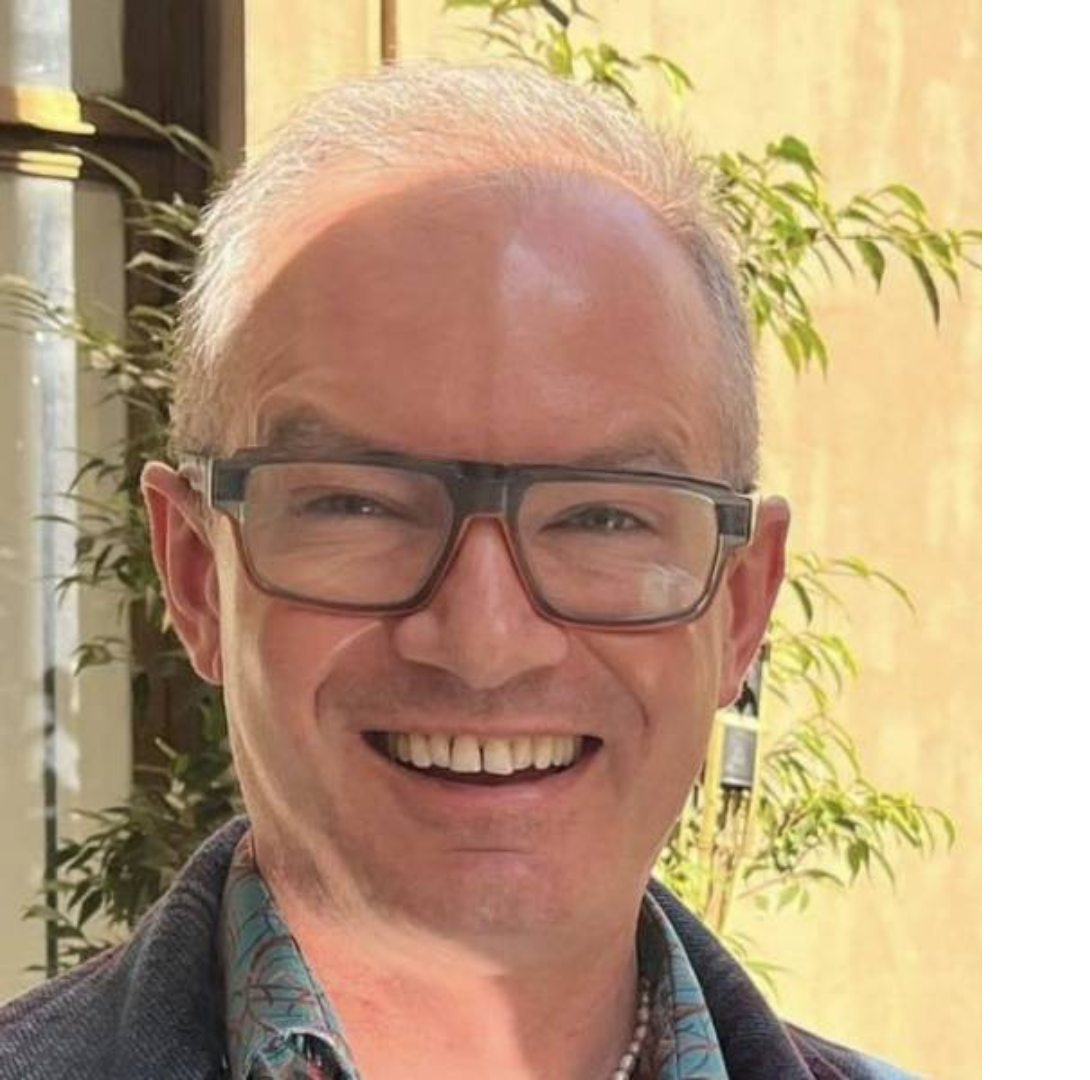
Daniel Conway’s work is situated at the intersection of Feminist International Relations, political sociology and queer theory, focusing on the politics of LGBTQ+ rights and activism. He held a 2018-19 Leverhulme Trust Research Fellowship studying 'The Global Politics of Pride: LGBTQ+ Activism, Assimilation and Resistance', and conducted comparative fieldwork on LGBTQ+ Pride events across Africa, Asia and North America. His forthcoming book is titled 'The Queer Politics of Pride: Global LGBTQ+ Activism and Homocapitalism' (Bloomsbury Academic).
His earlier work on white South African conscientious objectors and white anti-apartheid activists explored how militarisation was gendered and how contesting this process was destabilising for the state, but also subject to significant pressures to appear respectable and to conform with the heteronormative logics of the state.
He joined the University of Westminster in September 2015 after having worked as Lecturer at the Open University and Loughborough University. He was an Economic and Social Research Council (ESRC) Post-Doctoral Fellow and Visiting Lecturer at the University of Bristol between 2006 and 2007. He also held Visiting Research Fellowships at Goldsmiths, University of London, University College London, the University of Bristol and the University of Cape Town.
He has a BA (Hons) in History and Politics from the University of Exeter and an MSc with Commendation in International Relations from the University of Bristol. He was awarded a PhD in Politics by Rhodes University, South Africa.
He is a Research Associate at the Wits Centre for Diversity Studies, University of the Witwatersrand.
Dr. Daniel Conway's research at Congress:
Dr. Conway’s paper is titled ‘Revisiting the Queer Critique of the Commercialization of Pride amid Backlash Politics’
Synopsis
The rainbow branding of transnational and many national corporations in the Global North for Pride Month has become commonplace. Yet the backlash, or pushback, against LGBTQ+ rights across the world has tested corporate willingness to be visibly associated with LGBTQ+ causes and communities. This has led to many LGBTQ+ activists and academics to debate if the critique of corporate involvement in Pride needs to be revisited. Some have wondered if we will miss rainbow branding if it is gone, and whether visible corporate support for Pride, and by association LGBTQ+ communities and rights, is now important that such rights are now being questioned and rolled back, even in Europe and North America. This paper will explore these important questions and will argue that corporate “support” for Pride and LGBTQ+ communities and rights has always been contingent and inconsistent across time and place.
[00:00:08] Eleni Vlahiotis: Welcome to Congress in Conversation, a special podcast series brought to you by the Big Thinking Podcast and The Conversation Canada. In this series, we bring you key scholars from Congress 2025 to share their research within the context of our theme Reframing togetherness. My name is Eleni Vlahiotis, and I am the business and economy editor at The Conversation Canada, and I will be your host for today’s episode of Congress in Conversation.
[00:00:29] In this episode, I am joined by Dr. Daniel Conway and together, we take a closer look at the rise of Pride branding in the global north, the pressures and contradictions multinational companies face in different cultural and political landscapes, and what the current moment reveals about the limits and possibilities of corporate allyship.
[00:00:52] Eleni Vlahiotis: Daniel, let's start our conversation today with your research journey. What first sparked your interest in the relationship between Pride events and corporate sponsorship?
[00:01:01] Daniel Conway: Well, it was really when I was living in Brighton in the UK and Brighton has one of the largest Pride parades in Europe, actually, as well as the UK. And it was 2015 and I was watching the Brighton Pride Parade, and I saw this float which had on the side “#ProudtobeaBrightonemployer” and it was a financial services company.
[00:01:24] And on the float were presumably the employees and they were wearing T-shirts, and one had "#Proudtobeascouser”, which is colloquial for someone from Liverpool in the UK. Another person had "#ProudtobeScottish” and the third person who had a ginger beard had "#Proudtobeging”.
[00:01:42] And I really sort of reflected on this and I thought, well, as the meaning of Pride becomes so broad and so anodyne, and so sort of commercialized in this way that it's no longer about LGBT advocacy. And then obviously around that time and before, Pride has become increasingly controversial and criticized for becoming too commercialized and being too much a platform for big business. So it was really that, that got me started thinking.
[00:02:10] Eleni Vlahiotis: Mm-hmm. And speaking of Pride, of course, we are now seeing a number of corporate sponsors pulling out of Pride this year, most notably here in Toronto, Google, and Home Depot, along with these broader rollbacks of diversity and inclusion initiatives. Why do you think so many corporations are withdrawing from Pride right now?
[00:02:25] Daniel Conway: Well, as I started researching the project and I was awarded, um, Leverhulme Trust Fellowship to go and look at Pride events outside of Europe and mainly North America. So I went to South Africa, to East Asia, to Cuba, also world Pride in New York and also Mumbai Pride.
[00:02:42] What really struck me is that companies have always been, very quick to pull back from territories where they feel that their profits could be jeopardized if they seem to be involved in LGBT advocacy or Pride. So what we're seeing now is particularly noticeable in North America, but that reluctance has always been there, it's just we've not noticed it in, in the global north so much.
[00:03:09] Eleni Vlahiotis: Oh, that's interesting. I want to take a little bit of a step back here and like broaden the camera angle. Can you give us a brief history of how corporations became involved in Pride events in the first place, like what corporations wanted by accessing this?
[00:03:22] Daniel Conway: So there's a number of different ways to sort of answer that. One way is that the first Pride parade was obviously, in 1970, it was to commemorate the Stonewall uprising or riots in 1969, and there weren't corporations or businesses involved in that first Pride parade in 1970 in New York, it went from the Stonewall Inn to Central Park.
[00:03:49] But as early as 1972, you start seeing companies becoming involved in Pride. So, they reversed the route of New York's to go to start at Central Park and to end at the Stonewall Inn. And in Greenwich Village there were bars and street stalls, and this decision caused controversy at that point. So as early as 1972, you start having people debating, ‘should we have companies involved?’
[00:04:15] Then as the seventies go on, and you see changes in employment laws in many global north countries. So for example, in the UK you have, employment laws protecting the rights of women and ethnic minorities, you start to see companies increasingly looking to appealing to diverse groups.
[00:04:36] So you have, around, I think 1981, Absolut Vodka claim to be the first company to brand their products in rainbow colors with the Absolut Pride bottle. And you also see companies like IBM who claim to have one of the earliest equality and diversity policies, although that also has a very controversial beginning as I found out in my research.
[00:05:03] Eleni Vlahiotis: Can you tell us about that controversial beginning?
[00:05:07] Daniel Conway: Yes. So, I was very sort of interested in IBM because they are very prominent, or at least they were very prominent in the sort of equality and diversity space. And at World Pride, for example, in 2019 in New York, IBM really made a big play for how they were the first company to really frame policies that protect their LGBT employees.
[00:05:29] And, I came across some research that really explored how it is true that IBM were one of the first companies to have equality and diversity policies and ethical trading standards. But the reason for this is that IBM and also Kodak, were operating in apartheid era of South Africa; were responsible for the creation of South Africa security apparatus, and in particular the operation of apartheid.
[00:06:02] So for example, IBM and Kodak provided the hardware and software for the production of past books, which underpins the apartheid system. And they approached the Nixon administration, and they say, well, we are getting pressure and protest from activist groups who are criticizing our involvement in South Africa, and we would like to frame a voluntary code of business in order to stave off compulsory sanctions and boycotts.
[00:06:29] So the reason why they came up with one of the first, if you like, social responsibility policies, was to try and prevent activist protests against their operations of South Africa. Now, the research that's been done said these codes were full of contradictions, they probably did nothing to help end apartheid, in fact, if anything, they split the international anti-apartheid movement.
[00:06:52] But the codes were really taken up by business schools and the business studies literature as really good ideas for corporations to adopt, to frame voluntary standards of behavior, ethical codes of conduct, and sort of non-racist, non-sexist, and then later, non-homophobic ways of working.
[00:07:12] So it really took me aback that sort of IBM that claims to be at the forefront of LGBT advocacy and really parades in Pride parades that the, the sort of history of those policies are in their, their desire to make a profit in the apartheid South Africa.
[00:07:28] Eleni Vlahiotis: That's very interesting. And of course, like none of this corporate alignment with Pride in LGBTQ+ rights more broadly has come without consequences. Who or what kinds of advocacy have become marginalized in this process?
[00:07:42] Daniel Conway: I think there’s a very sort of complex answer to that. I think that what underpins corporate involvement in Pride is the notion that there is a business case to be made for LGBT advocacy, LGBT people or consumers; we're employees, and essentially we're productive within capitalism. So we should be supported because we're productive.
[00:08:06] And I think that's the first problem, because of course some people can't be productive in those capitalist sort of ways, maybe their global location means that they're in the global south, they don't have access to education, they have a disability.
[00:08:22] And as human beings, I think we all have inherent rights, and our rights shouldn't be premised on us. Being wealthy consumers and productive employees. So, I think that's the first problem. And it means that people who aren't deemed as productive are then marginalized.
[00:08:40] Eleni Vlahiotis: That's very interesting and it's something I see a lot as a business editor. I have edited many stories where, LGBTQ+ employees are framed as being a positive thing for a company because they are productive, they'll drive up your profit margins.
[00:08:53] Daniel Conway: Yeah, and I mean, certainly in my research for my forthcoming book, which is called The Queer Politics of Pride, I look a lot at Pride in South Africa and South Africa is of course the most unequal country in the world so you have a quite a large number of people either in poverty or with significantly less resources than the most wealthy people in South Africa, so to frame LGBT rights in terms of who's productive is is very terrible in that context.
[00:09:21] Eleni Vlahiotis: And speaking of South Africa, your research has looked at rival Pride events in South Africa that reflect historical divisions along racial class and spatial lines. Can you talk about these rival events and what they represent?
[00:09:34] Daniel Conway: So many things in South Africa still get defined and have tensions around race, class, and space because of the sort of legacies of apartheid. And South Africa actually had the first Pride parade in Africa in 1990. But progressively as the nineties go on, the center of Johannesburg is considered as becoming too dangerous.
[00:09:57] And the Pride parade starts moving north in the city, from the city center to the former [...] suburbs, which are of course wealthier. And then when Johannesburg Pride moves to the suburb of Rosebank, which is a middle class, formerly whites only suburb, there were protests in 2012 undertaken by Black lesbians and not gender non-conforming people who led down in front of the root and really wanted to protest that you are having this celebratory Pride parade in a wealthy area in a country where there are high levels of violence, high levels of gender-based violence and high levels of homophobic violence, particularly targeted at Black lesbians.
[00:10:42] And there's a very horrible term in South Africa called ‘corrective rapes', which are targeted at Black lesbians, particularly in townships and rural areas. So, they wanted to protest the fact that Johannesburg Pride wasn't raising this and was taking place in a wealthy area. The then organizer of Johannesburg Pride - and there's a video of this on YouTube - and she sat in her gold Mercedes shouting out the window: “get off my route, get off my route”. And she said: “if they don't get off my route, walk over them”. And this is what happened so, incredible tensions.
[00:11:17] And then you have Soweto Pride emerging, which takes place in the form of Black townships and really seeks to raise the issue of gender-based and homophobic violence. And also talks about things about the impact of poverty and inequality on people's ability to really live the truth of the South African Constitution, which protects, on paper anyway, LGBT rights.
[00:11:42] But today, Johannesburg Pride takes place in Sandton City, which is a luxury shopping mall in the wealthiest square mile of Africa. So, Johannesburg Pride today is very much in that kind of global north celebratory, well sponsored, celebrity attended Pride.
[00:11:59] And Soweto Pride takes place in Soweto and raises the sort of, I would argue, the real issues that affect the majority of LGBT people in South Africa. So, in a sense, you have rival Prides in one city, and there's a similar story to tell about Cape Town, unfortunately as well.
[00:12:17] Eleni Vlahiotis: I was going to ask if, if these rival Prides have happened elsewhere as well, and it sounds like they have.
[00:12:23] Daniel Conway: Yeah. So, I also looked at Pride in Hong Kong and although there isn't the sort of open contestation of different events, you have the kind of underlying social, economic, and national differences in Hong Kong playing out in the different Pride events.
[00:12:42] So you have, at least, you did have, lots of corporate diversity events, lots of corporate groups participating in Pride parades, and also quite less politically controversial events. So things like Pink Dot. Which is an alternative to Pride, which takes place in Singapore and Hong Kong.
[00:13:00] But at Hong Kong Pride, you have local, mostly working-class Cantonese activists, organizing Hong Kong Pride, and you may have corporate employees attending the parade, but there is a reluctance from those corporations to actually sponsor the Pride Parade because they view it as too political.
[00:13:22] And Hong Kong Pride historically has been, associated with the pro-democracy movement, so business has gotten anxious about to being too closely associated with those Pride events. We also have Hong Kong Migrants Pride, which is a Pride event, taking place, organized by migrant domestic workers who are mostly from the Philippines, Indonesia, and Thailand, and they are in Hong Kong on different visas to professional migrants, so they never have the right to claim permanent residence.
[00:13:53] They can be sacked for being LGBT, they must live in their employer's home, and if they're sacked, they must be out of Hong Kong within two weeks. So you have different Pride events which really speak to different worlds and different communities, and they're not always aware of each other.
[00:14:10] Eleni Vlahiotis: So, these are examples then of how like corporate involvement in Pride, has not gone uncontested by activists.
[00:14:16] Daniel Conway: Yes.
[00:14:17] Eleni Vlahiotis: What are the main criticisms of this corporate involvement in Pride that you've seen from these queer activist groups?
[00:14:24] Daniel Conway: I think it's a number of different things. So, like I said, in South Africa, Queer activists really say that corporations don't want to engage with the realities of the majority of LGBT life in South Africa they don't want to engage with the reality of violence and murder, essentially. So that if corporations are heavily involved in a Pride event, that Pride event is going to sidestep those issues and just be celebratory.
[00:14:56] I think in other contexts: so in Hong Kong, for example, corporations as well, and this is something I sort of really talk about in the forthcoming book, corporate involvement in Pride and also corporate framings of equality and diversity are very premised on this very positive, liberal progressive, understanding how things change.
[00:15:23] So they're always framed in very positive, happy terms and there's an academic called Sara Ahmed who writes about the happy, smiling face of diversity. So she even talks about the corporate website will have diverse people or smiling,
[00:15:39] That's no coincidence, and she says, you know, of course social protest and demands for riots also involves anger, but there's no place for anger within like corporate framings of diversity and equality. It's all about progressive positive change, that's just going to happen. And of course, Pride events can really aid that. So if you have a corporate Pride, you are almost certainly going to have this very positive celebratory feeling that things are just going to get better.
[00:16:15] And in all contexts there will be groups who, that's just not true. And so, in the context I've talked about in South Africa, in Hong Kong, in Mumbai, which was another one of my field sites, there were queer activists in Mumbai saying, this Pride event is not talking about the Hijra community, which is intersex or trans.
[00:16:39] They're not talking about cast, which is an enormous impact, on social division in India. And they're also rewarding a sort of new elite, a very wealthy local activists and business elites who are feeling very positive about LGBT rights in India because they're also an elite and they're wealthy.
[00:17:02] And so I think that's sort of different context where you have different local flavors of division. But there's a common thread if you like, which is that corporate involvement in Pride inevitably leads to the celebratory positive sanguine view that things will just get better. And queer activists in multiple contexts say things don't get better just because we say, or we just feel they'll get better. We need to protest in order to make things change.
[00:17:37] Eleni Vlahiotis: Yes, and I'm thinking about the research that you've done in Shanghai. Can you talk about what you learned on Pride events there?
[00:17:44] Daniel Conway: Shanghai is a very interesting case study because Shanghai Pride had been running for 10 years. When I attended it in 2019 in Shanghai, as with the rest of mainland China, it's illegal to have a public parade or protest. So, there was no Pride parade, but they did do a Pride run and a Pride bike ride.
[00:18:09] And they very much viewed business and western business as an effective and relatively safe way in order to hold Pride events, and they viewed that kind of language of business, which I've been critical of previously in this conversation. But they really viewed it as a sort of pragmatic way to really address the Chinese state and also Chinese society to say, well, we are consumers, we are your colleagues in work, it just makes business sense, and economic sense to give LGBT people more rights, be more tolerant, acknowledge that we exist.
[00:18:48] And they felt that this would sidestep a sort of government crackdown which would happen, they felt if they used a human rights discourse. So they had been very careful around this but what was really striking, and I remember asking the organizer of Shanghai Pride in 2019, do you have any worries given the sort of increasingly authoritarian sort of drift of the Chinese government. Do you worry about the future of Shanghai Pride? And she said no, she said she felt that their message made sense to Chinese people and the Chinese government and that they would be fine.
[00:19:28] But really over the following two years, they were not fine, they were subject to increasing police harassment, one of the organizing committee who was a Malaysian national just lost his residence permit for no reason at all. And in 2021, they took the decision to indefinitely suspend Shanghai Pride. And what I really took from that is that that cautious business sense approach didn't work in that context.
[00:19:58] That was really striking for me. And the other thing behind that is that across all the research, I can't think of an example really where business has really spoken out and challenged authority when LGBT communities have been threatened. So, Shanghai Pride has worked with different Western companies, but those companies will not have been outspoken in China in support of Shanghai Pride when police repression increased.
[00:20:31] Eleni Vlahiotis: Point of clarification, is there a difference between corporate support of Pride specifically and then also corporate support of LGBTQ+ rights and initiatives more broadly?
[00:20:44] Daniel Conway: So that's a good question, and in a way, there, there was a recent, I think it was from 2023, it was a bearing foundation and give out report into corporate support for LGBT advocacy and that concluded a number of things. The first thing is that it's actually quite difficult to access accurate statistics on the amount of money corporations, provide for LGBT advocacy.
[00:21:12] So one answer is it's quite difficult to give a definitive answer, but it found that they could find very little evidence of corporations or corporate philanthropy organizations of prioritizing LGBT rights. And they estimated, for example, that in the UK, and of course the UK is home to quite a few transnational corporations.
[00:21:36] But in the UK, it found for every a hundred pounds spent on corporate social responsibility, only six pence of that 100 pounds was spent on an identifiable LGBT cause. And they found that in the UK and US the majority of corporate expenditure on LGBT causes or advocacy or anything, was spent within the country and on staff groups.
[00:22:08] So most likely holding internal corporate events or of course participating in a Pride parade and producing like the t-shirts and the logos. So that's a rather long answer of sort of saying that when we look at the specifics and if we look at the amount of money that's spent, we find that corporations spend very little money on LGBT rights and the, the majority of that will be on literally being in the Pride parade.
[00:22:34] And then when I looked at specific companies, so I interviewed people from Absolut Vodka for example, and I asked them specifically, do you ever raise any LGBT rights issues in the territories you operate in?
[00:22:50] And they were very clear that they don't. They view that as inappropriate interference in the domestic politics of a territory in which they operate. So, on the one hand, they have the official Pride bottle, you know, rainbow branded, but on the other, if it comes to advocating in a political way for LGBT people, they won't do it. And I think that would be replicated pretty much across most corporations, if not all of them.
[00:23:17] Eleni Vlahiotis: So it's incredibly superficial.
[00:23:19] Daniel Conway: Yes. Yeah.
[00:23:20] Eleni Vlahiotis: So then if corporate support of LGBTQ+ rights has never been that significant to begin with, how does that recontextualize how we understand this corporate pullback from Pride.
[00:23:32] Daniel Conway: It is a really good question, and I suppose that it's insignificant in material terms and it's insignificant in material terms, but it's been very significant in terms of the visuals of Pride, if you like. So if you think of, we think of mainstream Pride parades in Canada, America, Britain, corporate support is very, very visible and Pride organizers will argue that they need money, particularly these large-scale Prides, they'll say, we need money and we need it from business.
[00:24:04] Daniel Conway: But I think there's a number of different things to say about that, one thing is that the visual pullback of corporations from Pride, I think could be a positive thing, it will make more space for grassroots activists, it will make more space for just more people to participate. And it may even lead to organizers reconfiguring how they think about a Pride parade.
[00:24:29] So rather than having all these permits and it being all regimented, maybe they will be a bit more open to people participating. And certainly from my research, other Pride parades in the world are more open. So I went to Taipei Pride, it's a Pride, parade of 140,000 people and anyone could join the route, it wasn't regimented.
[00:24:51] I think the second change is that, there is an argument that when Pride organizers say, “oh, it's so expensive to organize our event, we need corporate support.” There's an argument that says they have taken decisions that have made it really expensive, so maybe they could take different decisions which makes, could make it cheaper.
[00:25:13] And the third thing is: I would be interested to see whether corporations have ever made big donations for the operation of Pride events or whether Pride events in places like London and Sydney and Toronto. I suspect they're probably getting money off the local government, they're getting money off of attendees, some of which will be from corporations of course.
[00:25:37] But, I still think different decisions could be made. So, and I suspect there will be companies, most likely local companies, that may still be willing to pay the money to be part of the parade or pay the money to maybe put on a drink stand. So I think my personal view and certainly the view based on the research I've done is that we should not be sorry that corporations have pulled back from Pride.
[00:26:06] Eleni Vlahiotis: So there seems to be this, like this silver lining that perhaps organizers could pull on here this idea of creating a de commercialized Pride, but I think that perhaps for organizers in the global North, it might seem daunting to move towards the idea of a de-commercialized Pride.
[00:26:23] Are there examples from elsewhere in the world that organizers could look to when imagining what visibility and support could look like without relying on corporate sponsorship?
[00:26:32] Daniel Conway: Yes, I think certainly. So Taipei Pride is a very large-scale event. I mean 140,000 people, on average. In previous years, it's taken over three routes in the city. There are some corporates involved, so they've had the sort of networking, dating hookup platform Grinder had a float but a small float at the beginning.
[00:26:55] Uber, for example, provided free transport to Taipei Pride, but the organizers of Taipei Pride, who are a voluntary committee, they were very clear that corporations could only be a certain part of the route and really couldn't dictate anything else. So they hold a very large event without significant corporate support.
[00:27:19] I also think, you know, large-scale Prides can even look within their own countries. So one thing I didn't mention at the beginning is another influence on inspiring this research was, I'd taken a driving holiday in June, from Vancouver to San Francisco and I kept turning up at Pride Parades across the route, and you really saw the differences in scale, in organization, from Vancouver to places like Olympia in Washington State, Portland, Eugene in Oregon, and then San Francisco.
[00:27:52] And, I would personally say that the smaller Pride events that were more community based were much more enjoyable and much more meaningful. And even though perhaps San Francisco Pride would turn around and say, we need corporates, I would say to them I don't think you do. Or at least you will still have some, and the ones that are still participating have taken a meaningful decision to participate
[00:28:19] Eleni Vlahiotis: Now, you've already talked quite a bit about your research, on the global South and the global East because your research on Pride is quite expansive. Have you noticed any differences in how Pride events relate to capital in these different contexts?
[00:28:33] Daniel Conway: I think that certainly in the Global East, even after what happened with Shanghai Pride, there's still a tendency to talk about LGBT rights and LGBT tolerance in LGBT communities in that more commercialized way, in that sort of business sense way. Whether that's going to change as the transnational corporations pull away from that remains to be seen.
[00:29:04] I've talked about South Africa and certainly there's an umbrella group called The Other Foundation in South Africa, and last year they released, a report called “Size Matters” and they were seeking to quantify the value of LGBT communities in South Africa to the economy.
[00:29:23] And I just still see even this sort of Pride month, if you like, I can see on LinkedIn, I can see on my emails, I can still see people talking about the business sense. And currently in London there's a group of events under the sort of [...] Work Pride, so, you still have people talking about that kind of business sense even though companies are pulling back, I personally think it's going to be increasingly difficult to do that.
[00:29:53] And I think that will be a very interesting thing to see how that changes in context like India, China, Hong Kong, Singapore, as you see transnational companies responding to the Trump government, and pulling back their EDI and Pride commitments.
[00:30:11] So I think at the moment you're still seeing the same dynamics broadly playing out, but I would say across context, you see queer activists have consistently said: “If we want social justice, if we want LGBT rights, we have to think about all the ways in which LGBT people are made precarious”, and that includes poverty, inequality, and you can't just be thinking about the professional employees of large companies and their lives and their rights alone.
[00:30:46] Eleni Vlahiotis: And so, there's this ongoing tension that we've been seeing then between those who believe Pride should remain a protest and those want, who want to embrace just the celebratory and commercial nature of it. How present is this tension in activists themselves between activists groups?
[00:31:01] Daniel Conway: I think that's an interesting question and I guess it's a complex one, and again, if I talk about South Africa, so I talked earlier about, Soweto Pride and how it really emerged to highlights the issues of precarity, violence that is faced by Black communities and particularly Black lesbians in South African townships.
[00:31:24] And, they've also been very clearly anti-corporate and have a critique of capitalism on how it feeds through to racial and economic and other inequalities in South Africa, but they struggle for funding. You know, inevitably, you know, and within context particularly global south context, the state are either non-existent or unreliable funders.
[00:31:50] So they adopt a pragmatic viewpoint. And when I've sort of spoken to them, and they have said they are willing to consider corporate sponsorship but only if their intentions are genuine. But like I was saying, you really see what underpins the desire for corporations to be evolved in supporting Pride when grassroots and queer activists seek to try and get corporate sponsorship, because corporations are inevitably reluctant to provide that sponsorship.
[00:32:27] Because they're more reluctant to be involved in something which is bringing up tricky, uncomfortable issues around violence, precarity, poverty. So you know, I don't think there's necessarily a divide between say, grassroots groups who get some corporate support. Because I think there's a sort of, there's an understanding of the challenging circumstances, but there's definitely a divide between grassroots activists and what I would call the sort of elite LGBT activists that just hold very large scale, very well-funded and with corporations playing quite a sort of high profile role. So there's definitely a divide between them.
[00:33:13] Eleni Vlahiotis: And so then if we're looking in a future direction, how do you see the future of Pride Events evolving amid this pullback of corporate sponsors and also this political backlash against LGBTQ+ rights more broadly?
[00:33:27] Daniel Conway: It is very interesting. I think that we probably will see Pride events becoming, not necessarily more small scale, but they will possibly change due to the different ways in which they're being funded. So I suspect there will be fewer VIP events, fewer sort of free drinks, tents at large sort of Pride events.
[00:33:52] They might become more democratic, a lot will depend on how the state steps in. So for example, London Pride I know gets support from the mayor of London. It will have things like the police, local government, the NHS [editor’s note: National Health Service] involved. I suspect the same will play out in different Canadian contexts.
[00:34:12] But in the United States, I think you'll really see a different dynamic playing out. And you may find what were once very large-scale Pride events, seeing they have limited state funding and also limited to no corporate involvement, they will have to really think about how they run their event.
[00:34:31] But what they will also find maybe, is that they will have to connect to the queer grassroots and protest groups, which have always been active. Maybe, I think it could maybe lead to a really creative sort of outcome. And one thing I came across in the research, which is when I went to world Pride in New York in 2019, World Pride was obviously huge. It had a budget of $12 million.
[00:34:55] The parade went on for nine hours, went on into the early hours of the morning. But Reclaim Pride, which had been organized really in the previous 12 months in community centers across New York with different groups from ACT UP to Black Lives Matter, all sorts of groups involved. They really didn't know how many people would turn up for their Pride march, and actually about 48,000 people turned up for their march, and I was part of that march as well as sort of going to see World Pride Parade.
[00:35:26] That was a large-scale event, and they shut I think it was Sixth Avenue and they had a [...] so they had 48,000 people led down on Sixth Avenue to sort of symbolize the deaths from AIDS and also homophobic and transphobic violence, so an incredibly powerful event. And it ended in, in Central Park where there were speeches and various sort of things going on. So I actually think a return to that kind of event or a combination of that with the more organized Pride events might happen, and I think that would be good.
[00:36:03] Eleni Vlahiotis: I did want to ask about, this might be too soon to ask because this, you know, very visible backlash, with corporations pulling back from Pride has just happened. But I wanted to ask how activists are re-imagining Pride in response to this backlash.
[00:36:18] Daniel Conway: I think that in a way the Reclaim Pride movement has been seeking to sort of reimagine Pride even before what's happened with President Trump happened. So Reclaim Pride was very clear that they wanted to reclaim Pride from what it has become. So they wanted to reclaim Pride from corporate involvement, from police involvement, from just being about a celebration and from it just being about, well, it will get better because things just get better.
[00:36:47] So they wanted to reclaim that political purpose and the notion of protest and protest about all kinds of social injustice. So Reclaim Pride in 2019 included things around immigration and asylum, included things about gentrification and the cost of rent in New York. It included all sorts of messages, but it was about LGBT people saying, well, this affects us too, and it affects us in particularly exacting ways.
[00:37:14] So clearly that's the case with asylum and immigration. So, I think that's how people want to reimagine Pride and to sort of not be so avoidant of controversy, and avoidant of offense. And one thing I haven't discussed is sort of the, the early sort of Pride movements are really about reclaiming, you know, reclaiming LGBT identity, but also sexuality and sex from sort of disgust and shame and celebrating it.
[00:37:48] And I think more recent sort of Pride parades have been about being family-friendly, non-offensive, conforming. And I think they could be different ways of thinking about how Pride can go back to talking about issues which may be mainstream society finds difficult to sort of be confronted with or think about, but which are still important and a part of LGBTQ+ life.
[00:38:15] Eleni Vlahiotis: So this reimagining has already been happening and we will continue to see it unfold. I have a question about reimagining Pride, is this a global movement?
[00:38:29] Daniel Conway: In one way, you can say yes in a superficial term. So Pride events take place across the world, and new Pride events have been taking place consistently over the last 20 years and they can look superficially the same, so they all, pretty much, will use a rainbow, almost all of them have a march or a parade. Although I talked about Shanghai, where that couldn't happen in the same way.
[00:38:55] But when you actually dig down, and if you think about this in academic terms, the academic literature on transnational social movements really thinks about transnational movements spreading across the world, relatively uniformly about them communicating ideas and ways of protesting and being across the territories in which they operate.
[00:39:18] And I think when you look at Pride, it's actually quite difficult to think about Pride in those same simple terms. And I actually found across, you know, I went to Pride events obviously in East Asia, South Asia, South Africa, Cuba, New York, there would be very little communication sometimes between different Pride events even within the same city or same country, let alone across different territories.
[00:39:46] So you would find very different understandings of what Pride is, how it should be. And people also drawing from local histories of protests. So in Hong Kong, like I said, Hong Kong Pride really drew from the pro-democracy movement, and there was a crossover between activists in Taiwan, it drew from the youth protest movement and also something called the Sunflower Movement, which is a group of younger Taiwanese people has occupied the parliament and protested against the then conservative government.
[00:40:16] In South Africa, it draws from the liberation struggle, and the women's movement and, and LGBT movement within that. So you see very local understandings of how Pride should be. So, I would sort of critique this very set notion that Pride's a global movement and it's just spread everywhere and it looks the same everywhere and people have the same understanding of what it's doing.
[00:40:40] Eleni Vlahiotis: Something that you talk about in your research and that has come up of course in this conversation is this idea that response to corporate involvement in Pride should not be one of gratitude.
[00:40:50] Daniel Conway: Yes.
[00:40:51] Eleni Vlahiotis: Why is that?
[00:40:50] Daniel Conway: Certainly, I think that we have to think about what is the motivation of this involvement? And by that, I want to make an important qualification there, I never want to be critical of individuals, and individual corporate employees who are involved in Pride events or involved in LGBT advocacy because I do understand, and I respect that as LGBT people, we do, you know, if we work in an institution, we want to be involved in Pride, and that's meaningful to us, and we want to raise LGBT issues within the place we work. We have every right to do that, so I don't have any criticism on an individual level.
[00:41:33] What I am critical of and I'm saying we shouldn't be grateful for is that institutional involvement because within capitalism, capitalism is based on profit, we are consumers and employees, or we're unemployed and we're precarious, and therefore capitalism and from my perspective, always has a level of exploitation.
[00:42:00] And business chooses to be involved in Pride because it sees an opportunity, it sees an opportunity for fighting new consumer markets, for presenting business as a more friendly, tolerant, just set of institutions and also where I really am critical is when business presents itself as an activist for social justice and an activist for socially just political change.
[00:42:30] So, I think we shouldn't be grateful for those reasons because we have to think what's motivating this business involvement.
[00:42:35] Eleni Vlahiotis: Daniel, thank you so much for speaking with me today. This has been a fascinating and very enlightening conversation.
[00:42:42] Daniel Conway: Thank you very much.
[00:42:57] Eleni Vlahiotis: Thank you for listening to Congress in Conversation and to my guest Daniel Conway. The Big Thinking Podcast would like to thank our friends and partners at the Social Sciences and Humanities Research Council, whose support helps make this podcast possible, to CitedMedia for their support in producing the podcast, and to The Conversation Canada for their partnership.
[00:43:13] Let us know what you thought of this episode and feel free to share your feedback with us on social media. Follow us for more episodes wherever you listen to your podcasts and stay tuned for new episodes coming soon!

Spotify

Apple Podcast

Amazon Music

Podcast Addict

iHeartRadio
