

Introduction | About the guest | Transcript | Follow us
Introduction
Across healthcare, education, and advocacy, many assumptions about disability are being challenged and, in some cases, dismantled. Among them are questions related to intimate relationships and sexuality, where stigma can get in the way of safety and rights.
On this month’s episode of the Big Thinking Podcast, Karine Morin is joined by Dr. Alan Martino, Assistant Professor in the Community Rehabilitation and Disability Studies Program at the University of Calgary.
About the guest
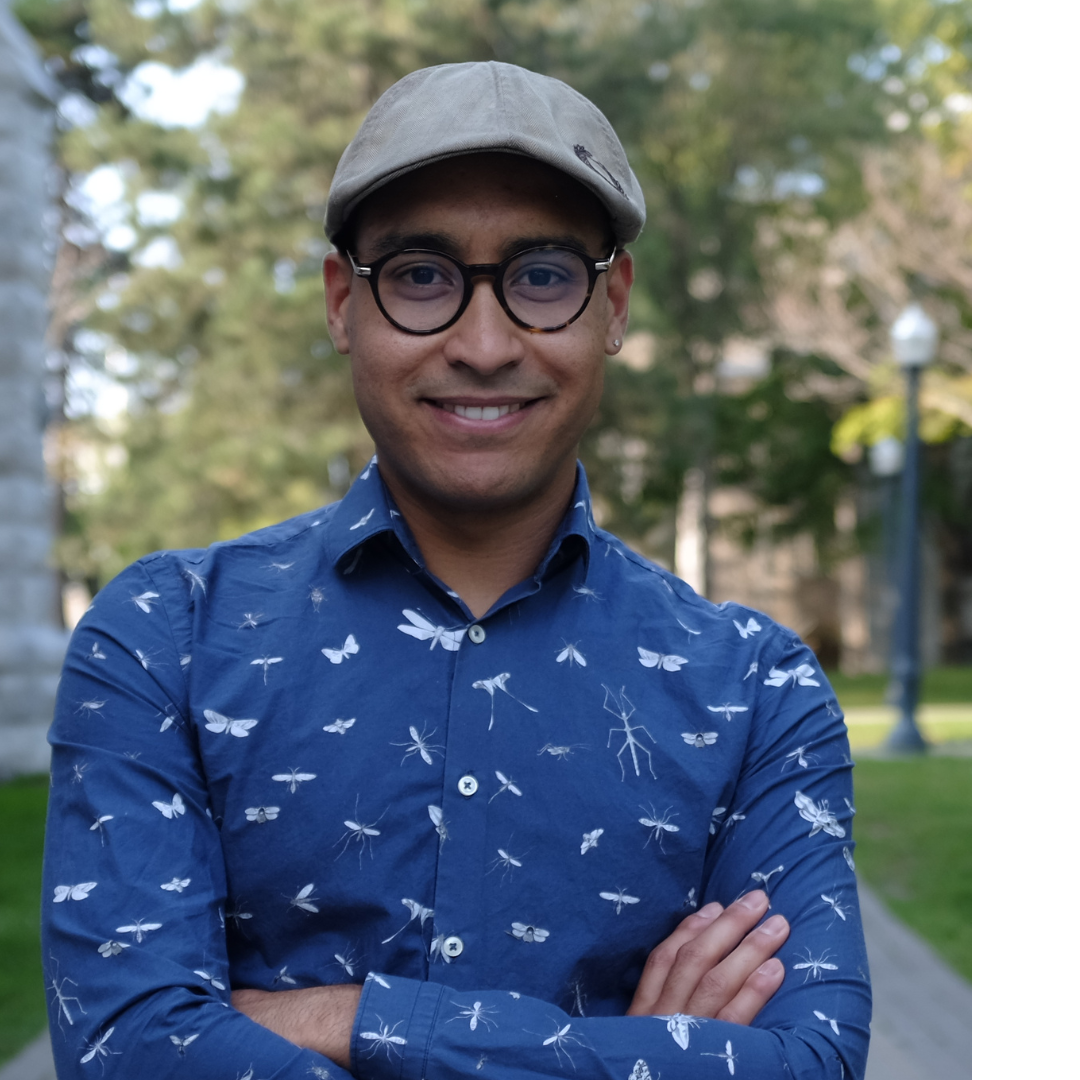 Dr. Alan Martino (he/him) is an Assistant Professor in the Community Rehabilitation and Disability Studies program in the Department of Community Health Sciences at the University of Calgary.
His main research interests include critical disability studies, gender and sexualities, feminist and critical disability studies theories, and qualitative and community-based research, particularly participatory and inclusive methodologies.
His work has been published in multiple journals, including Disability Studies Quarterly, Sexuality and Disability, and Sexualities, as well as in edited volumes on disability and sexualities studies.
He leads the Disability & Sexuality Lab at the University of Calgary. In recognition of his contributions, he was awarded the 2024 Early Investigator Award by the Canadian Sociological Association and the 2024 Early Career Award by the Sociology of Sexualities Section of the American Sociological Association.
[00:00:07] Karine Morin: Across healthcare, education and advocacy, many long held assumptions about disability are being challenged and in some cases, actively dismantled. Among them are questions related to intimate relationships and sexuality where stigma can get in the way of safety and rights.
[00:00:26] I'm Karine Morin, and I'm the president and CEO of the Federation for the Humanities and Social Sciences. Today, I am joined by Dr. Alan Martino, assistant professor in the Community Rehabilitation and Disability Studies program at the University of Calgary, where he runs the disability and sexuality lab to tackle silences and promote social change by co-creating research and resources with communities.
[00:01:18] Karine Morin: Dr. Martino, thank you for joining me in this Big Thinking Podcast. I'd start by noting that you are a sociologist and that you're affiliated with the School of Medicine. So, could I first ask you to give us a bit of a landscape about the field of disability studies and how you are situated in that space?
[00:01:39] Alan Martino: Yeah, first of all, thank you so much for having me. I really appreciate this invitation. Yeah, disability Studies is this really exciting field that is expanding so fast and we get more and more students interested in learning about it, and I think the coolest thing about the field is that we're penetrating other areas and other fields.
[00:01:57] So for me, being a social scientist in a school of medicine opens up so many possibilities for new partnerships that I didn't before. Literally from across my hallway here I have OBGYNs, who I've worked with on projects about reproductive health and women with disabilities. Like it just expanded the ways that we can work and hopefully create some change, not only in the typical spaces that I'm used to navigating, but also in the healthcare system, and that's what makes it very exciting.
[00:02:14] Karine Morin: And I also know that you sometimes refer more specifically to being engaged in “critical disability studies”. Can you say a word about that framing, how you differentiate “critical disability studies” from “disability studies”?
[00:02:39] Alan Martino: Yeah, for me, “critical disability study” is a field that is about social justice, is about involving and really centering the perspectives and voices of people with lived experiences, and that's very critical in the work we do.
[00:02:52] But most importantly, it's a field that is also critical about the work we do ourselves, its limitations where we need to expand the work we do. So for example, we still have a body of scholarship that talks about how we have a white disability studies, so we need to engage with race, ethnicity. We need to learn from scholars in those fields because we need to make sure we're not reproducing the same inequalities, the same biases that we have in the past.
[00:03:20] For me, that's what makes the work really fascinating too, the opportunity to collaborate with people who you would never imagine. For example, during Congress years ago, I had a chance to meet someone from the animal studies section of my association, and in a hallway conversation we were like, “what would it be like to put critical disability studies into conversation with critical animal studies?”
[00:03:43] We knew that there were some really good intersections there, but we couldn't find as much work at the time, so that led to like a special issue and then, we started realizing how much we are missing by only looking at our fields as enclosed space rather than expanding and challenging our thinking, challenging our views, and that to me is the most exciting part of this work.
[00:04:06] Karine Morin: Thank you very much for that, perhaps a very fruitful collaboration you just alluded to there. I've done a bit of work on equity, diversity, and inclusion, and I know that's exposed me to the fact that when it comes to people who will disclose that they have a disability, they'll very often face quite a bit of ignorance, some prejudice, and that even in the academic space.
[00:04:29] And yet, you've referred to yourself as a “mad scholar”, so I wonder if you could say a word about that expression, “mad studies”, “mad scholar”, and how you came to use that term in reference to yourself?
[00:04:44] Alan Martino: Yeah, this is a very difficult question for a lot of academics. A lot of the graduate students who are going to the job market as academics, they come to me asking for advice on whether or not they should disclose their experiences with disability or mental health.
[00:04:58] And it's never an easy one to say, because we can only look at the pros and cons, or the potential consequences of this. We know from scholarship that there's still a lot of what we call ableism, right? Discrimination against disabled people, or what we also call sanism: discrimination against folks with lived experience of mental health.
[00:05:17] So “mad studies” is really about this field that is emerging in Canada still, but it's really about reclaiming the word “mad”, which has been used in very pejorative ways historically, but really thinking about how can we think critically about what does it mean to have this label of mental health?
[00:05:34} How did we come to develop this label historically? How do we treat people with those labels? And can we ever think about madness as a gift or a different way of looking at the world? So for example, my experience of madness, of having mental health experiences, I think made me very aware of some of the challenges the students themselves are facing.
[00:05:55] It challenges and changes how I do assignments, how I time them, how I support students that come to me: moments of crisis or difficult moments of disclosure. So for me, it's very significant and it was very important for me to be out as a disabled scholar, as a mad scholar because, first of all, we need more representation.
[00:06:16] The number of students that come to me and say, “you're the first faculty member who's like so open about those identities and those experiences”, and I think that the ability for them to see that there is some representation, that this path is possible for them, I think that it's so important for me to do that.
[00:06:35] And of course I also acknowledge the privileges that I have, especially now as a tenure faculty member, even though I've been open about my madness, my disability much earlier than that, but I do know that this is unfortunately still seen as a luxury for many of us that can... are able to disclose.
[00:06:54] Karine Morin: The double-entendre of a mad scientist, but I appreciate very much that need for making those spaces safer, and those who unfortunately don't feel they can disclose and share; how it's often to everyone else‘s detriment not to know the whole person.
[00:07:10] Just now we're touching on a few of the labels that are used, and I still wonder if we could explore a few of them because I think people out there, in the public aren't quite appreciating some of those expressions, and I'd start with “a disabled person” or “a person with a disability”? Do you want to speak to that a little bit?
[00:07:26] Alan Martino: Yeah, absolutely, so language is always changing, you know, it is evolving, and there's also a preference in some ways, in some contexts, in some groups, some countries, some organizations; they might have different approaches to language or preferences.
[00:07:43] So my approach is that I really like to privilege “disabled person” language, and the reason for that comes from disability rights movements that really highlighted how disabled people, first of all, are disabled by our society, by our social world, right? Rather than something you have or live with.
[00:08:01] But I also understand that some people might prefer a “person with a disability” because it really highlights the personhood, right? That you're a person, you're not just a disability label, we have, you have so many parts of your identity, your lived experience.
[00:08:14] So I think it's really about, for me as a researcher, navigating different spaces and partnerships and really being able to adapt with who I'm working with, what are their preferences in terms of language.
[00:08:28] Karine Morin: Thanks, that's very helpful. You just mentioned the word ableism and you gave us a real quick definition of it, but again, let's explore a bit how that term came to exist, but still is perhaps not well understood. What, can you tell us more about ableism?
[00:08:44] Alan Martino: Yeah, a hundred percent. It's unfortunate that when we talk about other forms of social inequality, ableism doesn't usually make it to the list, you know, of the things that we're thinking about. Even though historically, ableism has been highly connected with other forms of social inequality.
[00:08:59] For example, when we look historically at women and women's right movements. women were labeled as in quote, “hysterical”, right? A disability label, a mental health label as a way to disempower, to silence, right? To eliminate the credibility of the voices of women.
[00:09:16] So even if we think about it or not, disability was also part of that other social movement. Then we need to be thinking about what does it mean for us, as women rights movement, to separate ourselves from disability when we do have women with disabilities in our movement.
[00:09:30] So it's very interesting to see those, how ableism is always part of the conversation, whether or not we think about it. But I do think that having a language, naming it is so important. We need to have a name for it, and we need to understand the multiple ways that ableism can be passed on.
[00:09:47] It's reproduced in a structural way through policies, for example, in the province where I live in Alberta, for example, we have policies that absolutely discourage disabled people from having children, right? So that, to me, is a structural way that we unequally treat people with disabilities and generate different outcomes.
[00:10:04] But also, it's about interactions in our everyday life. One example that I like to mention to my students is that when a baby's born, we usually say congratulations to the parents. But when a child with a disability is born, and I know from the experience of my own family having a disabled sibling, the first thing that people will say is, I'm sorry to hear that.
[00:10:25] So from the very moment you're joining this planet, people already reproducing ideas of who is a worthy human or a full human. And that to me also demonstrates what we call ableism. So it, it's so many layers of it.
[00:10:40] Karine Morin: Before we come to all of those types of challenges and barriers and whatnot, I did want to explore one other term that I've more recently come across, and that really can sound derogatory, but I think is now being reclaimed as well, and that's “Crip studies”. How about that term? What can you tell us about that?
[00:10:59] Alan Martino: Yeah, Crip studies: very similar and really borrowing from language of “Queer studies”. Again, reclaiming a word that was used in very negative ways in the past, but trying to use it in a much more empowering way, and to me, and to other scholars in critical disability studies, “Crip” is not just a noun, but it's really a verb, as an act of cripping things
[00:11:22] What I mean by that is how do we radically change and flip how we think about it? So, for example, how do we crip the ways we think about relationships, or what sex can look like? It's almost like we have certain scripts that assumes everyone is non-disabled and we follow the scripts.
[00:11:40] But what I like about disabled people and disabled activists is that we're constantly showing new ways of doing things, in creative resilient ways, in ways that are equally as good and pleasurable and amazing, and sometimes even more strategic.
[00:11:57] So a quick example I can give you, one of the largest and longest protests in the US of a government building by people with disabilities: what happened was the protestors inside the building, their communication got cut off so they couldn't do phone calls or do anything from inside the building; what they did was actually using sign language through the window to communicate with people on the outside.
[00:12:21] That to me, represents the imaginative possibility of Crip ways. It's not about simply becoming as close as possible to non-disabled ways and scripts, and ways of doing things, but it's about how do we as disabled people develop so many amazing ways of doing things that it brings so much, a lot more opportunities for everyone actually in society, not just for disabled people.
[00:12:47] So cripping for me is really about shifting, transforming, challenging things that we take for granted, and how do we challenge is thinking and actions that we just don't think about even.
[00:12:59] Karine Morin: Excellent example there. And so this brings me to a little bit how you've been doing your work when you've been exploring the challenges that people with disabilities will face and the assumptions we make about them. You've done this work working directly with members of the community. Can you speak a little bit about the highlights of doing community-based research?
[00:13:20] Alan Martino: Honestly, it's the best part of my job. I love being out in the community, even though I'm a very shy person, I just love connecting with people and building those relationships and understanding really what are the needs of community, what are the most urgent things or research questions, and how can I use the resources I have available to me to help answer or partially answer some of those questions?
[00:13:44] And what I notice is that my work becomes so much more relevant, it answers the questions that are really pressing in the community. So for example, in my research area, disability and sexuality, so much of the literature still focuses so much on risk and harm. And of course, those questions are extremely important, we should be doing this work.
[00:14:07] But when I actually work with community organizations, they tell me that's not the top one on the list. What people actually want to learn about is disability and online dating. Like, how do you do online dating? How do you navigate emojis, like “what does an eggplant mean?” is what one person, for example, mentioned to me, and that's one of the reasons we are like, okay, let's do a research project about how people with disabilities are navigating online spaces.
[00:14:30] How are they disclosing disability? Are they making sense of these emojis? So all these projects that I do, they're all based on conversations that I have with people with lived experience or caregivers service providers. Another interesting one, recently, was a service provider that came to me because the government released a small pocket of funding for technological devices for people they serve, and they put out a call and people could just apply for this pot of funding.
[00:14:59] One person with a disability applied for it, and he wanted to get like a sex toy, like electronic sex toy. And of course, that generated lots of discussions about, is this an accessibility device? How do we measure worth in terms of different needs that people have? Is this even eligible? And that generated a lot of sub conversations.
[00:14:20] But from that conversation too, we realized that actually, there's not a lot of studies on whether and how people with disabilities are using sex toys and how do they understand this? Do they see it as important? So that's why I'm like, okay, let's partner up and let's do this project. So now we just have the call for participants for this project, inviting people with disabilities to have this conversation in a nonjudgmental space, in a way that we genuinely just want to learn.
[00:15:48] So, that's what I love about this community partnership. It's about like understanding what people actually are interested and need and how can I use the resources I have as a scholar to help answer some of those questions.
[00:16:01] Karine Morin: I'm curious if you find it difficult, whether there is a certain reluctance to engage more with those that are part of systems where many members of the community will have had poor experiences.
[00:16:14] How are you able to connect with community and how have you been able to continue to maintain that sort of trust relationship with members that you reach out to or that come into these research projects that you're involved in?
[00:16:25] Alan Martino: I think as scholars, there's a lot of trust that needs to be rebuilt, especially when working with marginalized social groups or groups that were labeled as vulnerable groups.
[00:16:34] Historically speaking, people with disabilities had participated in research, but sometimes in a very extractive way: we're going to listen to your experiences and never even step back in the community, you'll never even hear back about what happened, or there's no commitment to making sure that this leads to something.
[00:16:52] So first of all, a lot of this is even proving to community members that I'm different, like that's not my goal, that I'm really committed to this. Part of it is sharing my relationship to disability again, and being very transparent about that. Having a sibling with a disability has certainly raised my awareness about lots of these issues, and I think one of the reasons that I came to disability studies was him, my sibling, growing up with him, and like having to go to restaurants days before to make sure they were actually accessible physically for him, like the small lived experiences that I had because of him really motivated me to do this work.
[00:17:30] And I bring those back to when I'm building these relationships in the community because I'm not just a stranger coming out of nowhere, but I'm really deeply careful in terms of doing this work, even if it takes more time and going back to the notion of cripping, for me, cripping research is one example, is also challenging the time of doing research like building trust, challenging this historical way of doing research takes time and we need to be able to do that.
[00:18:00] Like having coffee with people, learning about their cats. I had so many conversations about cats with community partners, for example, because it's not just about one-off relationships, but it's meaningful relationships that you hope to continue for the rest of your life.
[00:18:14] And that's how I choose to look at community-based research. It's not a one-off, but it's really about making the time to work together and really figure out what the needs are, build that trust again.
[00:18:26] And once that happens, it's so magical, like the number of times that I've interviewed people with disabilities about their intimate lives, and then at the end they say: “Oh my God, this is the first time in my life I talked about this in a nonjudgmental way”. To me, that just makes the work worth it.
[00:18:43] There's so much judgment around this topic. We need to challenge that, we need to create safer spaces for people to share their experiences in the ways that work for them.
[00:18:53] Karine Morin: That's right, you've not only been able to establish those relationships of trust, but really entered in places that not everybody's going to be able or not comfortable talking about, and that has been focused of some of your research on disabilities and sexuality.
[00:19:11] What are some of the stereotypes that are persistent and that you're a little bit perhaps surprised to you hear people refer to still, when it comes to their experience of gender? Their experience of intimacy, sexuality, reproduction?
[00:19:24] What is being perpetrated out there that by now we should know better? What still is being said that would no longer be said of people with disabilities and sexuality, let's say?
[00:13:36] Alan Martino: Yeah, unfortunately there are still lots of myths, that we need to face. One of them is this idea that people with disabilities are either childlike, innocent and desexualized, and thus have no sexual interest or interest in romantic relationships.
[00:19:50] That's already false, we know from literature that people are as interested in these relationships and connections as non-disabled people. And on the other hand, there's also this idea that if people with disabilities ever get information about sexuality, that they will have deviant behaviors or inappropriate behaviors when, again, we know that is the opposite.
[00:20:12] When we give people with disability information about sexuality in a way that's comprehensive and accessible, people are actually less likely to be doing things that are seen as deviant in our society. They feel more prepared to navigate sexual life.
[00:20:26] So first of all, we need to challenge those. One of the biggest myths that I still see, especially from caregivers and parents, is this idea that if you don't talk about sexuality, that you're protecting your loved one, your family member. And that to me is a scary one because we know, from a lot of research already, that it's the opposite effect, right?
[00:20:45] Not giving people information about sexuality, about safety, not having these ongoing conversations actually make people with disabilities more vulnerable to sexual abuse and exploitation. So, we are doing the opposite of what we should be doing. So, a lot of my work sometimes is just about challenging some of these myths and being like: “Okay. I understand that you have this very genuine concern about your family member, and this should be taken seriously. However, if you want to get this in a better direction, we need to do the opposite.”
[00:21:18] Let's have these conversations. And doing this kind of work has been interesting for me because, if I go back to like my first year undergraduate, when I started this work, I was really shy in terms of sexuality.
[00:21:30] I remember doing my very first interview in the community and being like, can we talk about sex? Like whispering? Until my supervisor at the time was like, Alan, if you're going to do this work, like you need to learn or, and really reflect about why is it that you're so uncomfortable with this? Because if you're uncomfortable, your participants will also be uncomfortable.
[00:21:48] And that just flipped something for me too, and it transformed how I see sexuality, how I understand sexuality, it transformed how I have these conversations with people, and for me, again, it's about like, how do I show people I understand where they're coming from? Their concerns are relevant or important, but there are better ways to do this for a better outcome for people.
[00:22:10] And we know that people with disabilities, a lot of people want spaces to talk about this topic. They just don't have the space, the opportunity. The other sad part that I see is people getting punished for doing things that non-disabled people would not. Like people who are just holding hands with their boyfriend, girlfriend, for example, getting punished for that.
[00:22:31] People who get punished by calling their girlfriends after 6:00 PM. So, we still have a lot of constraints around people with disabilities, even for those who have ..., who have relationships. Their relationships tend to look very differently from the kind of what a typical relationship would look like.
[00:22:49] And on top of that, there's so much misinformation. I cannot tell you the number of people who I talk to who have been given wrong information: whether about their sexual rights or about sexual health in general. One example, I would talk to a couple with Down Syndrome, and they said that if they were told that if they ever have sex, that they would get pregnant immediately, and that their child would have Down syndrome, and we had to kind of unpack that a little bit.
[00:23:14] Or another young man who told me that he was told that he wasn't legally allowed to get married until his twenties, like late twenties. And then when I told him, actually 18, you are allowed, you have the right to get married if you want. He had this shocked look on his face, right? Like I had just blew his mind.
[00:23:24] Karine Morin: That someone had misrepresented his rights. Absolutely.
[00:23:38] Alan Martino: Exactly, it's really scary. And the other one that I find very, very scary and I see way too often is women with intellectual disabilities in the community who are on birth control. And let me make it very clear, the issue is not birth control, the issue is that they're being put on birth control without being told that this is birth control, or without being given the opportunity to participate in the decision-making process.
[00:24:02] Like we know the different methods have pros and cons, right? Potential side effects, so we need to make sure that women with disabilities are participating in these decisions about their own bodies. And unfortunately, I still see quite a few women with intellectual disabilities being put on birth control, and they don't even know that. That to me is very concerning.
[00:24:23] Karine Morin: And so I guess it, this takes me to the fact that you are in a school of medicine where there will be a lot of the health practitioners who will be interacting with members of the community. What are you seeing, what are you hearing perhaps, or seeing yourself as to interactions between healthcare professionals, members of the disability community, and what would you like to see change in the way that they approach reproductive care, sexual health, etc., etc.? How could that be changed?
[00:24:0] Alan Martino: Yeah, so just a couple years ago we did a study actually with medical students across Canada, and we asked students about their interest in learning more about disability as part of their medical school curriculum. What we learned is that very often it included only one tutorial, one session, and that was it about disability.
[00:25:08] But on the upside of it, a lot of them were interested in learning more, they felt passionate about having the skills and tools to support people with disabilities when they came to their care. So, to me that was encouraging. So, for me working in a school of medicine environment is only always trying to kind of plant a seed across the different spaces, and I've been very lucky to have colleagues who are very open to the sociological perspectives, who want to learn more about it, gain new vocabulary to talk about social inequality.
[00:25:38] So these partnerships are just amazing , because of that, I'm able to access spaces that I wouldn't myself, or be able to try to change practice in a way that I wouldn't if I were in, maybe in a different place. That has been a very successful partnership in many ways. The opportunity to challenge their thinking a little bit and they challenge my thinking. So, trying to create change, even if it's a little by little, and changing the curriculum, make exposing students more to this knowledge, to me that counts as success.
[00:26:06] Karine Morin: Maybe just before we close, I know that you've used the term of “positive sexuality”. Are you seeing uptake of that? Understanding that it's not all about the risk, it's not about all only about the potential harm, but also it can be a positive experience including people with disabilities. What about positive sexuality would you like to say?
[00:26:27] Alan Martino: Oh, a hundred percent. And that's super amazing because we see a lot of disabled activists, and artists, and community members, and that's what I love about it. It's from the ground up, right work coming out.
[00:26:38] People are using creative spaces and means to really challenge ideas of desexualization or hypersexualization. For example, we have so many podcasts like Disability After Dark by Andrew Gurza, completely changing how we think about disability and queerness and sex.
[00:26:56] We also have amazing groups like Drag Syndrome in the UK; it's a group of performers who perform in drag, and they all have Down syndrome. Folks with Down syndrome tend to be so infantilized and like seen as not being able to make their own choices about gender and gender presentation, and here's a group who's like thriving and loving to be able to perform and have their like drag names. Like that to me is another highlight.
[00:27:20] Or even the explosion of TV shows now, right? Whether or not they have limitations, TV shows, media always have limitations. We know that, and we need to be critical, like critical disability studies scholars and thinkers, but at the same time, we're still seeing a lot more representation like TV shows like Special centering around a gay man with a physical impairment who has an active sexual life, who’s exploring his sexuality, who is a complex character, is not just an amazing superhero that is, you know, overcoming everything, but someone who's also vulnerable, who has bad days, good days, just like everyone else.
[00:27:58] That to me, feels very encouraging. We're seeing more complex characters with disabilities out there, and I think that's what people want, to be seen as full humans with bad experiences, with pleasurable experiences, and yeah, that's what needs to change in the literature, I feel like we need to really keep up with this amazing movement that is being led by people with disabilities on the ground who are doing much more radical work sometimes even.
[00:28:23] Karine Morin: You're really expressing a lot of optimism here. If you were to leave our audience with one last takeaway from your area of research, what would that be?
[00:28:34] Alan Martino: I would say that a lot of times we focus so much on teaching disabled people how to be sexual, in the “right way”, we've put so much energy and resources in doing that, but I think what we are missing here is how there's so much to learn from disabled people about sexuality.
[00:28:51] One example I gave you is by doing interviews with people, I'm learning about so many new erogenous zones in the body that we're not thinking about, like the tip of your nose, your ear lobes, like these are parts of the body that we take for granted a lot of times that we don't even see as amazing erogenous zones.
[00:29:09] So for me, what I love about this Crip knowledge or Crip way of thinking about body, sex and sexuality is that at the end of the day actually could make everyone's life's better, like everyone's sexual life could be so much more interesting if we didn't think about it based on a script of like beginning, middle, and end, but that we knew that we can take breaks in the middle.
[00:29:31] We can take different positions of the body that work for us, we can communicate during sex, for example, and have that communication open, that we can explore new parts of the body that we never thought about before.
[00:29:43] One of my favorites too, was one of my participants who said, “I don't get why we cannot tell jokes during sex”. And again, why can't we? Why does sex need to be this serious endeavor that you finish and has to be “successful” and all these things.
[00:29:59] So I think we all would have a much better intimate sexual life if we learn from disabled people themselves about what they bring to the table.
[00:30:07] Karine Morin: Well, thank you so much, Dr.Martino, for those very positive lessons from those you've been researching with and for. Thank you very much for your work. Thank you, Dr. Martino.
[00:30:18] Alan Martino: My pleasure. Thank you so much.
[00:30:25] Karine Morin: I thank our audience for listening to this episode of The Big Thinking Podcast. Also, a very sincere thank you to my guest, Dr. Alan Martino, assistant professor in the Community Rehabilitation and Disability Studies program at the University of Calgary.
[00:30:42] I also want to thank our friends and partners at the Social Sciences and Humanities Research Council whose support helps make this podcast possible. Finally, thank you to Cited Media for their support in producing the Big Thinking podcast. New episodes are released each month, so be sure to follow us on your favorite podcast platform. À la prochaine!

Spotify

Apple Podcast

Amazon Music

Podcast Addict

iHeartRadio
