
About the author | About the book | Author's notes
"By viewing literature as a space for the production of knowledge, this book highlights how Indigenous women writers become, through the language-mediation strategies they develop, true theorists of language. "
About the author
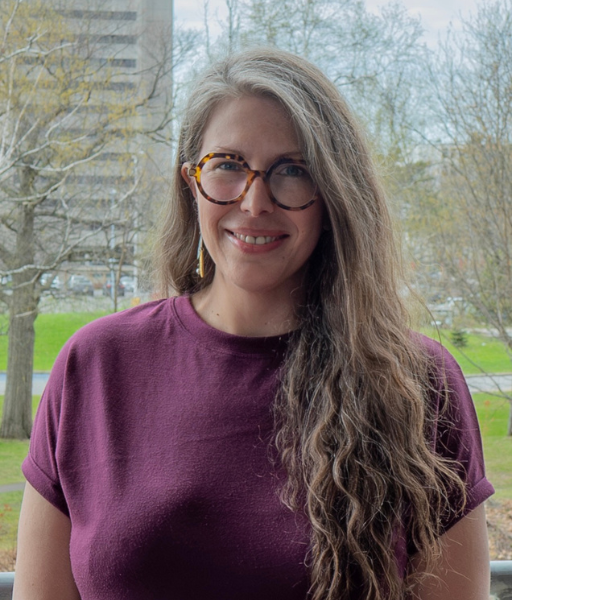
Marie-Ève Bradette is an assistant professor in the Department of Literature, Theater, and Film at Laval University and has held the Maurice-Lemire Chair in Leadership in the Teaching of Indigenous Literatures in Quebec since June 2022. Her current research explores the multilingualism of First Nations literatures in Quebec as a manifestation of a pluralistic literary history. She is also interested in the representation of Indigenous women and girls, gender-based violence, and the (re)signification of women’s knowledge, particularly in residential school literature. Her work has been published in journals such as Les Cahiers du CIÉRA, @nalyses, Captures, and Voix plurielles, among others. In 2025, she received the Herb Wyile Award for her article “The Conflict of Linguistic Sovereignties in Quebec: Indigenous Critical and Literary Perspectives,” published in Studies in Canadian Literature/Études en littérature canadienne. She is the author of an annual column on Indigenous studies for the journal Voix et images. Her book Langue(s) en portage: Literary and Linguistic Resurgence in Indigenous Women’s Literature was published in 2024 by Presses de l’Université de Montréal and won the 2025 Best Book Award from the Association of Canadian University and College Professors (ACUCP). She also co-edited the anthology Urbanités autochtones en création (with Julie Graff, Gabrielle Marcoux, and Alexia Pinto Ferretti), published in 2025 by Presses de l'Université de Montréal.
About the book
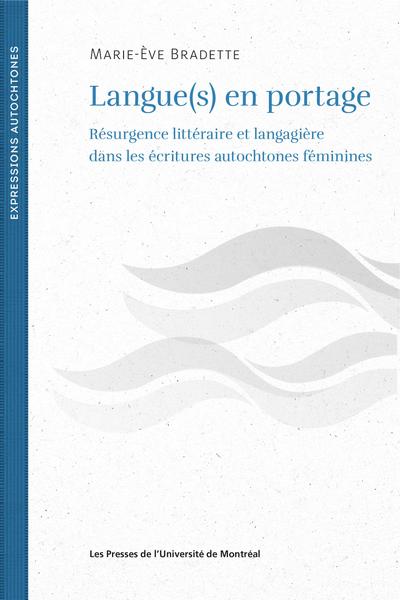 This book examines how contemporary Indigenous women writers, who write primarily in English or French, engage with language to create a critical alternative to the dispossession and erasure that have marked the history of their peoples. It demonstrates how, from this literature produced at the intersection of linguistic spaces and grounded in a rich poetic and narrative imagination, critical theories of language emerge in which the body, language, and territory are intimately linked. It also explains how these writings, as sites of knowledge, contribute to the overall revitalization of Indigenous knowledge.
It is by invoking the words of Virginia Pésémapéo Bordeleau, Kateri Akiwenzie-Damm, Marie-Andrée Gill, Leanne Betasamosake Simpson, Natasha Kanapé Fontaine, and Cherie Dimaline, the author of this ambitious essay formulates not only a literary theory of language but also a novel approach to engaging in a sensitive, relational, and reciprocal reading of these writings.
By viewing literature as a space for the production of knowledge, this book highlights how Indigenous women writers—from different nations and writing in both French and English—become, through the language-mediation strategies they develop, true theorists of language.
This way of conceiving literature as theory represents a crucial reframing for understanding the active contribution of Indigenous women writers to the current cultural resurgence.