

Introduction | About the guest | About the essay | Transcript | Follow us
Introduction
How can we continue to live, hope, and love when our era seems to be entering a series of climate, social, political, and humanitarian crises? Nicolas Langelier, journalist, columnist, publisher, and founder of the social enterprise Atelier10, joins Karine Morin to discuss his latest essay, Ce qu’on trouve dans la cendre : Méditations sur le sens et le courage dans un monde en effondrement. (What we find in the ashes: Meditations on meaning and courage in a world in collapse).
About the guest
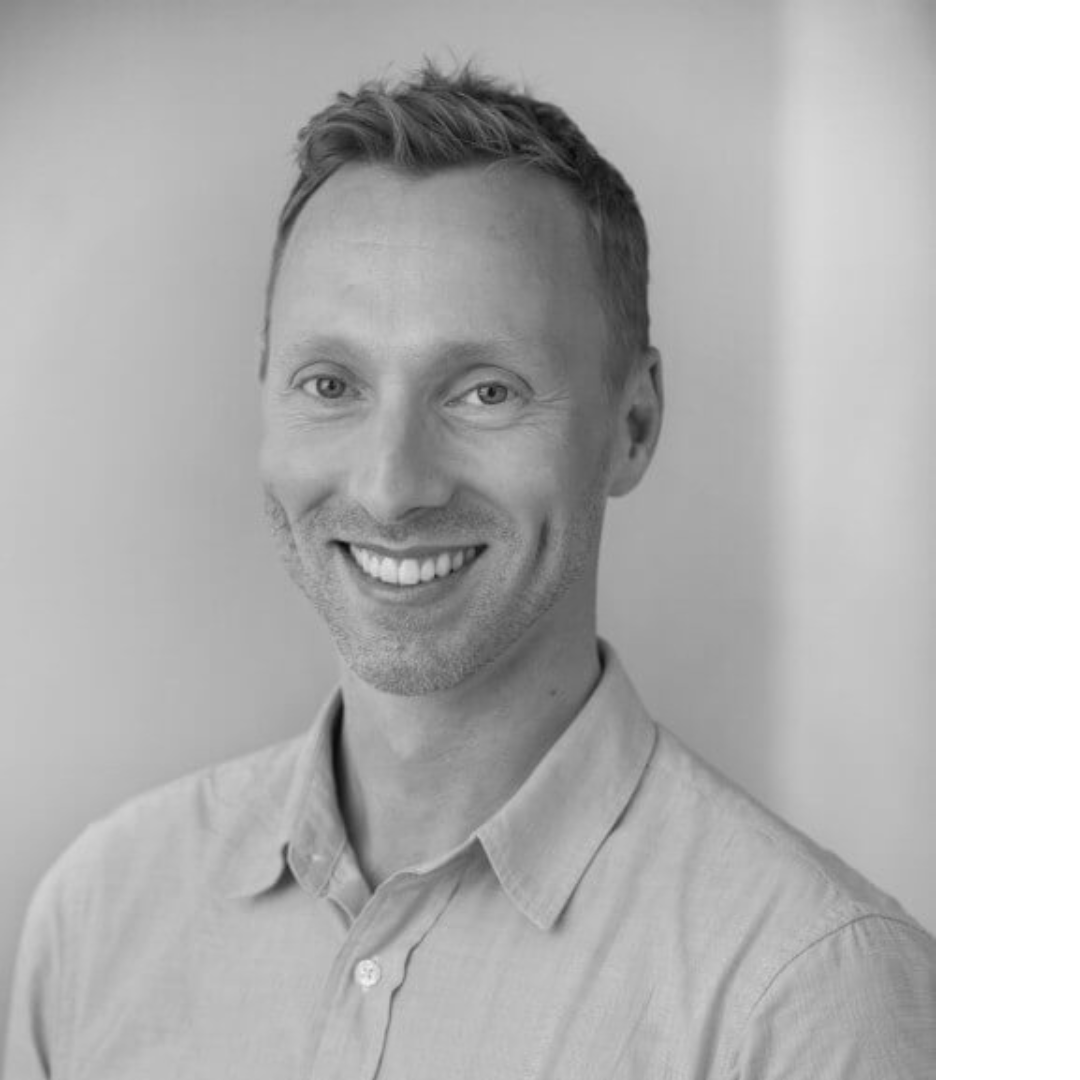 Nicolas Langelier is the editor-in-chief of Nouveau Projet and the director of Atelier 10, both of which he founded. As a journalist and editor, he has been a finalist on several occasions for the Canadian Magazine Awards, the Grands prix du journaliste indépendant, and other awards of excellence. His novel Réussir son hypermodernité et sauver le reste de sa vie en 25 étapes faciles (Boréal) was a finalist for the Prix des libraires du Québec in 2011. He was born in 1973 in East Montreal.
About the essay
Title
Ce qu'on trouve dans la cendre : Méditations sur le sens et le courage dans un monde en effondrement (What we find in the ashes: Meditations on meaning and courage in a world in collapse)
Summary
Our civilization has already begun to crumble. Our species’ insatiable greed has led us to disaster. Every year to come will be hotter, more chaotic, and more violent than the last, and what once seemed inexhaustible is about to run out forever.
How do we come to terms with the realization that life will never again be as sweet and easy? How can we even go on living, day after day, when horrors loom on the horizon? Conversely, what precious things might we hope to find in the ruins of our civilization? What joys, what hopes?
First and foremost, this book attempts to answer the question that will lie at the heart of our existence for the rest of our lives: where can we find a reason to live and the necessary courage in a world falling apart?
[00:00:07] For this new episode of the Big Thinking Podcast, I’m joined by Nicolas Langelier, journalist, columnist, editor, and founder of the social enterprise Atelier10, to discuss his latest essay, What We Find in the Ashes: Meditations on Meaning and Courage in a World in Collapse.
[00:00:27] In this book, Nicolas Langelier poses a difficult but unavoidable question: how can we continue to live, hope, and love when our era seems to be entering a series of climate, social, political, and human crises? Rather than looking away, he chooses to confront this anxiety head-on and reflect on what might still remain amidst the ruins—such as joy, solidarity, and community. Our conversation today revolves around these themes.
[00:00:59] Furthermore, this episode is part of a collaboration that we are particularly excited about. Through our Scholarly Book Awards, the Federation has long worked with university presses to support the dissemination of knowledge and research in the humanities.
[00:01:19] This discussion with Nicolas Langelier marks a new foray into this world of ideas and publications, making them accessible to a wider audience. Welcome to the Voir Grand podcast. My name is Karine Morin, and I am the President and CEO of the Federation of the Humanities and Social Sciences.
[00:01:39] Karine Morin: Hello, Nicolas Langelier. I’ll start with a little background. The Federation of the Humanities and Social Sciences primarily maintains relationships with university presses that publish the work of researchers in the humanities and social sciences.
[00:01:52] But about a year ago, I was introduced to Atelier10, a publishing house that really impressed me with its social enterprise mission. So, it’s a real pleasure for me to speak with you, its founder.
[00:02:07] You are also the editor-in-chief of Nouveaux Projets magazine, which publishes Atelier10, as well as the Documents series—a collection of short essays that offer thoughtful, personal perspectives on social, cultural, and, in short, contemporary issues.
[00:02:23] And last February, issue number thirty-two of this collection featured an essay you wrote titled: What We Find in the Ashes: A Meditation on Meaning and Courage in a World in Collapse.
[00:02:38] From the website, I’ll read a portion of the summary: Our civilization has already begun to crumble. Our species’ insatiable greed has led us to disaster. Each coming year will be hotter, more chaotic, and more violent than the last, and what once seemed inexhaustible is about to run out forever.
[00:03:03] I’d first like to ask you to elaborate a bit on this state of collapse you’re observing and also to explain why this essay at this particular moment?
[00:03:18] Nicolas Langelier: As for the collapse, it refers to reaching a collective situation where we will have to give up many things we had taken for granted in our world, in our daily lives: in terms of comfort, in terms of standard of living, and also in terms of social, political, and cultural organization.
[00:03:43] These things will gradually disappear over the coming years; in my opinion, we may lose them one by one or several at once—that remains to be seen. The pace of the collapse is truly impossible to predict, but we can still, with a fairly high degree of certainty, predict that this collapse will occur, leading to a significant simplification of our lives.
[00:04;16] And that might sound positive, put that way—a simplification of our lives—until we ask ourselves, for example, what simpler dental care might actually mean.
[00:04:34] So, we live in an extremely complex world, but that complexity has brought us many benefits. This collapse, which is coming, will be caused, yes, by the climate crisis; it’s clear we’ve already begun to see many of the manifestations of these disruptions in our climate, in our precipitation, in our ocean currents.
[00:04:57] But it goes far beyond that. In fact, the climate crisis is a consequence of another, larger phenomenon known as overshoot—that is, the fact that the human species has taken far more from the planet than the planet is capable of giving us.
[00:05:18] And so, we are already in debt to the planet; we have already taken more than we could, and this situation is going to catch up with us fairly quickly.
[00:05:32] Karine Morin: Why write this essay now?
[00:05:35] Nicolas Langelier: First and foremost, it stemmed from my own desire to reflect on this question personally, as an individual. What do I do with the feelings that are overwhelming me right now? They are, first and foremost, a sense of anxiety and fear regarding the unknown that the collapse will bring.
[00:05:56] But also already a sense of mourning—for things that have begun to disappear—and a somewhat anticipatory mourning for things that will disappear, as we already know, over the coming decades.
[00:06:13] What we’re experiencing right now is a kind of—I saw a researcher who used the term “pre-traumatic shock”—it’s as if we’re on the verge of the major loss that the collapse will bring, but some of us are already so attuned to that impending loss that we’re already in a state of shock.
[00:06:36] And so, I wanted to “process” those emotions, to help myself reflect on them and to help the people around me—potential readers who might also have similar emotions to “process”—and who might want guidance on this, perspectives that could help them with what they’re going through and what they’re likely to experience in the coming decades.
[00:07:02] Karine Morin: What I really liked was that, in fact, your meditation on what we find in the ashes includes sections that are much more—and here I hesitate to choose my word, it might not be quite “optimism”—but still, looks toward the future, a section dedicated to courage, another to meaning.
[00:07:22] So, beyond the observation, you propose a certain way of being. How do you suggest we experience this change? At least, how do you try to experience it?
[00:07:35] Nicolas Langelier: I think, on the one hand, that’s it—there’s no right answer, there’s no science to it. We’re in uncharted territory anyway, in the unknown; we don’t have an instruction manual to prepare everything in advance for what’s coming.
[00:07:50] We’re going to have to adapt. So first of all, the issue of flexibility and adaptability is crucial because we’re moving forward, stepping into the unknown every day. It’s also going to take a minimum of mental and logistical preparation, I’d say.
[00:08:08] First of all, mental preparation is absolutely essential: we need to prepare ourselves for the losses to come, for what lies ahead, and for a more difficult life as well, because it’s inevitable that the life awaiting us will be a little harder—or much harder—than the life we’ve been accustomed to since birth.
[00:08:32] And more generally, I think we’re going to have to find meaning in life: we’re going to have to find reasons to keep living in this world that’s crumbling before our eyes.
[00:08:47] It can obviously be extremely difficult from a moral standpoint, from a psychological standpoint, to experience that collapse. But what I’m trying to do—as you alluded to—what I’m trying to do as well, is to look for whatever we can find, to hope to find something positive in all of this.
[00:09:09] And at the very least, where to find our sources of joy, satisfaction, and our reasons to keep on living despite everything.
[00:09:17] Karine Morin: That’s exactly what I was getting at. You haven’t given up on the idea of having moments of joy or hope. Could you give us some examples of how you find that joy or hope in your daily life? Or perhaps in some medium- to long-term planning—where do you find joy and hope for yourself right now?
[00:09:40] Nicolas Langelier: Well, first of all, it’s a mindset—it’s about shifting our focus away from the future, which is where we tend to look in today’s world, and bringing it back to the present and the things we already have.
[00:09:57] It seems essential to me to be able to enjoy what we have today—the joys inherent in what we’re already doing, whether in our relationships with others, the beauty of a sunset, or simply a landscape that makes us feel good.
[00:10:15] These things already exist and will continue to exist; it’s not true that the collapse will lead to the loss of everything; there are things that will continue, and so we should appreciate those things, and also realize that the vast majority of things are beyond our control, so it serves no purpose for us to live in constant anxiety, always preparing for the worst, since we don’t control those things.
[00:10:44] And so, in that letting go, there’s also a joy that can come with it, or at least a greater sense of fulfillment, and a greater appreciation for what we’re experiencing right now. Otherwise, joy clearly comes from our relationships with others, from what others can offer us.
[00:11:04] And nature, too—I truly believe that this simplicity, this profoundly genuine thing that is nature, can bring us great joy, great satisfaction, and great inner peace.
[00:11:16] And that can be part of the “benefits”—perhaps in quotes here—of the collapse, insofar as it forces us to start appreciating those things again, those simple things that modernity had caused us to lose sight of a bit, because modernity has, in a way, conditioned us to focus our attention elsewhere— toward technology, toward development in terms of comfort, well-being, care of all kinds, and our own selves as well.
[00:11:52] That has been the great—both the great victory and the great defeat—of modernity: that it has truly brought us back to ourselves as individuals. And that is something we will have to correct in the coming decades and even in the coming months and years, I would say.
[00:12:09] Karine Morin: You absolutely highlight the importance of community or certain communities, but what is your current perception of our ability to come together in a cohesive way? I think you just touched on it a bit—we seem to have lost that. How do you think we could regain it?
[00:12:33] Nicolas Langelier: It’s clear that we’re in a world where the individual is the basic unit. We need to be able to transition to a world where the community is the basic unit.
[00:12:47] Whether it’s the immediate community of people around us—our family, our loved ones—or a slightly broader community, such as our neighbourhood, our village, or our region.
[00:12:59] We’re going to need others, and others are going to need us too. And when I talk about the meaning we can find in this collapse, there’s certainly the question of the care we can provide to others, to the people around us, to our communities—and the care that these people can provide to us as well.
[00:13:18] I think there will be a lot of this: on the one hand, it will be absolutely necessary to be able to rely on one another, because we will no longer be able to rely to the same extent on those large structures—the states, the MRCs (editor’s note: regional county municipalities), and the multinationals. These entities are bound to lose much of their effectiveness for all sorts of reasons.
[00:13:43] That’s where the community becomes absolutely essential, but it brings us back to a situation that has historically, and since time immemorial, been the case for humanity—that is, we’ve always needed our community; we’re social animals; we’ve accomplished everything we’ve done as a species through collaboration.
[00:14:03] And perhaps modernity has made us forget that a bit—the idea of collaboration, cooperation, and mutual support. We’ve fallen into the era of the self-made man, of people who think they’ve built themselves up all on their own and don’t need others. The collapse will quickly remind us that we absolutely need others.
[00:14:23] Karine Morin: Do you have any recent examples where you were able to participate in this kind of solidarity effort? Something you’d like to be able to do more often than just that one-time experience you had—where a group comes together and acts in a positive way to overcome a challenge, for example?
[00:14:48] Nicolas Langelier: It doesn’t have to be big things. Of course, if you’re in a city and there’s a hurricane, and there are sandbags to fill and levees to build, there’s something very symbolic about that, and you immediately understand the concept of solidarity in that.
[00:15:10] But I think we can see solidarity in small gestures too, in small interactions—whether it’s just going to greet a neighbour in the neighbourhood, checking in on someone who lives near us, seeing if they need anything, if there’s something we can do for them—that’s solidarity in action.
[00:15:35] And I think that through these small gestures, with these small gestures, we can build the connections that will allow us to do great things. I think that even now, in a world where things are still going relatively well—despite what we might sometimes think when we watch the news or when we just look at the weather, which makes no sense—things are still working very well in our society.
[00:16:00] Now is the time to put our solidarity muscles to work, because it is a muscle—it’s something we’ve let go of a bit over time, something we’ve actually let go of a lot. And it’s something that needs to be exercised, that needs to be practiced. And I think it’s something we can do every day—nurturing those habits of solidarity—and gradually building the network we’ll need in the years to come.
[00:16:25] Karine Morin: I often think of a slightly younger generation, the one currently in college or university. Do you think that this generation is already experiencing the crisis differently than those of another age who were marked—or whose parents, in particular, were marked—by the wars of the 20th century?
[00:16:45] I mean, there have been other difficult times not so long ago in history, but this generation that is now in school—how do you perceive their attitude toward this collapse and what needs to be done to overcome it?
[00:17:01] Nicolas Langelier: I think young people today are in a paradoxical situation, and that’s perhaps why their lives are difficult. It’s because, on the one hand, they’ve lived in a world of ease: they grew up with the Internet, with technologies that all too often give us the impression that, as a species, we are invincible, that nothing can happen to us anymore, that we have overcome our subjugation to nature, that we are now above nature, that we can do anything, that nothing is beyond human capability.
[00:17:38] On the one hand, they live in that world, but on the other hand, they live in a world where, for as long as they can remember, people have been talking about this climate crisis, talking about this kind of coming apocalypse. I think they’re torn between these two worldviews, one very positive, the other very negative.
[00:18:01] And for them, it can be difficult at times—and often on a daily basis—to navigate between these two extremes and find a reason to keep going. Then, the fact that a large portion—or at least many young people—spend a large portion of their lives in front of screens doesn’t help them either, because they’re living with a false sense of community and solidarity, with connections that lack the quality and strength we truly need as individuals.
[00:18:38] It seems like I really wish that for the younger generation—to be able to tear themselves away from their screens and establish themselves in the real world.
[00:18:51] Karine Morin: For me, there are certainly university memories of the thickest books that were the heaviest to carry, and the shorter books that we could finish before the exam.
[00:19:01] But to feed your thinking, which discipline do you lean toward? Is it mainly the sciences that give you ideas that prompt these reflections? Does it come from history, from philosophy? What accompanies your musings?
[00:19:20] Nicolas Langelier: I think it’s a mix of all of that; perhaps that’s what makes my book a bit different—I immerse myself in both the most up-to-date scientific discoveries regarding, for example, where we’re headed in terms of climate change and the depletion of resources in relation to demographics.
[00:19:44] All of that—I really make it a point of honour to stay up to date on the latest scientific developments. But at the same time, I ground my thinking in a tradition that’s much older, drawing on thinkers and history as well; it’s clear that I drew heavily on historical sources to write this little book.
[00:20:17] Insofar as, indeed, what we’re experiencing is unprecedented, but at the same time, humans have always, throughout history, been confronted with a great deal of precariousness. I think it’s modernity—the last 150 to 200 years—that led us to believe that this precariousness was over, that the human species had managed to ensure its survival forever.
[00:20:40] And even today, we hear people in Silicon Valley and elsewhere talking about the fact that humans could possibly live to be a thousand years old, five thousand years old. I’ve even heard talk of ten thousand years. So, we’re still largely stuck in this sort of attitude of invincibility.
[00:21:03] But it’s an illusion. And traditionally, humans knew this; they were aware of the fragility of life, of the fragility of our species, of our collective endeavours, and of the kind of hubris with which we all too often live. And it did me good to immerse myself in the ancient thinkers, the thinkers of the Middle Ages, and also of the Renaissance, in relation to these reflections, which are timeless.
[00:21:34] Karine Morin: I noticed that the epigraphs in your essay are mostly from American authors. And I was wondering: do you think that thinking in North America might be more advanced because that’s where the crisis could be particularly acute if we shift from unlimited abundance to constant shortages? Or do you believe that this concern exists just as much in France, in Europe, or elsewhere?
[00:21:56] Nicolas Langelier: I think the concern is present everywhere. It’s clear that in the United States, if only because of its population, there is a critical mass of thinkers and people who have reflected on issues of collapse.
[00:22:11] And perhaps my own sources and influences are more American than European because of my North American background; that’s the impression I have.
[00:22:22] But we’re seeing right now that there’s a global convergence of people all over the planet, whether in countries that are threatened in the very short term, like India, for example, or in Western countries like ours, where we generally consider ourselves a bit more sheltered or at least better protected from the most harmful effects of the coming collapse, because we’re a so-called [...] society and we too often get the impression that it’s mainly developing countries that will bear the brunt, but everyone will pay the price.
[00:23:06] Karine Morin: I’d like to steer the conversation in a slightly different direction, since you do have a background as a columnist and journalist, or at least experience in those roles.
[00:23:17] What kind of public discourse or conversation do you think we need to have today? And do you feel that journalism’s role remains relevant in this regard, or has the proliferation of media meant that it’s no longer where we turn to ensure public debate?
[00:23:38] How do you see the current state of affairs, where people in their daily lives will hear about certain topics or not hear about certain topics, will learn to address them or not learn to address them—where do we stand on that front?
[00:23:50] Nicolas Langelier: Unfortunately, our mass media really have an aversion to talking about situations that might seem a bit hopeless. We’re still in a mode where: OK, we’ll tell you that things are bad, but in the end, we wrap up the article by saying: But there’s still time to act if we roll up our sleeves and all that.
[00:24:14] So, we’re still in a mindset where we’re in denial about our current situation. And that’s why it’s not in the mainstream media that we’re going to find good, relevant information about our actual situation.
[00:24:29] We’re still burying our heads in the sand when it comes to most of the media. That’s why we need a variety of news sources—including smaller ones that aren’t completely dependent on advertising, for example.
[00:24:47] Obviously, the people who pay for advertising are there to get us to consume, so they have no interest in putting us in a situation where we’d want to give up consumption. So there’s a kind of conflict of interest in most media outlets.
[00:25:02] But on the other hand, I think that at its core, it’s really just a desire not to depress people with things that are considered too heavy, too hopeless, and so we avoid the reflection we should be having right now.
[00:25:18] We’re still in a mindset where we’re like someone with terminal cancer who’s being led to believe that in six months, they’ll be able to take a trip down south, then they’ll be able to go back to work, and all that.
[00:25:31] So we can’t make the decisions that need to be made right now, because we don’t have access to the right information. Often, I think that, when it comes to politicians, for example, it’s easy to say, “Oh, they’re hiding things from us, they’re lying to us, they know everything, but they act like nothing’s wrong.”
[00:25:51] I think that in some cases, that’s true, but I think that generally speaking, even our politicians are misinformed; even the people at the helm of our society don’t have all the information they need to make the right decisions about how to prepare for what’s coming, about what we should be doing.
[00:26:10] And that makes us live in a world that’s a bit surreal in that we think, then we build, then we develop in directions that don’t make sense given where we are, for example.
[00:26:24] Well, the example of the third link in Quebec is well known for its absurdity, but when you think about it in the context of collapse, it’s even more absurd to say: in a few decades, we’re going to be short on everything, but we’ll have a tunnel that cost us ten billion dollars.
[00:26:44] What could we do better with those billions of dollars in 2026 than put them into a tunnel? That’s an extreme example, but it’s true on every level. And unfortunately, those decisions aren’t being made right now.
[00:26:59] Karine Morin: If, in addition to suggesting that we read What We Find in the Ashes, you had to leave us with one final thought related to our existence today and tomorrow, what would it be?
[00:27:14] Nicolas Langelier: I find that all of this—everything that might lie ahead for us—brings us back to that essential, eternal question: how do we live now? How do we live day to day? How do we approach each day when we wake up in the morning? How do we think about the next day when we go to bed at night?
[00:27:39] It’s a very simple question, and at the same time, it’s the biggest question of all: how do we live now? How do we make the most of what we have? How do we build the connections around us that we need to build? How do we find peace within ourselves? So, this question of the good life has preoccupied philosophers since time immemorial.
[00:28:01] And I think it’s essential that we, as individuals, each in our own way, ask ourselves that question, and then that we each try to arrive at our own personal answer rather than just going with the flow—which is sort of the default condition of modern life, where we often settle for being entertained, moving from one personal satisfaction to the next, from one pleasure to the next, without asking ourselves too many questions.
[00:28:35] I think we need to ask ourselves this question today, in 2026: what is a life worth living for me? How can I live it now? Because I have no guarantee that in five years, in ten years, in fifteen years, I’ll still be here to do the things I’d like to do one day in my life.
[00:28:54] Doing them today, doing them in the way that feels most right for others, for ourselves, and for the planet—I think that’s the answer we need to find right now.
[00:29:08] Karine Morin: Thank you so much for writing this piece, which really resonates with my own reflections. Thank you very much for this wonderful interview, and let’s hope that the human condition finds a way to endure. Thank you, Nicolas Langelier, for this interview.
[00:29:25] Nicolas Langelier: Thank you, Karine.
[00:29:33] Thank you for listening to the Big Thinking Podcast, and thank you to our guest, Nicolas Langelier. I’d also like to thank our friends and partners at the Social Sciences and Humanities Research Council and the production company CitedMedia, without whom this podcast wouldn’t be possible.
[00:29:48] You can find all previous episodes on your favourite podcast platform. Let us know what you thought of this episode by connecting with us on social media. See you next time!

Spotify

Apple Podcast

Amazon Music

Podcast Addict

iHeartRadio
