
Introduction | About the guest | Transcript | Follow us
Introduction
A university is not just a campus; it is also a place that is part of a neighbourhood, a place that coexists alongside its residents, its businesses, and its public spaces.
But how can we ensure that this proximity between the university and the neighbourhood develops into a genuine relationship? How can a university contribute to the life of its neighbourhood while learning from those who live there?
This is one of the central questions driving UQAM’s Quartier Latin project, which aims to transform the neighbourhood into a dynamic and inclusive space where learning, culture, research, and community life come together.
Today, Karine Morin is joined by Priscilla Ananian, Associate Vice-Rector for the Revitalization of UQAM’s Latin Quarter, and Lucie Dumais, Dean of the Faculty of Humanities at UQAM.
Together, they explore how the university can truly become an active partner in its community and the role of the humanities in shedding light on the realities of a neighbourhood.
About the guests
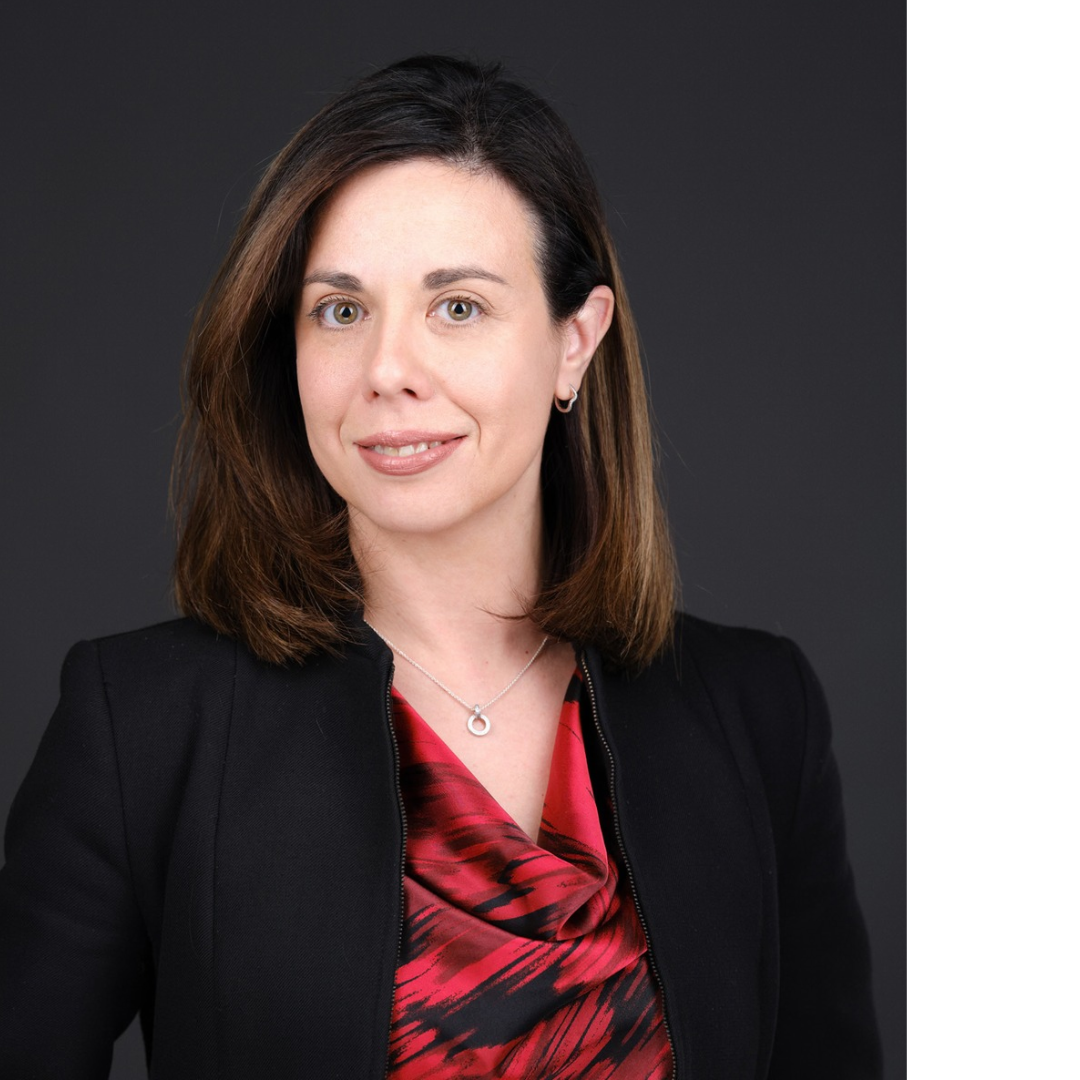 Priscilla Ananian has been a full professor in the Department of Urban and Tourism Studies at the School of Management Sciences (ESG UQAM) since 2022, having joined the department in 2012 as an assistant professor.
She holds a Ph.D. in Architectural and Urban Planning from the Catholic University of Leuven in Belgium and a postdoctoral degree in urban planning from the same university.
At the time of her appointment, she was the director of the graduate program in urban studies at ESG UQAM; she also serves as director of the Observatory of Urban Living Environments.
Priscilla Ananian was appointed associate vice-rector for the Revitalization of the Latin Quarter on December 14, 2023. She took office on January 8, 2024, for a five-year term.
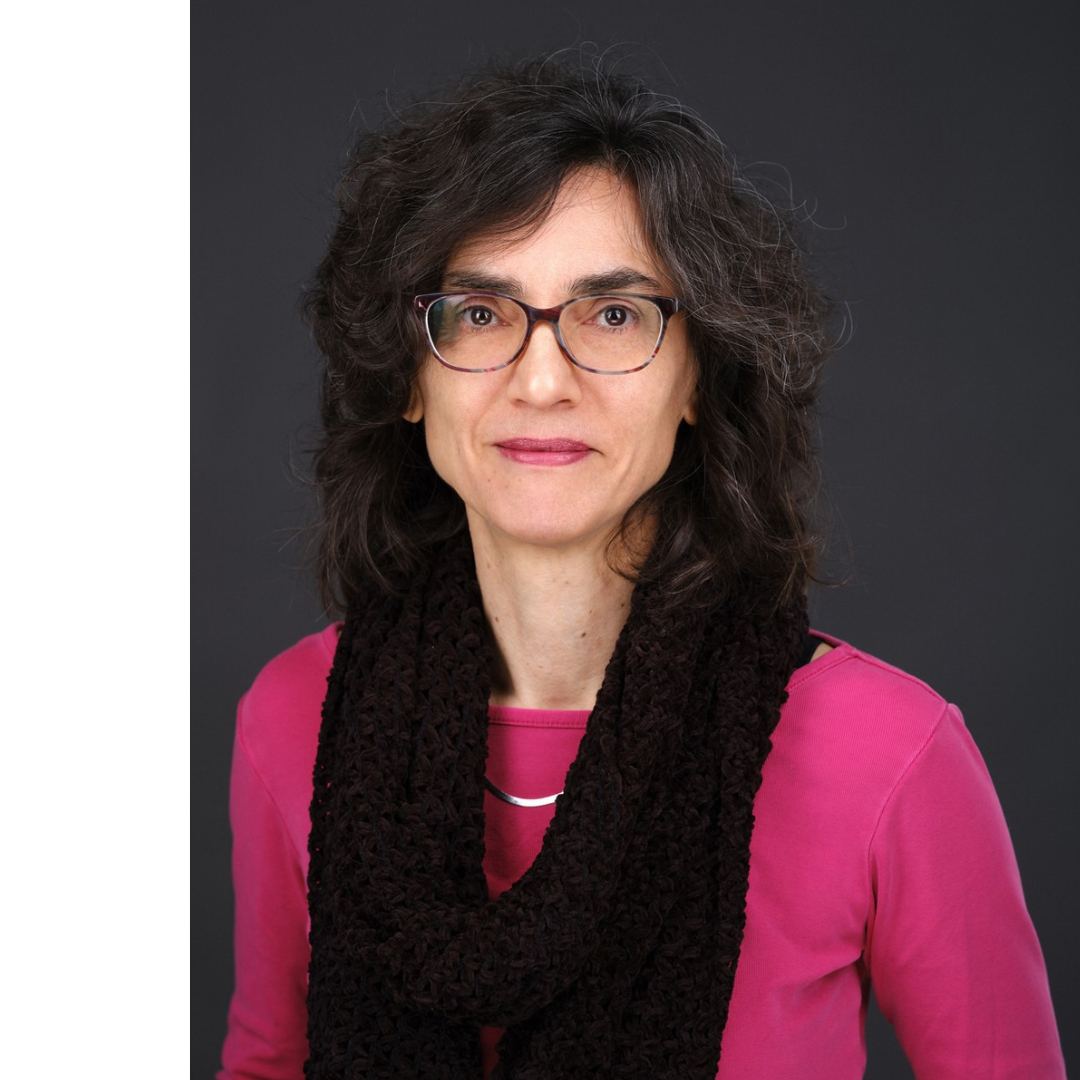
Lucie Dumais is the Associate Dean of Academic Affairs at UQAM’s Faculty of Humanities.
She holds a master’s degree in sociology from the Université de Montréal and a Ph.D. in political science from the London School of Economics and Political Science; her research focuses in particular on social policy, the social economy, and the social inclusion and participation of people with disabilities.
[00:00:15] Karine Morin: A university isn’t just a campus; it’s also a place that’s part of a neighbourhood, a place that coexists alongside its residents, businesses, and public spaces.
[00:00:27] But how can we ensure that this proximity between the university and the neighbourhood develops into a genuine relationship? How can a university contribute to its neighbourhood's life while learning from those who live there?
[00:00:39] This is one of the central questions driving the Quartier Latin project at the Université du Québec à Montréal (UQAM), which aims to transform the neighbourhood into a dynamic and inclusive space where learning, culture, research, and community life come together.
[00:00:55] Today, I’m joined by Priscilla Ananian, Associate Vice-Rector for the Revitalization of the Latin Quarter, and Lucie Dumais, Dean of the Faculty of Humanities at UQAM.
[00:01:08] Together, we’ll explore how universities can truly become active participants in their communities, and the role of the humanities in shedding light on the realities of a neighbourhood. My name is Karine Morin, and I’ll be your host for this episode of the Big Thinking podcast
[00:01:28] Karine Morin: Hello, Professors Ananian and Dumais. It’s a pleasure to have you both here today. Before we turn to the Latin Quarter—the main focus of our conversation—could you tell us how you came to collaborate on the project we’ll be discussing?
[00:01:45] Professor Ananian, perhaps you could speak first, and then I’ll turn to Professor Dumais.
[00:01:51] Priscilla Ananian: Perfect. Good morning, I’m very, very happy to be here with you this morning. This project began two and a half years ago, in 2024, with the creation of a new position: Associate Vice-Rector for the Revitalization of the Latin Quarter.
[00:02:05] The goal was really for UQAM, which has been rooted in this neighbourhood for 56 years, not to be just a bystander to the transformations in this area, but to be a true agent of change.
[00:02:17] Given the challenges and issues we face in the neighbourhood—including issues of social coexistence as well as neighbourhood identity—it was essential to work with the Faculty of Humanities, and specifically with Lucie Dumais, who is the dean of the Faculty of Humanities. We found a wonderful synergy very early on in our respective terms.
[00:02:37] Karine Morin: Professor Dumais, do you remember that first moment or those initial conversations about this project?
[00:02:43] Lucie Dumais: Yes, it was completely natural, since right from the start of my term as dean, I started before Priscilla; I had invited the community of the Faculty of Humanities—which includes the social sciences and professions such as social work and psychology—to take an interest in the revitalization of the Latin Quarter, to understand its dynamics, and to get involved as well, since all the disciplines in my faculty are capable of analyzing, conducting research, and taking action.
[00:03:16] Priscilla Ananian: I’d like to add a little anecdote. Actually, I think on April 16, 2024, Lucie organized that big meeting, and it was my first public presentation as vice-president, outlining the vision for the Latin Quarter—and from that point on, we never looked back.
[00:03:28] Karine Morin: And since then, how many other presentations and events have there been, if you’ve kept track?
[00:03:35] Priscilla Ananian: I wouldn’t call it a presentation, but over the first year, I actually held 750 meetings. I cataloged everything so I could identify the key players and map out their locations—not only within UQAM but also outside, in the Latin Quarter.
[00:03:49] Karine Morin: Visually, or in a few images, what does Montreal’s Latin Quarter look like? Where is it?
[00:03:55] Priscilla Ananian: Where is it? It’s right in the city's heart. It’s at the intersection of various metro lines. So that’s perhaps the most telling image. It’s the Berri-UQAM station, which used to be called, I think, Berri-de-Montigny.
[00:04:07] It’s a neighbourhood that was, in fact, the epicentre of the French-Canadian bourgeoisie and, I’d say, the Francophone counterweight to the city. Geographically, it’s centrally located for transit lines; it spans two boroughs: Ville-Marie, the truly central one, and the Plateau, which is also well known, I think, in the collective imagination.
[00:04:36] So when people think of Montreal, they probably picture streets that are, in fact, very human in scale—that would perhaps be the first thing that comes to mind. And the bell tower—the Saint-Jacques bell tower, in fact—is truly a landmark for everyone in the area, and it's all that remains of Saint-Jacques Church.
[00:04:55] Karine Morin: And then, if we were to trace a brief history of this neighbourhood—how long has it been around? How has it evolved over the last century, over the last few decades? What are the historically significant milestones for this neighbourhood?
[00:05:10] Priscilla Ananian: Well, here I’m going to venture into territory that, I’d say, isn’t directly my own. So, actually, I’m going to quote my two colleagues: Joanne Burgess, from the Faculty of Humanities—she’s a historian—and my colleague Martin Drouin, who is a historian in the Department of Urban and Tourism Studies, which is, incidentally, my home department.
[00:05:28] And those two historians from the Montreal History and Heritage Laboratory have done truly remarkable work in trying to piece together that history. So, to give you a sense of how striking it is—two hundred years ago, there were actually still fields in this area.
[00:05:42] And it really is, as I was saying earlier, starting from Saint-Laurent Boulevard, the emergence of this counterbalance—this very, very important Francophone hub, in fact—with a succession of religious institutions and truly significant institutions in the neighbourhood.
[00:06:01] And in 1852, unfortunately, there was a major fire. That fire destroyed what we now call the Latin Quarter—but back then, people called it the Saint-Jacques Parish, so they didn’t use the term “Latin Quarter.”
[00:06:13] That name is much more recent. So this fire really ravaged what we now call the Latin Quarter—a part of Old Montreal—which was actually a very large area of Montreal at the time.
[00:06:25] And for that reason, as I was saying, the bell tower we see today isn’t the one from back then. It’s a reconstruction. So there you have it—a few historical points of reference. And the term “Latin Quarter”—that’s actually important for those listening to us. The Latin Quarter gets its name from the students.
[00:06:42] Back then, in 1895, the students at Laval University—which was, of course, the first university based here, in the Latin Quarter—coined the name. It referred to the Latin Quarter in Paris and the Sorbonne.
[00:06:57] Karine Morin: Yes.
[00:06:58] Priscilla Ananian: Exactly.
[00:07:00] Karine Morin: Professor Dumais, perhaps a more recent story?
[00:07:03] Lucie Dumais: Yes, yes. For example—and this is important—we started with the metro intersection. That was in the mid-1960s; we revitalized the neighbourhood somewhat by turning it into a hub, but it was already at the intersection of the commercial thoroughfares Sainte-Catherine and Saint-Denis.
[00:07:24] One is more focused on culture and music or academics, like the university, but also on commerce. And here, we’re talking a lot about the commercial bourgeoisie on Sainte-Catherine Street.
[00:07:40] So Sainte-Catherine Street runs east-west, and Saint-Denis Street runs north-south. It’s also worth noting—and this is important—that religious congregations were present there as well, because it’s not far from a very disadvantaged neighbourhood. So, historically, it’s a neighbourhood with many community-based nonprofit organizations.
[00:08:07] Karine Morin: You’re bringing up the topic I want to discuss. Today, in 2026, what are the main issues at the heart of this neighbourhood? And perhaps you could start by describing a bit about the project UQAM is undertaking in relation to the Latin Quarter.
[00:08:27] Priscilla Ananian: Well, the main issue is social coexistence. So today, we’re right in the middle of an election campaign, right? So obviously, there’s a lot of attention on the issue of homelessness across Quebec.
[00:08:38] But at that time—during the pandemic—students were no longer on campus, nor were workers, and so homelessness, which was already present—as Lucie said—is actually something that’s always been there.
[00:08:52] So there were more people in vulnerable situations. The Œuvre de la Soupe was just a few steps away from what is now the university. And so all of that was already very much present; it’s always been a reality.
[00:09:03] But with the pandemic, it’s certainly become even more visible on the one hand, and on the other hand, all the difficulties we’re seeing today—across Quebec, in fact, in many cities—have also been exacerbated.
[00:09:15] And so it certainly served, I’d say, as the spark that ignited a mobilization of various stakeholders—including the university, but also the City of Montreal and the borough—to recognize that there is indeed a significant issue of social coexistence, homelessness coupled with mental health challenges, and also substance abuse.
[00:09:35] And that’s actually how we got started—both through the work we do extensively with Lucie, as well as through a whole series of research projects aimed at documenting the situation and equipping public authorities to take action in this neighbourhood.
[00:09:50] Karine Morin: And I’d like to know a bit about how it was decided that UQAM would take on this important role. How is a decision like that made—to actively engage in a community where our campuses are located across the country?
[00:10:06] Lucie Dumais: I think it’s important to highlight the arrival of a new president, Stéphane Pallage, because presidents are elected at our institution—they’re elected by the community—and during his campaign, he mentioned the important role UQAM would play as a strong institution in the neighbourhood to revitalize the Latin Quarter.
[00:10:33] So, it’s winter 2023. We’re still in the pandemic's aftermath. We’re facing challenges: fewer people downtown, and a resurgence—and even an increase—in housing-related issues. There’s a sense of vulnerability, and vulnerable people are flocking to the Latin Quarter.
[00:10:54] So it’s really under Rector Pallage’s leadership that we start talking about this. At the Faculty of Humanities, I’m also fully on board with this approach. The following year, in 2024, the university published its five-year strategic plan, which included one of six main priorities: revitalizing the Latin Quarter and creating a vice-rector’s office dedicated to that revitalization—and Priscilla took on that role.
[00:11:31] Karine Morin: The other thing I’d really like to explore—having read a bit about what’s happening—is the phrase that keeps coming up: “learning neighbourhood.” Elsewhere, in a university context, people often talk about innovation or an “innovative sector,” but here you’re using a different term: “learning neighbourhood.” Can you explain exactly what this type of neighbourhood is?
[00:11:56] Priscilla Ananian: Yes, I’d be happy to. Here, I’m speaking from my perspective as a researcher—first and foremost, I’m a researcher in urban studies and urban planning, and I’ve studied innovation districts extensively.
[00:12:05] In fact, we’ve had an “innovation district” in Montreal, and several cities around the world—Barcelona and others—have placed a strong emphasis on this concept. I was quite critical of this model for several reasons, one of which was that it was disconnected from the local geographic, social, and economic context.
[00:12:25] Because often, an innovation district—yes, centred around universities—does have its positive aspects, of course, but it’s very focused on technological innovation or innovation in healthcare, with very little emphasis on social innovation. And for us at UQAM—as Lucie so aptly put it, regarding Stéphane Pallage’s leadership and the history of this university—our DNA is deeply rooted in social issues and community engagement.
[00:12:51] And the need here—there may be a technological need to provide social solutions. So that’s entirely possible, but the primary need here is for social innovation.
[00:13:01] And so the “learning district” is completely different from the “innovation district.” The learning district draws on what already exists in the neighbourhood—that is, the resources: we’re talking here about the various institutions and the different educational programs that exist.
[00:13:15] So, we have a large library, we have a university hospital, we obviously have UQAM, and we have other educational institutions: the INRS, the Cégep du Vieux Montréal, the Institut d’hôtellerie—I’ve also mentioned the ITHQ and the INRS.
[00:13:29] And so all these institutions have their strengths, but we know—we’ve seen—that we don’t actually work together that much. We work on training programs; we work on things that are very, I’d say, narrowly focused. But working together for the neighbourhood? Not really.
[00:13:44] And that’s how the idea of the “learning neighbourhood” came about—it’s inspired by UNESCO, so it’s a network of cities that currently includes 424 cities, spanning ninety-one different countries—and the common thread among all these cities is really to promote lifelong learning, connection, and networking among universities, citizens, community organizations, and cultural organizations.
[00:14:05] And we had all the ingredients we needed to make it happen. That’s how the vision for the learning neighbourhood came about. We’ll be submitting our application in March 2027—that’s the next UNESCO Learning Cities competition. And if we’re lucky enough to be selected, we’ll be the first learning neighbourhood in the world.
[00:14:24] Karine Morin: What a wonderful challenge you’ve taken on. We wish you the best of luck with your application. So, as you just mentioned, there are several other sectors involved—the education sector, higher education, and so on—as well as community organizations. So how do these relationships form between UQAM and all these other nonprofit organizations that are deeply rooted in the community? How do these relationships develop? What roles can these different community groups play?
[00:15:08] Lucie Dumais: The first thing to mention is what Priscilla calls the tradition—or our way of doing things—at UQAM. We already have a large number of professors engaged in collaborative or participatory research with community groups.
[00:15:28] For the past 45 years, UQAM has had a community outreach program that conducts research with community organizations, labour unions, and the feminist movement, for example. So working with partners is in UQAM’s DNA.
[00:15:48] We already had a large number of professors and organizations with whom we’d forged ties in research, particularly in action research. And now, I’ll let Priscilla explain what else she did afterward with other organizations.
[00:16:06] Priscilla Ananian: I think you summed it up very well, Lucie. Those connections were already in place; we’re just bringing a certain coherence, I’d say, to these different initiatives at the neighbourhood level. After all, it's a small neighbourhood—one square kilometre, which isn’t very big.
[00:16:21] There are 8,600 residents in this neighbourhood. Normally, in urban planning, a neighbourhood is considered one that can be served by convenience stores and a full range of local services when it has 12,000 people. So, there’s still room to grow in terms of population density.
[00:16:37] But what’s interesting is that these synergies are already in place. So, we’re simply bringing coherence to the situation and intensifying that synergy on a very localized scale—the neighbourhood scale.
[00:16:48] And also to break down barriers—I think that’s important too—between the activities we’ve carried out. Perhaps we’ll have a chance to talk about this later, but what we’ve mainly done—the projects I’ve led here with my team at the university—have really been inter-institutional or inter-organizational projects.
[00:17:04] Rather than saying, “We only work with community organizations,” or “We only work in the cultural sector,” or “We work…” No, we carry out meaningful projects that bring people together, for example, a community organization, a performance venue, and students and professors from the university. So that’s perhaps the innovation we’ve been able to bring to the table.
[00:17:28] Karine Morin: And now, we’ve just briefly mentioned the fields of culture and the arts, but we also wanted to talk about the role of the humanities and the social sciences.
[00:17:38] Professor Dumais, could you give us some examples of these researchers and their projects in the humanities or social sciences?
[00:17:48] Lucie Dumais: Well, I’ll give examples from different disciplines. As I mentioned earlier, the Faculty of Humanities encompasses several disciplines ranging from helping professions—psychology, social work, and, at UQAM, sexology—to more traditional fields such as linguistics, philosophy, and history.
[00:18:08] And within that framework, we also have institutes that are closely tied to intervention. For example, the Institute for Feminist Research and Studies and the Institute for Health and Society. We also have an Institute for Cognitive Sciences. So, we have disciplines that operate in fields that are inherently focused on intervention.
[00:18:27] It’s clear that, for example, everything related to community health, community psychology, street work, and intervention with the homeless and itinerant populations—that’s important. Or the tremendous work with gender minorities, since the Latin Quarter is where the gay village is located.
[00:18:56] It’s actually characteristic of Montreal—the gay village is located in the Latin Quarter. So these intervention disciplines are inherently rooted in action and action research.
[00:19:08] On the other hand, we’re talking about history. The Latin Quarter—and thus the Heritage Institute led by Joanne Burgess and other professors who study the neighbourhood’s history and contemporary history—has ties, for example, with museums.
[00:19:24] L’Écomusée du Fier Monde. So, there’s a desire to collaborate with other museum institutions to produce museum materials and inform the public. We’re working within traditional disciplines, but we’re closely aligned with research that addresses the neighbourhood’s development challenges and needs, for example.
[00:19:53] Priscilla Ananian: Let me give a concrete example of what Lucie just said. Right now, we’re working with historians on a signature walking tour of the Latin Quarter. So we have designers, historians, and, of course, a whole range of partners in the neighbourhood.
[00:20:07] The idea is to create a socio-educational walking tour that will highlight the history of the Latin Quarter in a fun and engaging way throughout the neighbourhood. So right now, we’re working very hard on it. I’ve seen the first sketches, and they’re really exciting. As for the timeline, we plan to have the first phase ready by the summer of 2027 and launch fully in 2028.
[00:20:29] And that’s truly valuable because we have museum professionals working alongside historians to showcase the neighbourhood in all its historical facets—so to speak—including its educational, social, entrepreneurial, and cultural dimensions, of course.
[00:20:47] And this program will serve as a foundation for, for example, the students who will arrive at UQAM with each new cohort. Could this program be an introductory course—in sociology, design, urban studies, or urban planning- where students leave the university and really come to learn the material in the field—killing two birds with one stone—meaning that, on top of that, they also reconnect with this neighbourhood, which historically was a very student-oriented neighbourhood but has lost some of that vitality in recent years.
[00:21:17] Karine Morin: Well, you know, one interesting thing is that it’s really a potentially very active way to learn. Are UQAM students familiar with the project? Are they involved in any way? Are there researchers who are using this opportunity to develop the next generation of intervention researchers? Where do the students fit into all of this?
[00:21:45] Priscilla Ananian: That’s perfect timing. As soon as I hang up with you, I’m heading to a classroom to give an introduction to the Quartier Latin. This is my fourth visit; this semester, four professors have decided to incorporate the Quartier Latin into their classes.
[00:22:02] The courses are as diverse as those in education and digital technology, management, design thinking, and even social and community organization, so it’s really fascinating to see the interest shown by both professors and students.
[00:22:15] The students’ eyes light up because, for one thing, many of our students come from outside Montreal. And with rent prices as they are, we’re no longer really in a situation where all students are in Montreal or in the Latin Quarter—unfortunately, that’s no longer the reality.
[00:22:23] That makes it all the more important to foster this integration through the courses, because otherwise, they don’t really have the opportunity to make it their own. In fact, we already had a cohort last year, and we’ve heard from students—the professors are the ones telling us this—who felt transformed because, through the course, they were exposed to the reality of social coexistence, and they now see things differently than they did when they first arrived, when they were likely filled with fear.
[00:25:30] Lucie Dumais: There are perhaps two other examples in which Priscilla and I are closely involved. One is a research project on social coexistence in the Latin Quarter. We’re doing this with numerous partners, and we have a dozen internships linked to this two-year participatory research project.
[00:23:28] Our partners include the City of Montreal—a key partner—as well as public health authorities and other institutional stakeholders. And there are twelve internships in this project. That means at least ten—almost ten—students are involved in this two-year collaborative research project.
[00:23:46] Our second example stems from an initiative by the security department, specifically at UQAM. The actual coexistence between the UQAM community—students, staff, and faculty—and the homeless population or those with substance use issues must take place in a productive manner.
[00:24:10] And so, for the past three years, we’ve had a warming center at UQAM, on the UQAM campus, organized in collaboration with the Office of the Vice-Rector, the security department, and a nonprofit intervention organization—an initiative in which, last year, nearly fifty students worked as volunteers. So this is a great starting point and a valuable experience for those students.
[00:24:37] Karine Morin: Yes, those are wonderful examples—I’m a little jealous of their experiences. As a university professor—who is always a researcher—do you still see a new… energy, a new synergy in research that this project brings, or new collaborations, new ways of advancing research? Is there something innovative, and something that acts as a catalyst, in this project?
[00:25:07] Priscilla Ananian: I’d like to follow up on what Lucie just mentioned regarding research on social cohabitation, because this isn’t just research conducted by graduate students and professors in an “ivory tower,” as they say—that is, strictly within the university—but rather, a whole governance structure has been established for this project, including a field committee and a strategic committee.
[00:25:27] So it’s truly a roundtable of partners, including community organizations, organizations representing people experiencing homelessness, and—as Lucie mentioned—public health officials as well. For example, we have the director of Montreal’s Public Health Department. So it’s really very interesting.
[00:25:43] And what’s really interesting is that it allows us to make the connection more quickly between the generation of knowledge and the actors who are currently taking action on the ground in parallel—and who aren’t necessarily waiting for the research to be finalized before taking action. Because, obviously, the timeframes are very different.
[00:26:00] But that, in my opinion, is innovation compared to… In fact, we’re truly engaged in collaborative research—respecting, of course, the boundaries of those carrying out intervention work on the ground, while also upholding academic freedom and everything that stems from it.
[00:26:14] Lucie Dumais: I’d like to add here that this is the important work associated with the office of the vice-rector. So, a vice-rector’s office is no small matter in a university’s organizational chart; it’s someone who is well positioned in the decision-making sphere and can also build connections with all the stakeholders in the neighbourhood.
[00:26:38] So, in that sense, in my opinion, there’s also a lot of mutual inspiration and learning. The “learning neighbourhood” is also a neighbourhood that, thanks to Priscilla’s work as vice-rector, will learn to embrace multi-stakeholder governance.
[00:26:58] And that’s one of the current challenges in all public actions and policies. We may well have fragments of solutions and ideas; bringing them together and combining them is a new challenge—not only in terms of action but also in terms of understanding public affairs. In that sense, creating a vice-rector’s office brings a great deal to the table for governance and the neighbourhood as a whole.
[00:27:27] Karine Morin: Yes, for those who know a little about university governance, we know that it’s already complex, so to add all these other social and other dimensions on top of that—kudos for taking on the challenge of this position.
[00:27:44] I’m a little curious. In Montreal, there are, after all, three other universities and a number of other institutions—uh—in the education sector, like CEGEPs and so on. Does the outside world pay much attention to what’s happening in this neighbourhood and what UQAM is doing? Do you have colleagues who come by to ask questions—even just to take a look—from other places?
[00:28:07] Priscilla Ananian: That’s a great point. I’d say there are two aspects to this. On the one hand, we collaborate with many institutions in the neighbourhood. As I mentioned, these include the Cégep du Vieux-Montréal, INIS, and ITHQ.
[00:28:19] We’re all aligned and committed to the “learning neighbourhood” because we face common challenges, even though our educational—or rather, training—specializations are quite different and often complementary, and sometimes— competitive —it must be said— we share a common interest, which is ultimately improving this living environment for our student body, for our staff, and, more broadly, for harmonious coexistence with the community.
[00:28:39] It’s generating a lot of interest. So, I’m thinking of Ottawa and Avignon. I’m thinking of Nantes, I’m thinking of Aix-en-Provence, I’m thinking of Brussels, Évry-Courcouronnes—which, in fact, is also something of a “learning city”—Lille, and Denver; we hosted a delegation there two weeks ago with twenty-five people who were very interested in this connection between the university and the neighbourhood.
[00:29:03] So there’s a lot of interest in this, and it seems—perhaps—I’d say—an essential element. So the university can no longer see itself as an isolated entity; on the contrary, especially an urban university, it’s connected to everything—not just in terms of its academic programs or accessibility, but also, I’d say, in terms of its physical and social roots in the various neighbourhoods where it’s established and becoming involved.
[00:29:26] So, with or without a vice-president, universities are naturally agents of change in their communities. So this is something that—we’re actually just reinforcing that connection.
[00:29:39] Karine Morin: But I see this with a lot of energy and enthusiasm. It’s 2026. Looking ahead to 2035, what might the fully realized “learning Latin Quarter” look like?
[00:30:00] Priscilla Ananian: What are we dreaming of? Well, for starters, that it actually exists on the map, on the plan—because it’s something we take for granted, but in reality, it isn’t. I mean, it’s been very strong in the collective imagination—so people who studied at UQAM in the 1980s talk about the Latin Quarter with love, with nostalgia, with so many memories, so many experiences they had in that neighbourhood.
[00:30:22] And all of that has been lost to some extent. And for a neighbourhood to sustain its revitalization, it depends heavily on commitment and a sense of belonging. So the first step is to reestablish its presence in that collective imagination—whether through educational programs with students, the “Halte Chaleur” we just mentioned, or a signature walking tour that will truly leave its mark on the area.
[00:30:47] Today, if you walk around the neighbourhood, there isn’t a single sign or poster anywhere that says “Latin Quarter.” You wouldn’t even know you’re in the Latin Quarter. So, rebuilding that image and identity is a major step forward.
[00:31:00] Second, governance, indeed. Two years ago when I started, it wasn’t that there was no collaboration—there were collaborations—but they were often bilateral, not multilateral. So, two institutions collaborated on an ad hoc basis on a specific issue or project, but never built a governance structure that brought together multiple stakeholders.
[00:31:23] And I think what we’ve managed to achieve—especially between UQAM, the Bibliothèque et Archives nationales du Québec, and the Société de développement du Quartier Latin, which brings together more than 240 business owners—is that, while we’re all very different, we still share this common goal.
[00:31:40] And so, having successfully carried out jointly funded projects with timelines and deliverables over the past few years, I think this bodes very well, in fact, for a more sustainable revitalization—and that we’ll be talking more about recovery, because if we don’t do this, we’ll still be talking about recovery ten years from now, unfortunately.
[00:31:55] Karine Morin: I hope to see that moment in all its colours. Perhaps as a closing thought: What would you like the public and elected officials to take away today from your efforts, your ambitions, and this project for a Latin Quarter—a learning neighbourhood?
[00:32:18] Lucie Dumais: It’s clear that this is a neighbourhood where people should live, pass through, and feel connected to. That’s part of what we hope for our neighbourhood. As we’ve said, because of the pandemic, our neighbourhood has faced all sorts of challenges—including an influx of people facing hardships into the downtown area, though now they’re moving elsewhere as well.
[00:32:47] The other issue is the infrastructure in the Latin Quarter. We’re rebuilding it and making it more attractive, but infrastructure takes time. So we need to ensure that people understand this is a neighbourhood worth visiting, staying in for a while, or even calling home—becoming a resident.
[00:33:14] That’s very important. We also need to make sure our students enjoy coming to campus. That’s not always the case—it’s a typical problem in downtown areas. So it would be great if people knew that.
[00:33:34] We’re fortunate here at UQAM to have a president and a vice president who are visionary, but we also have a chancellor who is a former premier of Quebec and who wants—and she’s said so, and she’s already made significant progress on this—to bring together all political parties and elected officials for a summit on homelessness in 2027. So that’s no small vision or ambition, and I think we’ll get there.
[00:34:06] Priscilla Ananian: I’d like to add a quick comment here. So Lucie spoke eloquently about the people, and that’s essential. But often, the biggest challenge—and this is my little political message—is really funding the infrastructure. No one is funding the infrastructure anymore. Whether it’s philanthropists or even the various levels of government, it’s very difficult.
[00:34:26] And as an architect and urban planner, I’d say that the built environment can have a significant impact—in fact, it’s not the only solution, but the built environment can also reinforce a sense of insecurity. So if you look at the buildings—specifically, the university, which dates back to the 1960s—it’s very inward-looking. So we really want to develop a campus master plan, which is what we’re doing right now, but we’ll obviously need help to open up our library to the public space so that, for example, our library is directly connected to Émilie-Gamelin Square, so that we can, of course, actually redevelop the entire ground floor, which is currently very densely packed with offices, for example, but which could really create much greater synergy with the city and the development of public spaces.
[00:35:09] I think that, too—the issue of public space—is vital. It’s a space for democratization and social interaction. And while we don’t yet have a comprehensive plan, we’re still hopeful that—well, there will be changes in Quebec City—and the municipal administration is also working hard to consider eventually updating the specific urban planning program that was actually published in 2013.
[00:35:33] So, I think the stars will indeed align—with a lot of enthusiasm, in fact—for the coming years. And we’re counting on that to address the various challenges we face effectively.
[00:35:45] Karine Morin: Well, on that note, thank you very much, and to our listeners, I think the invitation has been well extended. Go check out the corner of Sainte-Catherine and Saint-Denis streets.
[00:34:55] Spend some time in the Latin Quarter, but make it a point to check back annually to see how things are evolving. We wish you both—and UQAM, along with all the professors, researchers, and students involved in this project—the very best of success.
[00:36:11] Lucie Dumais: Thank you.
[00:36:12] Priscilla Ananian: Thank you very much
[00:36:20] Karine Morin: Thank you for listening to the Big Thinking Podcast, and thank you to my guests, Priscilla Ananian and Lucie Dumais. I’d also like to thank our friends and partners at the Social Sciences and Humanities Research Council and the production company CitedMedia, without whom this podcast wouldn’t be possible.
[00:36:36] You can find all previous episodes on your favourite podcast platform. Let us know what you thought of this episode by connecting with us on social media. À la prochaine!

Spotify

Apple Podcast

Amazon Music

Podcast Addict

iHeartRadio
