

Introduction | About the guest | Transcript | Follow us
Introduction
Soccer is often described as the world's game. It crosses borders and brings people together through languages and cultures in ways few other sports can. And every four years, the FIFA World Cup turns that connection into a global spectacle, drawing billions of people into the same unfolding story of victory, heartbreak, and national pride.
Soccer has the power to bring people together, but it can also reflect the divisions that already exist beyond the field.
So who actually gets to belong?
From local clubs to the FIFA World Cup, the experience of the game can be very different depending on who is playing.
For the episode, Karine Morin is joined by Greg Yerashotis, Assistant Professor at Trent University. For years, he has looked at the relationship between sport and social inclusion, more recently through the lives of immigrant youth playing soccer in Toronto. Their experiences offer a different way of seeing the World Cup, and of asking what belonging looks like when the whole world is watching.
About the guest
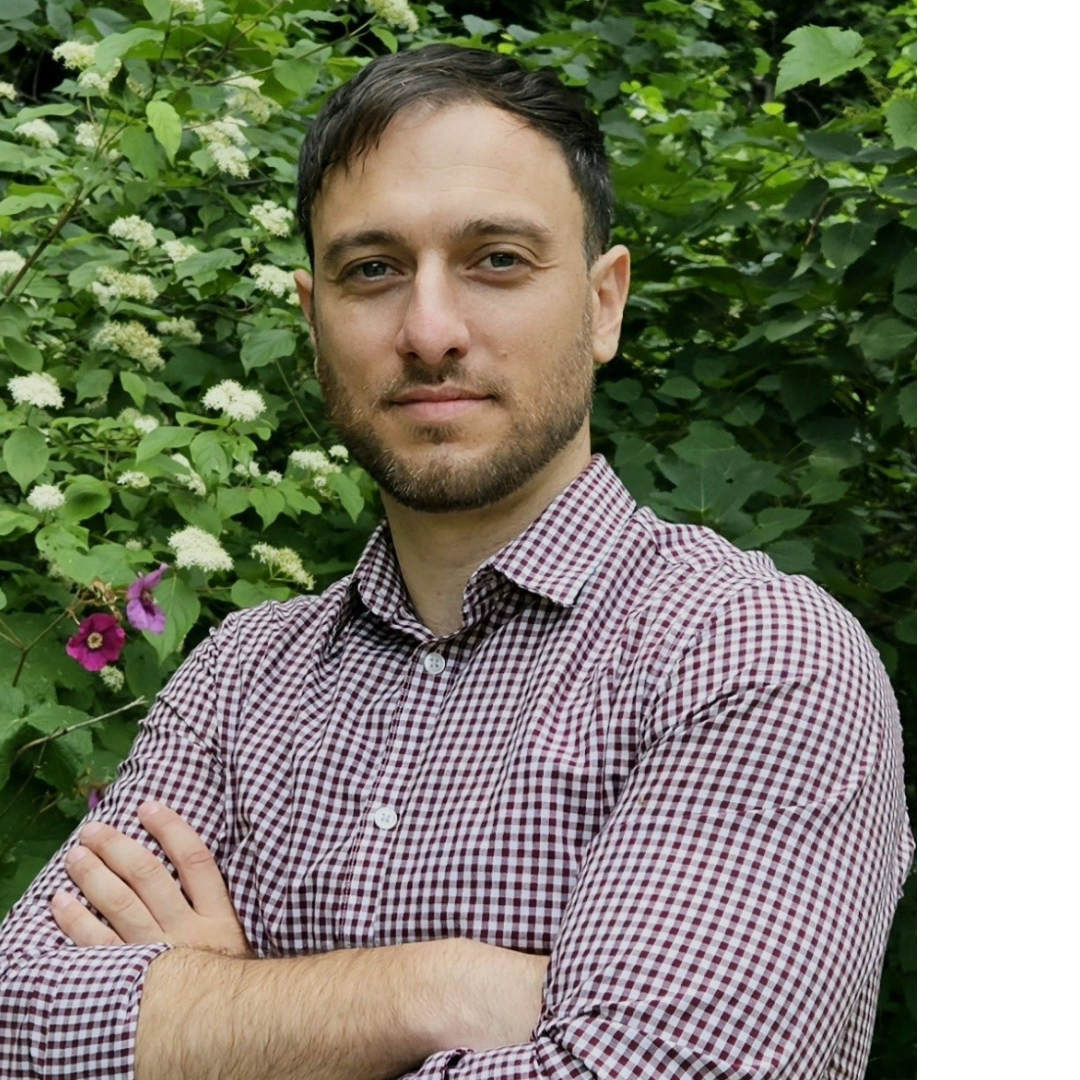 Greg Yerashotis is an Assistant Professor of Sociology at Trent University. He holds a Hons. B.A. in Sociology, an M.A in Criminology and Socio-legal studies, and a PhD in Physical Cultural Studies from the University of Toronto.
His academic research and community advocacy focus on sport, gender, health, and social inclusion, specifically exploring how community sport participation helps immigrant and newcomer youth integrate into Canadian society.
[00:00:06] Karine Morin: Soccer is often described as the world's game. It crosses borders and brings people together through languages and cultures in ways few other sports can. And every four years, the FIFA World Cup turns that connection into a global spectacle, drawing billions of people into the same unfolding story of victory, heartbreak, and national pride.
[00:00:33] Soccer has the power to bring people together, but it can also reflect the divisions that already exist beyond the field. So who actually gets to belong? From local clubs to the FIFA World Cup, the experience of the game can be very different depending on who is playing.
[00:00:49] Today, I'm joined by Greg Yerashotis, assistant professor at Trent University. For years, he has looked at the relationship between sport and social inclusion, most recently through the lives of immigrant youth playing soccer in Toronto. Their experiences offer a different way of seeing the World Cup and of asking what belonging looks like when the whole world is watching. My name is Karine Morin, and this is the Big Thinking Podcast.
[00:01:17] Karine Morin: Greg Yerashotis, welcome.
[00:01:20] Greg Yerashotis: Thank you for having me.
[00:01:22] Karine Morin: So you're a university professor, but also a soccer fan, as the sport is known here in Canada. And this episode is being recorded just a few days after the FIFA World Cup final - and what a match that was.
[00:01:36] Before then, Vancouver, Toronto hosted some of the games, and we know that there were watch parties all across the country throughout the tournament. So, from your perspective, how did Canadians experience the World Cup in terms of cultural connection and social inclusion?
[00:01:52] Greg Yerashotis: First off, so just from my own personal standpoint, I think I can speak for many Canadians and soccer fans when I say that this event held a special connection because of our hosting of the tournament.
[00:02:07] I think it really exposed the voyager, the soccer fandom that we have here in Canada. But it's a very interesting question in the Canadian context, and the reason for that is soccer is a global game, right? It has this sort of transnational appeal.
[00:02:29] You know, if you look at some of the host cities, they are Canada's global cities. If you look at the case of Toronto, as a young person growing up in this city, even prior to us hosting, I always really enjoyed World Cup season.
[00:02:46] I'm half Cypriot on my father's side. I supported Greece as a youngster, and I remember when Greece won the Euro Cup, and I was there on, on Danforth, this seminal moment in my life as a soccer fan.
[00:02:58] But I think my own experience brings up something, that is my support for Greece as a teenager, that many Canadians also experience, which is this sort of dual level of support, having multiple affiliations because of the transnational connections that many Canadians hold.
[00:03:19] So from my standpoint as someone that's interested in ethnic diversity and multiculturalism, what's been really interesting to observe is the way that Canadians have been balancing, in a lot of ways, their support for the Canadian national team, which prior to the past two tournaments, really hadn't been a mainstay or much of a threat to contend at this tournament.
[00:03:45] But now that it is, all of a sudden you've got these competing sort of attachments and affinities that people have for their ethnocultural background, right? Perhaps their parents' lineage with their sense of being a Canadian.
[00:04:00] So what's been really fun has been seeing the support for these different nations all over the world, while at the same time there's this huge, strong support for Canada, and this, I think, is something very uniquely Canadian that I've just really been interested in tracking and observing as the tournament went on and wrapped up.
[00:04:24] Karine Morin: So you just used that word of multiculturalism. Would you consider that the World Cup is a sporting event where multiculturalism becomes truly visible rather than just being discussed as a theoretical concept here?
[00:04:51] Greg Yerashotis: I think so, Karine, I think if you look at what does multiculturalism look like on the ground, and again, if we use the examples of these global cities, you see it playing out on the ground, right? And I would say there's different ways that you could see it, both in the fan experience, but also in the actual Canadian national team itself.
[00:05:17] I think if you look at Toronto's hosting of the last Portugal game. You know, Toronto has, uh, one of the largest Portuguese communities outside of - I think it's Brazil, I think we're next - there's over 10,000 Portuguese fans out on the streets just, you know, wanting to support Portugal, and there was interviews done with some of the players on the Portuguese national team, and they were asked, "Is this normal? Do you get this in other host cities?"
[00:05:43] And they said, "No, this is not normal. We very much appreciate it, but this is something incredibly unique." And then there's the piece about our national team, which I think it's gotten much publicity, there's been certainly a celebration of the ethnic diversity of the team in a way that I think is sort of unique in Canadian sporting history.
[00:06:11] Canada is a proud sporting nation. However, I would argue that there's a tenuous relationship that Canadian sport has with multiculturalism, and I would say a lot of that stems from the fact that really our hockey teams - while incredibly inspiring on the ice - they are, for the most part, made up of Anglo-Canadians.
[00:06:34] And so it's difficult for those with diverse racial and ethnocultural backgrounds to identify with them in the same way. When you look at some of our club teams that have had success, so I'm thinking of the Toronto Raptors title run, I'm thinking of the Blue Jays World Series run, there's more racial diversity, but they're made up predominantly of Americans.
[00:06:55] And so I think with this team and the celebration of diversity that has come with it, this is really a rare moment in Canadian sport. I would argue a multicultural one, right? When Stephen Eustáquio scores that goal that sends us to the round of 16, this is a young man, dual citizenship, Portuguese-Canadian, there is a certain symbolism, I think, and mythology that gets generated from that, that is very much reflective of multicultural nationalism, and Canada Soccer knows it.
[00:07:32] They have been advertising, promoting the team in this vein. There is this campaign, “Our Game Now”, I believe it's called, and the ad starts and there's kids playing out on the streets in the winter under streetlights, right? Symbolizing, you know, the Canadian winters, and they talk about how nobody saw us coming, that's the underdog story.
[00:07:58] But then combined with that, then they start to talk about how they have these allegiances to other countries, but they represent Canada. So there's this third thread that gets woven into the symbolism of “Canadianness”.
[00:08:09] You have the underdog story, you have fighting through our harsh winters and playing, and then you have this new piece that they're trying to add to the story, which is the diversity. And I think this World Cup gives soccer a part to play in Canadian multiculturalism.
[00:08:26] Karine Morin: Certainly, and so relatedly, would you say that the World Cup reframed for Canadians that sense of belonging or for some new Canadians in particular, that sense of belonging, and does it expand what it means to be Canadian?
[00:08:42] Greg Yerashotis: I wouldn't endeavor to speak for the experiences of all newcomers and immigrants, but I would say based on my background, the ability of these major sporting events, from what I've done with my research, there is something there that allows people to experience a form of belonging on a national scale that they otherwise may struggle to experience, right?
[00:09:09] If you are from a different racial or ethnocultural background, or you're in a different neighborhood and a different class status, or you have a different sexual orientation, like these are identity pieces that oftentimes divide people, right? And it's a cliche, but one of the cliches is how sport brings people together, right?
[00:09:29] And when you can rally around something common, and it's both a common passion and interest, but also in support for a common team, it reminds us of the common humanity that we all have. And I'll say, it doesn't even have to be support for a common team.
[00:09:48] This is just a personal anecdote, I was in Norway recently presenting at a conference, and I went to the town square in Lillehammer where I was staying to watch the first Canada game.
[00:10:00] And most people there were passively watching, their team isn't playing yet. And I sat right at the front, and there was this guy, this gentleman sitting beside me. I turned to him and I say, "Hey, I'm from Canada,” and this was Canada was playing Bosnia-Herzegovina, and he looks at me and he goes, "Bosnian."
[00:10:19] And it's sort of dry sense of humor. And throughout the whole match, and his friends eventually joined him, throughout the whole match we were jovially joking with one another, and I end up spending the whole evening with this group of Bosnian gentlemen.
[00:10:32] And they had been in Lillehammer for some time, so they ended up showing me different places and telling me where to go, and it was this real moment of intercultural contact that I would not have if not for the World Cup.
[00:10:45] And you know, I bring this up because I think there's a lot of people who although they're supporting different teams, they have these moments of connection that are very powerful.
[00:10:57] There's a strong affective force, emotional force that happens in these moments, uh, whether your team wins or loses, or who you're supporting, that maybe is more than just a national belonging, but sort of a "Hey, we're global citizens and this is everyone's game."
[00:11:13] Karine Morin: Right. Right. Now, so before we leave the World Cup, because there is more that we want to cover, you've brought up that it is very much promoted as a way to bring the world together. You've just presented that anecdote.
[00:11:24] But we also have witnessed exclusionary instances, the barriers in obtaining travel visas, or bias in the media narratives. So do you think that some of those global inequalities that persist affect how fans or the broader public then feels about soccer?
[00:11:44] Greg Yerashotis: You know, I consider myself a critical scholar first and foremost, and when you shine that magnifying glass, that lens onto the World Cup and global soccer, there's a lot there.
[00:11:59] We can get into FIFA and the corruption scandals, we can get into the sort of the capitalist overtaking of the event. We saw this so clearly in this year's event, but in the examples that you gave, in particular the case of the travel visas, some African fans not being able to come to support their teams.
[00:12:20] I suspect this has much to do with the geopolitics right now, the fact that the United States had such a strong role in the hosting of this event, and the, quote-unquote, "national security concerns" that they claim came with certain individuals from certain countries.
[00:12:36] I'm thinking of the Somalian referee that was not allowed into the country, I'm thinking also of the treatment of the Iranian national team. And so while we celebrate the inclusionary force that that sport can have, sport is reflective of society more so than it is world unto itself.
[00:13:00] So oftentimes you get the power inequalities that exist in society also existing in a sport, and you see this sort of play out even in the tournament. And I would say that FIFA right now has a big issue with credibility and integrity, and you saw this play out in the case when Donald Trump has famously intervened in the tournament.
[00:13:27] It just flies in the face of what you consider fair sport and the symbolics of what that's supposed to be. But no, I think you're right, there, there is much work to do to make the event fully inclusive.
[00:13:39] I think also the point you raised about the, the way that certain teams are discussed in the media, certain players are discussed in the media, particularly the African nations, there's been several studies that have shown a certain degree of media bias in the way that Black athletes are discussed in and around global soccer, more around their physicality over their technical ability.
[00:14:06] There's been some examples of some global sporting figures, I'm thinking of Bastian Schweinsteiger from Germany, he made a comment about the tactics of African nations and how they play a more disorganized style.
[00:14:22] So there are these sort of legacies of colonialism that are embedded within global soccer that still very much I think need to be weeded out. That being said, I also think that my favorite World Cup was when the South Africans hosted the event.
[00:14:38] And so it is both a platform I think for overcoming stereotypes, but these are legacies that exist in society and get transmitted also in sport.
[00:14:49] Karine Morin: So let's switch gears here from the very global to the much more local and your academic interest in questions of sport and culture that culminated in a recently published book, Social Inclusion Through Soccer in Global Toronto.
[00:15:03] And this book is informed by the years you spent coaching soccer in St. James Town. So tell us about this Toronto neighborhood and how you saw participation in soccer affect the everyday integration experience of the youth and the immigrant youth in that community.
[00:15:20] Greg Yerashotis: So first I'll just comment on the neighborhood that I was lucky enough to work in and I lived just outside of over the course of my research. When I first entered St. James Town, it was actually with the intent of doing research on youth crime.
[00:15:30] It is one of Toronto's priority neighborhoods. It is also, people say North America's most densely populated. It's certainly from what I've read, Canada's most densely populated neighborhood. It is a visual representation of the phrase “concrete jungle”.
[00:15:53] I entered this neighborhood at first interested in youth crime, and I volunteered in soccer programs as a means to get to know young people. I was connected through my old soccer coach, Xavier Lucky Boothe, who's a prominent member of Toronto's soccer community and Jamaican community. And he had the idea, "Why don't you volunteer in the program and you'll meet young people that way?"
[00:16:14] And through volunteering in the program, I was, I guess, not surprised, but I noted the very positive integration experiences that the young people were undergoing. They had positive views about Canada, they were doing well in school, they were integrated locally, despite their relative marginalization.
[00:16:36] And this countered a lot of the research done on racialized second-generation immigrants in North America, especially in America, and even in Europe. And I became then interested in what the role of sport, in itself was.
[00:16:50] So that's how I got into the sport angle. But about the community of St. James Town, I was just captivated by it the first time that I stepped foot in it. I use that term “concrete jungle”, but that doesn't - the dreary gray buildings are given life by the people that live there.
[00:17:07] There's a vibrancy in St. James Town, right? It is an urban village in the truest extent. There, there's a pulse in St. James Town. There are clips online of scenes when the Raptors won the NBA championship that someone recorded from their balcony in St. James Town, and the whole village that is St. James Town is lit up and people are celebrating from their balconies. It is a remarkable place.
[00:17:33] So when I was coaching, I coached the high school teams at Jarvis Collegiate, and I ran programs with the City of Toronto. And my high school team, I would have 20 players, let's say, and there'd be 20 different ethnocultural backgrounds.
[00:17:47] And we were talking about kind of the transnational character, and you asked about multiculturalism on the ground. That is multiculturalism on the ground. And soccer was this really interesting way where these unique forms of transcultural exchange would go on in the gymnasium spaces.
[00:18:07] Where you'd get young people from places as diverse as, let's just say Nepal, that know Arabic words. I'll give you an anecdote. Some of the young men were swearing too much in my program, okay? So I was like, "Okay, guys. Like from now on, if I hear you cursing, you're you're going to run shuttle runs, okay?"
[00:18:25] And so they adapted by learning to swear in all these diverse languages, so I couldn't keep track of it. But they, there was a pride in that for them, right? To going over to their friend's house and trying these dishes from, you know, Afghanistan, right, or Somalia.
[00:18:41] So in this way, soccer became this platform for these young people to integrate into Canadian society, a Canadian multicultural society, and understand what it is to live in multicultural Canada.
[00:18:53] Karine Morin: Do you have a specific moment when you sort of saw a young person get that feeling that they belong? Is there a story or person that you encountered where you just witnessed it in front of your eyes?
[00:19:10] Greg Yerashotis: Yes. And in the book I profile lots of different narratives. But one that stands out to me, and I forget now the name, the pseudonym that I gave the young man in the book, so we'll just call him Ahmed in this case, right?
[00:19:24] Ahmed was a Syrian refugee, and he first showed up in the program, he was very quiet, he was nervous, he was struggling to keep up, but he was consistent, and he kept on coming.
[00:19:40] And I spoke to him several months later, he sat down beside me, and we had this conversation that I document in the book, and then I later interviewed him and followed up on it.
[00:19:52] But he talked to me about what the role of the program was in his integration experience. When his family showed up in Canada first, they had to stay in a hotel, so they didn't have - his mother had no means of cooking meals, they were eating a lot of fast food.
[00:20:09] He didn't know where to go and play, so he developed this sort of, like, agoraphobic fear of going outside that a lot of young people describe when they first come to Canada: they don't know where to go, they don't know anyone, they don't speak the language, it's intimidating.
[00:20:25] And because of this, Ahmed talked about how he had gained weight, how he felt he was becoming antisocial, right? What the program gave him first, he explained, was an outlet, not just physically, but also mentally.
[00:20:38] He explained to me how being in that hotel room, he was fighting with his brother physically, right? It was almost like he was describing to me the mental toll of the migration process and how what the program was giving him, he said, was a space to relieve the stresses of migration.
[00:20:59] They eventually settled in St. James Town, they had an apartment. But what happened was, and this is documented in the news, there was a big fire in one of the buildings, so his family, they had to pack up again, they had to stay in the community center, right? And he's continuing through all this to come to the program.
[00:21:17] And I asked him, "So you've gone through these struggles, why is it that you're still committing to the program, right?" And he simply said, "Soccer really helps my mind."
[00:21:26] And when you talk about that moment, this conversation started between me and him by me saying, "You're doing really well." I could see he's communicating with the other players, right? His language is stronger, his play in the game is stronger, his confidence is growing, I'm seeing this young person really blossom or maybe it's a more of a return to self.
[00:21:47] But in his case, like through this odyssey that he experienced all through all these migration challenges, as a political refugee, having the game, having this program, it anchored him somewhere, it made him feel like he belonged somewhere, it helped him with his personal sense of wellbeing, both physically and mentally.
[00:22:09] Karine Morin: I can say that without such challenges, my own experience of playing rugby and also rowing make up some of the best memories I have of sort of my late youth and having shared those memories with just wonderful teammates and whatnot.
[00:22:25] Greg Yerashotis: Can I ask you a question? When you're rowing, what do you, what's going on in your mind?
[00:22:31] Karine Morin: That's an interesting question. Um, I can't remember exactly 'cause it's been a while, but I think there was such pleasure in that sport of focusing on the unison-
[00:22:44] Greg Yerashotis: Yeah.
[00:22:45] Karine Morin: Of rowing in a boat of eight or four, but mostly in a boat of eight. And the other thing is we have our back to the course, and we're counting on that one person that sees the course forward and sees the boats beside us, and that reliance on that one person who can see, and those of us who, without being able to see, are just giving our, as I say, sort of as much united unison effort, It was a great, great feeling, and I think that's what I focused on.
[00:23:15] Greg Yerashotis: And I ask that question because I think across sports there's commonalities. And when we talk about the mental health benefits, especially for young people that are going through difficult times, you described a real sense of unity and connection, and also a sense of just being in the moment and flow.
[00:23:31] You are not thinking about outside stresses. You are in the moment, and I think that's something that a lot of athletes identify with. Where they actually, as they get older, and certainly the youth in my study discussed this, they use sport agentically as a means to support their wellbeing. And that happens because when you're playing, you're just in the zone, and there's something very powerful about that.
[00:23:54] Karine Morin: I think we often think of soccer, oh, young boys, but you also were studying inner-city girls. And did you want to say anything about the distinct aspects of soccer for young girls in that community, and how, whether it was comparable or whether there were important contrasts?
[00:24:12] Greg Yerashotis: So I think that throughout all my work coaching, the most rewarding experiences I had were with the young women. You asked about the comparisons. In some ways they are the same in some senses because they're playing sport because it's fun, right? They enjoy it.
[00:24:30] On the other hand, their experiences are unique, and the meanings that they associate with their playing experiences are unique. First off, part of the reason I started working with the young women, I was approached by some of them asking me to coach them because they couldn't find - there were no girls' programs running locally because St. James Town is so densely populated, the available recreational space, it's like prime real estate.
[00:24:57] There were, like, territorialized clashes, and the young women often get marginalized in those encounters, and they end up playing, like - so if the boys are on the field, you'll see the girls on the outside often playing, right? Sort of making do with what they can.
[00:25:14] And so, with the support of Lucky Boothe from the city of Toronto, I was able to start a girls-only program and I started coaching the girls at Jarvis Collegiate, and the first game we ever had, we lost 15-nothing, and we didn't get the ball past half, okay?
[00:25:31] And so while starting the program was really good for them and they were able to grow community and they talked about feelings of personal empowerment and growth, and that it was inclusive in that regard, right?
[00:25:43] Paradoxically, their inclusion into community sport, right? When I tried to take them to the next level and play competitive sport, actually led to feelings of exclusion for a lot of them because it symbolized the relative deprivation, right? Like they were going up against schools that were from wealthier areas that had many club players.
[00:26:03] However, over the years, right, that same team that beat us 15-nothing, my last year coaching at Jarvis we beat them 4-1. And I had taken a very young team my first year, so they were now in grade 12, they started as grade nines. You know, some of them were crying on the field they were so happy. And so there's also there the experience of collective growth.
[00:26:26] And I made the argument based on my interviews with them, and I had some young women who helped me edit the chapter in my book, many of them are now working in community sport and doing great things.
[00:26:40] But I made the argument that there was a sense of empowerment, of physical self-empowerment playing for a lot of these women, it was symbolic for them of defying these gender norms that a lot of them had been socialized to accept. And on a group level, there was a sense of collective empowerment in that they weren't just playing for themselves, a lot of them talked about playing for girls like us, right?
[00:27:08] And for them there was a political undertone to this, like a politicized form of belonging that they experienced because they felt like they were - they carved out this space for themselves. You know, "We went from," I'm just quoting, you know, "We went from the not included to the included, we did this ourselves, we did this together."
[00:27:24] So this emergent politicized sense of belonging that a lot of them experienced through sport. So in that way the experiences of the young women, I would say, were unique, and the meanings that they derived from their participation was also unique.
[00:27:40] Karine Morin: That's very interesting. I think you've made it quite clear that you're an ethnographer, and that means that you don't just observe on the sidelines, you live it. You deeply are immersed in that St. James community with those teams. What was it like to live your research? How did that affect you?
[00:28:00] Greg Yerashotis: It's a great question, and I try to touch on this as much as I can in the book because I did get so close to the research, to the point where I couldn't tell anymore where, you know, my life ended and the research begun.
[00:28:19] Which is, I think, something that a lot of ethnographers grapple with. My whole identity came to revolve around coaching. Like, if my schedule, like for most weekdays, like I'd wake up at 6:45, I'd walk to the school, I'd run a practice in the morning, then I'd go to the university, then after my classes I'd go back to the community center and run these programs.
[00:28:44] And I would do this, like, for three, four days, I would run sessions over the summer. I developed these bonds with these young people that were as real and meaningful as any that I had ever developed in my life. I came to see them very much like younger siblings in a sense. A lot of them identified with me as a mentor figure.
[00:29:06] And this also complicated the research, because I'm changing, I'm not just some observer, right? I'm not a fly on the wall, right? It's not observant participation, it's participatory observation. So I had to methodologically account for this in my community sport ethnography.
[00:29:26] But I would say that there certainly were challenges, but it improved the richness of the data in a way that I never really could have anticipated. And, first and foremost, I think it allowed me to develop a real sense of trust with the young people.
[00:29:43] So when it came time to do the interviews, there was a sense of comfort, and we had shared experiences. They're not telling me about something that happened to them that I am learning about, we co-experienced things.
[00:30:00] So I'm able to recount or kind of cross-analyze what they're saying with how I experienced what they were saying. I learned a lot from those young people, and it changed me forever in a very profound way, and I've remained in touch with many of them.
[00:30:18] I'm currently working with one of them on a project around women's only hours and access to City of Toronto facilities for Muslim women in looking at how to increase participation and recreation amongst that demographic in Toronto.
[00:30:33] And they reached out to me because there was a sense of trust that I developed by working with them. But anybody who's considering doing this type of work, there's a lot of emotional labor. I was getting text messages from some of these young people all through the evening. Some of them, they'd call me if they had issues.
[00:30:51] That stays with you and, and it can be heavy, there's a burden to it, and coaches' burnout is a real thing, and when you combine that with being a youth worker, there's just this added layer.
[00:31:04] But I wouldn't change that experience for anything because I think it not only improved my research, it made me a more grounded person, I think. And like I said, I learned so much from those young people. I'm incredibly grateful for those experiences.
[00:31:19] Karine Morin: Terrific answer as to what motivates researchers to do research. It is a way to improve ourselves, too. We've covered a lot of ground, so to close, what's the big thought you want to leave with our audience?
[00:31:34] Greg Yerashotis: This may sound contradictory, but in my experience, although it was sport, it doesn't have to be sport. So my book is about this community program essentially, and certainly there are unique things that sport brings young people, right?
[00:31:53] We talked about the physical and, and the mental health piece. There's an engagement piece that sport can bring, draw people in to help build community.
[00:32:03] But really this was a story about a public – this is a public program, okay? This is people's tax dollars. And when I wrote this book, I had this in mind, like these debates around that dominate North American political discourse around what to do with our taxes and wasted public money and these sorts of things, right?
[00:32:25] And I started this diatribe here mentioning it doesn't have to be sport. What I mean by that is, in this case it was, but it could be an arts program, and that's going to have some unique effects, right? But nonetheless, like that's going to draw a different group of young people, that's going to help build community, that's going to get young people to express passion and identity.
[00:32:48] But it takes public investment, and I hope that what I showed in the book is - while sport is not a panacea for all social ills - but it certainly can have a role to play, pardon the pun, in a larger, more comprehensive social inclusion strategy.
[00:33:03] This was particularly effective for the young people that I worked with, but young people have diverse interests, and there are different ways of building community and facilitating belonging, but this takes political will and investment. But I think what I've shown in my work is that we bear the fruit of that investment.
[00:33:23] Karine Morin: Well, thank you very much for that wisdom from your years of coaching and of being the ethnographer. What a lovely conversation. And four years from now, let's see what happens with that next FIFA tournament. Thank you so much, Greg.
[00:33:37] Greg Yerashotis: Thank you, Karine.
[00:33:44] Karine Morin: Thank you for listening and thank you to my guest, Greg Yerashotis, professor at Trent University. I also want to thank our friends and partners at the Social Sciences and Humanities Research Council, whose support helps make this podcast possible.
[00:34:00] Finally, thank you to Sided Media for their support in producing the Big Thinking podcast. New episodes are released each month, so be sure to follow us on your favorite platform. À la prochaine.

Spotify

Apple Podcast

Amazon Music

Podcast Addict

iHeartRadio
